
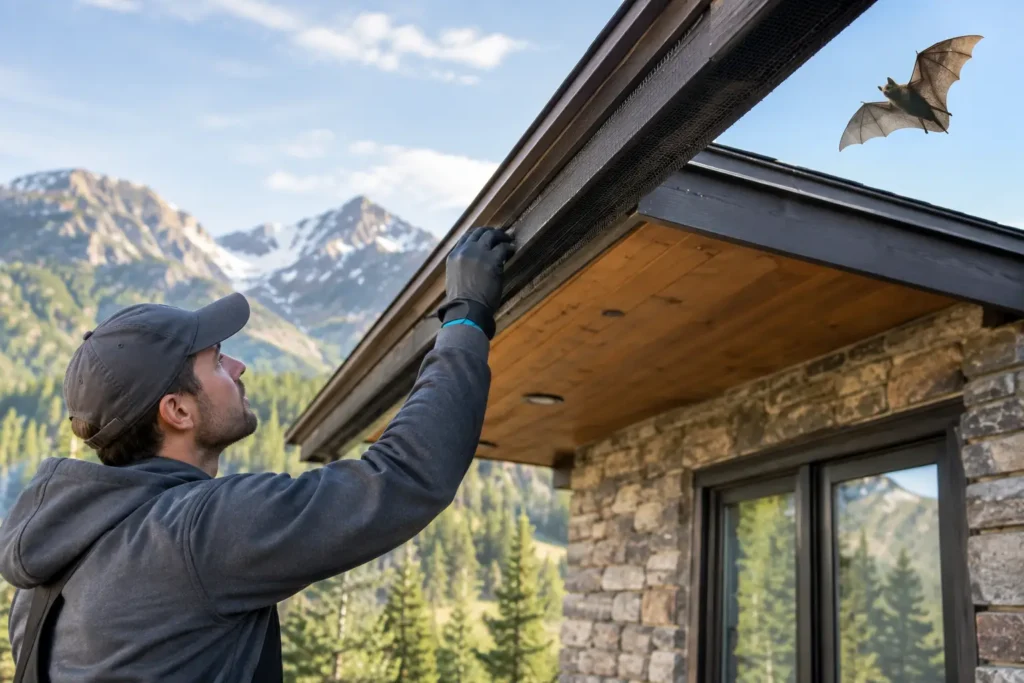
A bat slipping through a gap beside a roofline may not seem urgent at first. In a mountain cabin or full-time home, though, one quiet entry point can become a roosting area that leaves droppings in attics, walls, chimneys, and covered porches. Bat proofing mountain homes is about finding those hidden routes, allowing bats to leave safely, and closing the structure so they cannot return.
For homeowners and property managers in Big Bear, Lake Arrowhead, Running Springs, Crestline, and nearby mountain communities, the goal is not to harm bats. Bats are valuable insect-eaters, but they belong outdoors, not above a bedroom ceiling or inside a vacation rental attic. Humane exclusion protects both the property and the wildlife that shares our mountain environment.
Why Mountain Homes Attract Bats
Mountain properties naturally give bats the shelter they seek. Homes are often surrounded by mature trees, wooded lots, rock features, and nearby water sources. Seasonal cabins may sit empty for long stretches, allowing a small bat issue to grow unnoticed before the next visit.
Older cabins and homes also have the kinds of openings bats can use: loose fascia boards, gaps in siding, warped trim, damaged chimney flashing, roof intersections, attic vents, and spaces around utility lines. A gap as small as about three-eighths of an inch can be enough for some bats to enter.
Snow, wind, ice, and intense sun create another challenge. Mountain weather expands, shifts, and wears down building materials. A repair that looked tight in spring may open slightly after a winter of freeze-thaw cycles. That is why exclusion work in Big Bear Lake, Sugarloaf, Fawnskin, Green Valley Lake, and other high-elevation areas needs to account for the building’s condition, not just the bats seen outside.
Signs Bats May Be Using Your Home
Bats are usually most noticeable around dusk, when they leave to feed. Watching the roofline from a safe distance can reveal repeated flight from the same gap. Activity may be brief and easy to miss, especially when the exit point is high on a gable, chimney, or upper story.
Inside, homeowners may notice a scratching or light fluttering sound near dusk or before dawn. A musty odor in an attic, staining below a small opening, or dark pellet-like droppings on a deck, window ledge, or attic insulation can also point to bat activity. Bat droppings can resemble rodent droppings, so proper identification matters before any cleanup or sealing begins.
Do not handle a bat, even if it appears weak or injured. Any bat found in a room where someone was sleeping, or where a child or pet may have had contact, should be treated carefully. Avoid releasing or removing it yourself until you have received appropriate local public health guidance.
The Right Way to Bat Proof Mountain Homes
Effective bat exclusion follows a sequence. Sealing first may trap bats inside the building, push them into living areas, or leave animals dying in inaccessible spaces. The process begins with a detailed inspection of the roofline, attic vents, chimney areas, siding transitions, eaves, dormers, and every likely entry route.
Once the active exits are identified, a wildlife professional seals the secondary openings while leaving the primary exit route available. A one-way exclusion device is then installed at the active point. It allows bats to leave for their nighttime feeding activity but prevents them from getting back inside.
After the bats have exited, the final access point can be closed with durable materials suited to the structure. Depending on the home, this may involve repairing fascia, screening vents, securing flashing, sealing gaps around pipes, or reinforcing damaged roof and siding connections. The best material depends on the opening and how much weather exposure it receives. A quick bead of caulk may help in a protected seam, but it will not solve a loose board or failing roof edge.
Timing Matters for Humane Exclusion
Bat removal is not a one-size-fits-all service. Timing can be restricted when young bats may be unable to fly and leave with the adults. Sealing a colony inside during a maternity period is inhumane and can create a much larger sanitation problem for the property owner.
A professional inspection helps determine whether exclusion can proceed immediately or whether the work must be scheduled around bat activity and local requirements. This is one of the strongest reasons not to attempt a weekend seal-up after seeing a bat near the roof. The right plan protects the building without separating dependent young from their mothers.
Cleanup Is Part of the Protection
Exclusion stops future entry, but it does not remove what bats left behind. Guano and urine can build up in attic insulation, wall cavities, or beneath a regular roost. Over time, the odor can spread through the home, attract insects, and create staining or moisture-related damage.
Cleanup should be handled with appropriate protective equipment and containment practices. Dry droppings should not be swept or vacuumed casually, since disturbing contaminated material can send dust into the air. The affected space may need droppings removed, surfaces treated, insulation assessed, and odor sources addressed.
For a vacation rental or commercial property, this step is especially important. Guests, tenants, and employees should not be exposed to wildlife waste or odors. A complete service approach includes exclusion, cleanup, disinfection where appropriate, and repairs that restore the building’s barrier against future wildlife entry.
Common Mistakes That Lead to Repeat Bat Problems
The most common mistake is sealing an opening without confirming whether bats are still inside. Another is closing only the visible hole while ignoring nearby gaps along the same roofline. Bats may simply move a few feet and find the next accessible seam.
Homeowners also sometimes rely on repellents, bright lights, loud sounds, or strong odors. These approaches rarely solve an established roost, and they can drive bats deeper into wall voids rather than out of the structure. Poison is never an appropriate answer. It is inhumane, can create dead-animal odors inside the home, and does nothing to correct the openings that invited bats in.
Finally, temporary materials often fail in mountain conditions. Foam, light screening, or tape may not stand up to wind, snow loads, squirrels, woodpecker damage, or normal building movement. Exclusion repairs should be installed with both bat behavior and the local climate in mind.
Preventive Repairs for Cabins and Rentals
Property owners do not need to wait for a bat problem to inspect the exterior. A yearly check is smart after winter weather, before opening a seasonal cabin, or before peak rental periods. Look closely at vents, gable ends, chimney caps, roof edges, siding joints, and areas where cables or pipes enter the home.
Keep tree branches trimmed back from the roof where practical, but remember that trimming alone will not bat-proof a home. The real protection comes from closing structural gaps. If you see staining, loose trim, or a repeated bat flight path at dusk, schedule an inspection before the opening becomes an established roost.
Outbackzack provides humane wildlife removal and exclusion work for mountain homes, cabins, rentals, and commercial properties. A local inspection can identify the actual entry points, evaluate sanitation concerns, and build a practical plan for keeping bats outside without harming them.
A quiet attic should stay quiet. Address a suspected bat entry early, use humane exclusion at the right time, and give your mountain home the durable repairs it needs to stay protected season after season.