
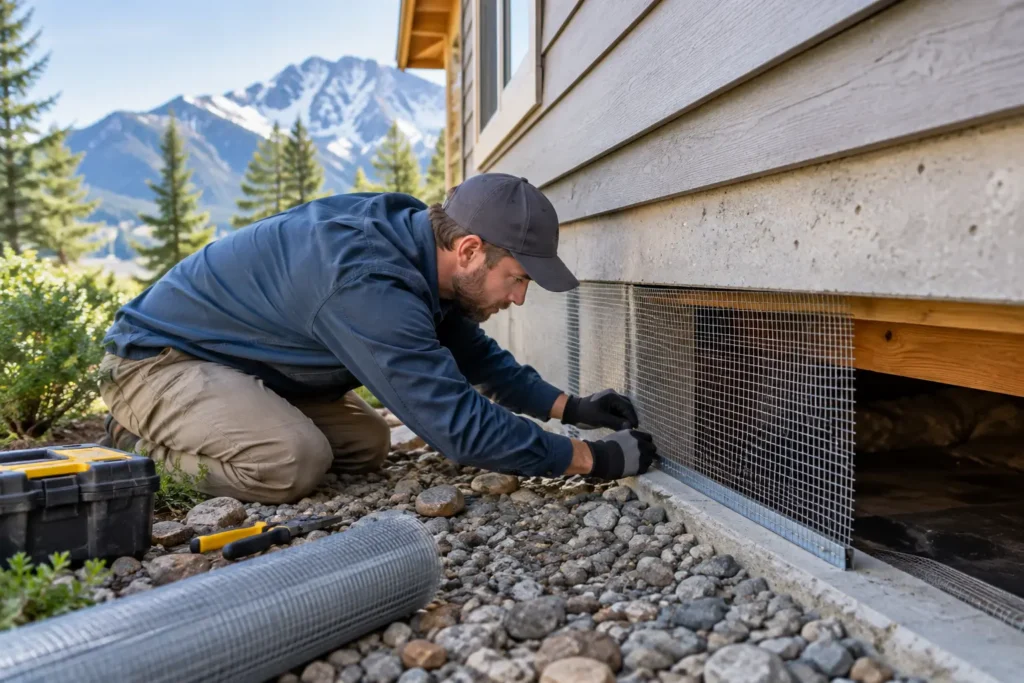
A crawlspace can look quiet from above while mice or rats are actively nesting below your floors. In Big Bear, Lake Arrowhead, Running Springs, and other mountain communities, crawlspace rodent defenses are not a one-time patch job. They are a coordinated effort to remove active rodents, close the openings they use, clean contaminated areas, and keep seasonal wildlife pressure from turning into another infestation.
Cabins, vacation homes, older mountain houses, and buildings surrounded by pine cover are especially vulnerable. Rodents look for sheltered, dry areas when temperatures drop, snow limits food sources, or nearby construction disturbs their nesting sites. Once they reach a crawlspace, they may move into wall voids, insulation, ductwork, and eventually living areas.
Why Mountain Crawlspaces Attract Rodents
A crawlspace offers what rodents need most: darkness, cover, and a protected route through the structure. Moisture from poor drainage, torn vapor barriers, plumbing leaks, or standing water makes the space even more appealing. Insulation supplies nesting material, while wiring, wood framing, and ducts give rodents pathways to explore.
Mountain properties also face a different level of exposure than tightly packed urban homes. Tree branches, rock walls, woodpiles, sheds, open foundations, and gaps around utility lines can all become access routes. Mice can fit through gaps about the width of a pencil. Rats need more room, but they can chew and enlarge weak openings when food and shelter are on the other side.
The problem is not always obvious from inside the home. A faint odor, scratching at night, damaged insulation, droppings near the water heater, or an unexplained increase in insect activity can all point to a crawlspace issue. Rodent droppings and nesting debris can also create sanitation concerns, particularly in vacation rentals and homes that sit vacant between visits.
Crawlspace Rodent Defenses Start With Inspection
The most effective defense begins outside, not with a trap placed under the house. A professional inspection identifies the species involved, likely entry points, nesting zones, moisture conditions, and structural weaknesses that make repeat activity likely.
This matters because a mouse problem, rat problem, squirrel intrusion, and wildlife issue can leave similar signs but require different exclusion methods. Sealing a crawlspace before active animals are removed can trap them inside. That can lead to animals chewing new exit holes, dying in inaccessible areas, or moving farther into the structure.
A thorough inspection should assess foundation vents, crawlspace doors, utility penetrations, gaps where siding meets the foundation, damaged screens, plumbing and HVAC openings, and areas hidden by vegetation or stored materials. It should also look for gnaw marks, tracks, fresh droppings, rub marks, burrows, and disturbed insulation.
For homeowners, the goal is clear: find out how rodents are getting in before spending money on repairs that do not solve the source of the problem.
Common Entry Points That Need Attention
Crawlspace vents are a frequent weak point. Standard vent screens may rust, tear, or have openings large enough for rodents to exploit. A durable, properly fitted rodent-resistant barrier can allow needed airflow while blocking access. The right material and installation method depend on the vent design and local moisture conditions.
Crawlspace access doors deserve the same attention. A warped wooden door, loose latch, missing weather stripping, or gap along the bottom can become an easy entry point. Doors need to fit securely without creating a moisture trap or making future service access difficult.
Utility lines are another common issue. Cable, plumbing, electrical, and HVAC penetrations often leave irregular gaps that were never fully sealed during construction. These openings need materials that rodents cannot easily chew through. Expanding foam alone is rarely a lasting rodent defense because mice and rats can chew it away.
Foundation cracks, damaged lattice, loose skirting, and gaps around additions can also create access. On older cabins, several small openings may be more important than one large hole. Rodent exclusion is only as strong as its weakest point.
A Layered Plan for Crawlspace Rodent Defenses
Long-term protection works best when removal, exclusion, sanitation, and exterior prevention happen in the right order. Skipping a step often leads to the familiar cycle of trapping a few rodents, seeing a temporary improvement, and then hearing scratching again after the next cold snap.
First, active rodents must be addressed with species-appropriate control methods. Humane and eco-conscious practices matter, but they must still be effective. The objective is to remove the animals responsibly while avoiding unnecessary risks to pets, children, non-target wildlife, and the surrounding mountain environment.
Next comes exclusion work. Openings should be sealed with durable materials suited to the location, not quick fixes that fail under weather, chewing, or snow-season conditions. A quality block-out repair also considers how water moves around the foundation. Closing gaps while ignoring drainage or damaged ventilation can create moisture problems that harm the structure in other ways.
Sanitation is the third piece. Rodent urine, droppings, nesting material, and contaminated insulation should be handled carefully. Sweeping or vacuuming dry droppings can stir particles into the air. A professional cleanup plan may include removing contaminated materials, disinfecting affected surfaces, treating odors, and replacing insulation when the damage is extensive.
Finally, exterior conditions need attention. Keeping firewood elevated and away from the foundation, trimming vegetation back from the structure, securing trash, and reducing clutter beneath decks can make a property less inviting. These measures will not replace exclusion work, but they reduce the pressure on it.
What Homeowners Can Check Safely
Property owners can catch problems early by walking the exterior regularly, especially before winter and after heavy weather. Look for torn vent covers, fresh soil near the foundation, new gaps around pipes, chewed wood, droppings, or signs that an access door no longer closes tightly.
Inside, pay attention to musty or urine-like odors, new noises under floors or behind walls, insulation falling from floor joists, or small droppings near appliances and storage areas. If you have a vacation property, ask cleaners, guests, or maintenance staff to report unusual sounds and signs promptly. A small opening can become a larger repair when a building sits empty for weeks.
Avoid putting poison loose in a crawlspace. Beyond the risk to pets and wildlife, poisoned rodents can die in walls or inaccessible voids, creating odor and insect problems. It does not correct the entry point that allowed the infestation in the first place.
When Professional Help Makes Sense
A homeowner may be able to replace a visibly damaged screen or clear debris away from a foundation. But repeated activity, visible contamination, damaged insulation, chewed wiring, multiple entry points, or animal sounds in walls call for a more complete response.
Professional rodent control is particularly valuable when the crawlspace is tight, wet, heavily soiled, or difficult to access safely. It is also the better choice for rental properties and commercial buildings, where sanitation, documentation, tenant comfort, and uninterrupted operations matter.
Outbackzack provides humane rodent removal, cleanup, disinfection, exclusion work, and block-out repairs for mountain properties. The focus is not simply on getting rodents out for the moment. It is on identifying the conditions that brought them in and building practical protection around the home or business.
Do Not Wait for a Small Problem to Travel Upstairs
Rodents rarely stay contained in one convenient area. A crawlspace infestation can spread into wall voids, attics, pantries, and mechanical systems as animals search for warmth and food. The sooner entry points are identified and activity is addressed, the more options you have for protecting the structure without allowing damage and contamination to grow.
If you suspect rodents beneath your home, schedule an inspection before the next cold period or vacancy gives them time to settle in. A clean, sealed crawlspace helps protect more than the space below your floor. It helps preserve the comfort, safety, and value of the property above it.