
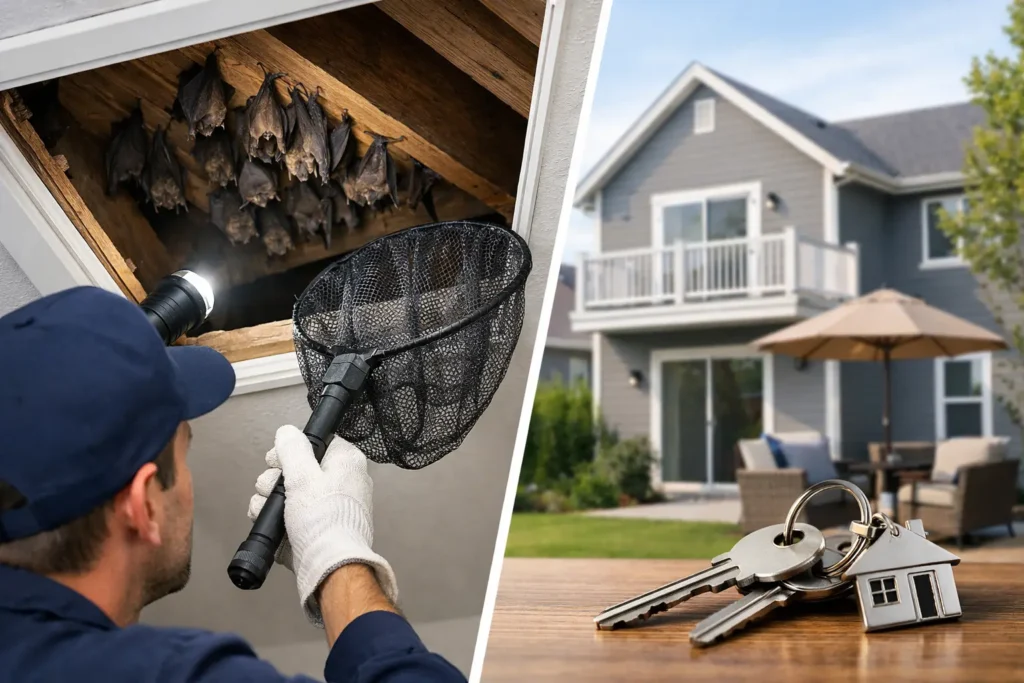
A guest hears scratching above the bedroom ceiling at midnight, spots small droppings on the porch the next morning, and suddenly your quiet mountain rental has a serious operations problem. Bat removal for rental properties requires more than getting animals out of the attic. It calls for a humane plan that protects guests, follows wildlife requirements, identifies entry points, and keeps the same issue from disrupting the next reservation.
For property managers and landlords in Big Bear Lake, Lake Arrowhead, Running Springs, Crestline, and nearby mountain communities, bats can be an occasional reality of owning a cabin or rental home near trees, open water, and natural roosting areas. They are valuable wildlife that consume insects, but they do not belong inside a living space, attic, crawl space, or wall void. Fast, professional action protects your property without treating bats carelessly.
Why Bats Create a Rental Property Problem
A bat sighting inside a rental is not always proof of a colony. One bat may have entered through an open door, fireplace opening, damaged screen, roof gap, or attic vent. Still, a single sighting deserves prompt attention because bats can use very small openings and return to established roosting areas year after year.
For a rental owner, the immediate concern is guest safety and confidence. Guests may not know whether a bat has been in a sleeping area, whether they should stay in the home, or how to handle an animal they find indoors. Your response needs to be calm and clear: tell guests not to touch the bat, keep children and pets away, close the animal into one area only if it can be done safely, and contact a qualified wildlife removal professional.
The property risk can grow when bats roost in an attic or enclosed building cavity. Accumulated droppings can create strong odors, stain insulation, attract insects, and affect indoor air quality. Urine can damage materials over time. In a vacation rental, even a faint odor or a visible stain can lead to poor reviews, canceled stays, and difficult conversations with guests.
Signs You May Need Bat Removal for Rental Properties
Bats are most active around dusk and dawn, so property inspections should not rely only on daytime activity. A professional can assess the building exterior, roofline, attic, vents, chimneys, siding transitions, and other areas where a bat may enter or roost.
Common warning signs include:
- Small, dark droppings below roof edges, vents, chimney areas, or attic access points
- Chirping, fluttering, or scratching sounds near walls and ceilings around sunset or sunrise
- A bat repeatedly flying near one spot on the roofline at dusk
- Musty odors, staining, or insulation contamination in an attic or upper wall area
Droppings alone are not enough for a definite diagnosis. Rodents, birds, and bats can all leave evidence around a structure, and each problem requires a different response. Correct identification prevents wasted repairs and helps ensure the removal method is appropriate.
Do Not Ask Guests to Handle the Situation
A guest should never be expected to catch, release, or remove a bat. They should also avoid sweeping up droppings or entering an attic where bat activity may be present. Besides the safety concerns, an untrained response can injure the animal, spread contamination, or allow a bat to escape deeper into the building.
Property managers should have a simple after-hours protocol for wildlife calls. Ask where the bat was seen, whether anyone may have had direct contact, whether it was found in a sleeping room, and whether pets were present. Then arrange professional guidance quickly. If there has been potential human or pet contact, guests should contact the appropriate local health or medical resource for advice.
Humane Removal Starts With the Right Timing
The best bat solution is exclusion, not trapping, poisoning, or sealing random holes while animals may still be inside. Exclusion uses carefully placed one-way devices that allow bats to leave but prevent them from returning. Once the structure is confirmed clear, entry points can be sealed with durable materials.
Timing matters because bats may have dependent young during certain parts of the year. Excluding adult bats at the wrong time could leave flightless young trapped inside a building. Wildlife rules and seasonal conditions can also affect what work can be performed and when. That is why a site-specific inspection is better than a quick patch job or an online do-it-yourself fix.
A humane wildlife professional will evaluate the species, roost location, number of likely entry points, and current activity before recommending exclusion. The plan may need to be scheduled around the season, weather, and the condition of your rental property. That approach protects bats while making the building less attractive as a future roost.
What a Proper Bat Service Should Address
Removing bats from a rental is only one part of the job. The long-term solution is built around inspection, exclusion, cleanup, and prevention.
First, the exterior must be examined closely. Mountain cabins often have complex rooflines, wood siding, aging trim, stonework, attic vents, and gaps created by snow, wind, or seasonal movement. Bats can enter at fascia boards, ridge vents, chimney flashing, roof intersections, utility penetrations, and small openings where siding meets the structure.
Next comes the exclusion work. A technician installs appropriate one-way devices at active exits and seals secondary openings that could let bats move to another part of the building. Sealing everything immediately without confirming activity can create a bigger problem, including bats entering occupied spaces through wall voids or interior gaps.
After the bats have left, cleanup and sanitation deserve equal attention. The scope depends on how long the roost was active and where contamination is located. Minor exterior evidence may require limited cleanup. A heavily used attic can require removal of contaminated insulation, disinfection, odor control, and repairs to restore the space. This is particularly relevant for short-term rentals, where cleanliness is part of the product you provide.
Finally, the property needs practical prevention work. Quality block-out repairs use durable materials, not temporary foam alone. Screens, vent covers, flashing, chimney caps, and damaged trim should be checked as part of the plan. The goal is to close access without creating new moisture, ventilation, or maintenance problems.
Landlord Responsibilities and Guest Communication
Rental owners should treat suspected bat activity as a maintenance and safety issue, not a guest inconvenience. Respond quickly, document the report, schedule an inspection, and keep records of work completed. Clear documentation can help with future maintenance planning, insurance questions, and guest communication.
Be honest without being alarming. If a bat was found in a common room and safely removed, explain the steps taken and provide the next update. If an inspection finds roosting activity, move affected guests when necessary and avoid placing new guests in a unit until the situation is professionally assessed. The right response depends on where the activity occurred, whether the animal was in a living area, and whether contact was possible.
For multi-unit buildings, inspect adjacent units and shared rooflines as well. Bats may travel through connected attic spaces or use similar gaps across a structure. Addressing one visible opening while ignoring the rest of the building can lead to repeat calls and unnecessary tenant frustration.
Preventing Repeat Bat Problems in Mountain Rentals
The most reliable prevention is regular exterior maintenance. Inspect rooflines after winter weather, check attic and gable vents, repair loose siding and trim, and make sure chimney caps and screens remain secure. Schedule checks before your busiest rental season so repairs do not interrupt booked stays.
Outdoor lighting can also influence insect activity around a property, which may draw bats nearby. That does not mean bats should be harmed or discouraged from the surrounding landscape. It means your building should be properly sealed so wildlife can continue its role outdoors without gaining access to the structure.
Outbackzack provides humane wildlife removal, exclusion, cleanup, and prevention services for mountain property owners who need a real solution, not a temporary patch. A trained inspection can determine whether you are dealing with bats, another wildlife issue, or a building gap that will eventually invite both.
A quiet attic and a confident guest experience start with acting early. When a rental property shows signs of bat activity, protect the people inside, respect the wildlife outside, and have the building evaluated before a small access point becomes a recurring problem.