
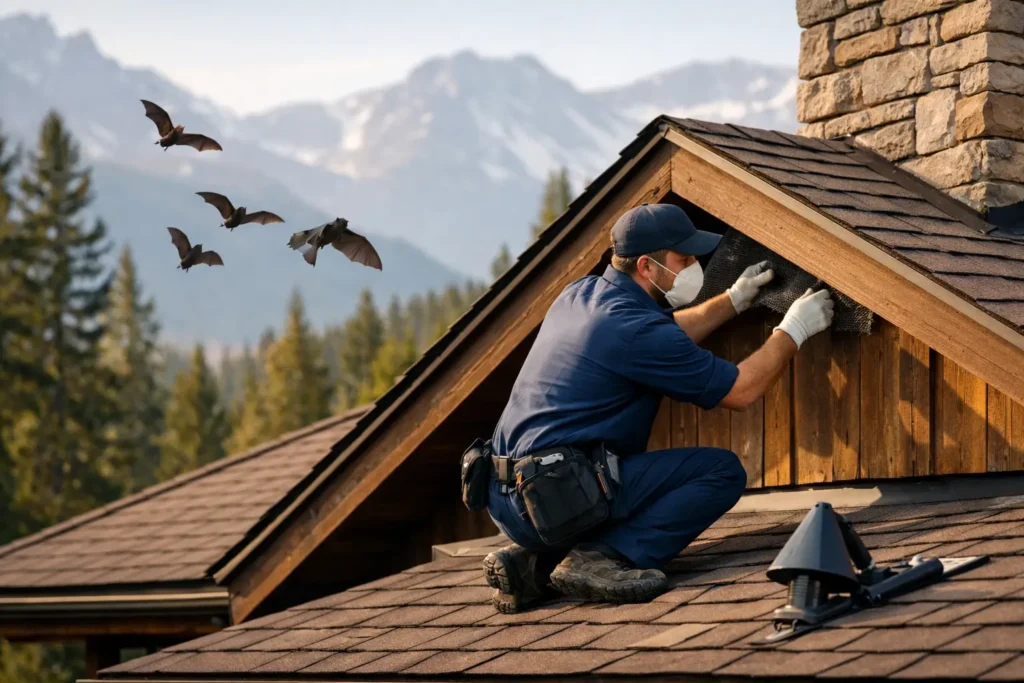
A scratching sound in the attic at dusk is easy to ignore once. By the third night, most homeowners know something is wrong. In mountain communities, that often points to a bat issue, and the right bat exclusion service is the difference between a temporary fix and a home that stays protected.
Bats are a valuable part of the local environment. They help control insects and play an important role in the ecosystem around Big Bear, Lake Arrowhead, Running Springs, and nearby communities. But when they move into an attic, soffit, chimney gap, or roofline void, they bring health concerns, staining, odor, and ongoing contamination from droppings and urine. That is where humane exclusion matters.
What a bat exclusion service actually does
A professional bat exclusion service is not the same as trapping or extermination. With bats, the goal is to remove them without harming them and to make sure they cannot get back inside. That usually starts with a detailed inspection of the structure, because bats do not need a large opening. A gap along fascia boards, a loose vent screen, or a narrow space near roofing materials can be enough.
Once entry and exit points are identified, the process focuses on controlled removal. One-way exclusion devices are placed over the active exits so bats can leave but not re-enter. Then the rest of the potential access points are sealed. After the colony has cleared, the temporary devices are removed and the final repairs are completed.
That sounds simple on paper, but real properties are rarely simple. A cabin with aging wood trim, a vacation rental with multiple roof transitions, or a commercial building with high gables can all present different challenges. Good exclusion work depends on reading the structure correctly the first time.
Why mountain properties get bat problems
Homes and buildings in wooded, high-altitude areas naturally create good shelter for bats. Rooflines offer warmth. Attics stay dry. Small construction gaps are common, especially on older homes that have seen snow, wind, and seasonal expansion.
In places like Big Bear City, Crestline, Fawnskin, and Twin Peaks, wildlife pressure is part of property ownership. Bats are not looking to cause damage in the way rodents do, but once they settle in, the consequences can still be serious. Guano buildup can stain insulation and wood surfaces, create strong odor, and support fungal growth. If the colony remains in place, the mess grows quickly.
There is also the issue of timing. Bat activity changes by season, and humane removal is not always a same-day seal-up job. In maternity periods, when flightless young may be present, exclusion timing has to be handled carefully. If you block access at the wrong moment, the result can be trapped pups inside the structure, dead animals in walls, and a much larger sanitation problem. It depends on species, season, and site conditions, which is why local knowledge matters.
Signs you may need bat exclusion service
Most people never actually see the bats at first. What they notice is what bats leave behind or how they behave around the building. A faint chirping in the walls or attic near sunset is common. So is a musty smell that gets worse in enclosed upper areas.
You may also see dark staining near roof gaps or vents where oils from bat fur have marked the entry point. Small droppings below those areas are another clue. If bats are exiting at dusk, they often appear in quick, darting flight patterns near the same section of roofline night after night.
If you find a bat inside a living space, especially a bedroom, the response should be cautious and immediate. Not every indoor bat means you have a colony, but it always deserves professional attention. The priority is safety first, then finding out whether the animal entered accidentally or from an established interior roost.
Why do-it-yourself sealing usually fails
The biggest mistake property owners make is closing one visible hole and assuming the problem is solved. Bats are experts at finding secondary access points, and most structures have more of them than owners realize. If the active exit is sealed without a full inspection, bats may end up deeper inside the building or shift to another gap you did not know existed.
The second problem is incomplete cleanup. Even after the bats are out, the contamination remains. Guano and urine can continue to affect air quality, attract insects, and damage materials. A real solution addresses both exclusion and the conditions left behind.
There is also the legal and ethical side. Bats are protected in many situations, and removal methods should reflect that. Humane exclusion is not only the responsible approach, it is often the only appropriate one.
What to expect from a professional bat exclusion service
The process should begin with a hands-on inspection, not a guess from a phone description. A trained technician looks for active exits, staining, guano deposits, nesting zones, structural gaps, and signs of other wildlife pressure. On some properties, more than one species may be using the same structure at different points.
After inspection, the work plan should explain the timing, the exclusion method, and what repairs are needed. This is where experience shows. Not every gap should be sealed on day one, and not every material holds up the same way in mountain weather. Durable exclusion work needs to account for snow load, temperature shifts, and long-term wear.
A complete service may also include guano cleanup, disinfection, odor treatment, and replacement of damaged insulation or soiled materials. If the infestation has gone on for a while, the cleanup can be just as important as the removal. Getting the bats out is only part of restoring the property.
Bat exclusion service and long-term prevention
The best exclusion work solves the current problem and reduces the chance of another one next season. That means looking beyond the main bat entry point. Roof intersections, attic vents, ridge caps, chimney flashing, siding transitions, and eave gaps all need attention.
On homes and cabins in the mountains, prevention is especially important because many properties sit vacant part of the year. A seasonal home or short-term rental can give wildlife a quiet opening to move in before anyone notices. By the time guests hear scratching overhead, the colony may have been established for weeks.
Long-term prevention also depends on maintenance. Even excellent repair work can be compromised if roofing materials loosen, screens tear, or trim boards pull away over time. A property that has had bats once is worth keeping an eye on, especially before peak warm-weather activity.
Humane removal matters
A tough approach to nuisance wildlife does not have to mean a harmful one. Humane bat exclusion protects your property while respecting the role bats play outdoors. That balance matters in mountain communities where people live close to nature and want practical solutions without unnecessary harm.
For companies that take eco-friendly work seriously, the goal is clear: remove the conflict, protect the structure, and let the animal continue living where it belongs. That is a better outcome for homeowners, businesses, and the surrounding environment.
Outbackzack approaches bat issues with that standard in mind. The work is direct, effective, and built for local conditions, but the method stays rooted in responsible wildlife removal rather than quick extermination tactics.
When to call for help
If you suspect bats in your attic, walls, chimney area, or roofline, it is smart to act early. Small colonies become larger ones. Light contamination turns into major cleanup. And a problem that might have been solved with targeted exclusion can become a repair project if it is left alone too long.
The right time to call is not after you have tried foam, wire mesh, or a hardware-store fix. It is when you first notice activity and want to protect both the building and the wildlife involved. A proper inspection can tell you what is happening, what season-specific limits apply, and what it will take to close the structure the right way.
If you own a home, rental, lodge, shop, or other property in the mountain communities, bat control is not just about getting animals out. It is about keeping your building clean, safe, and secure in a region where wildlife will always test the weak spots. A careful, humane exclusion plan gives you a way to solve the problem without creating a worse one.