
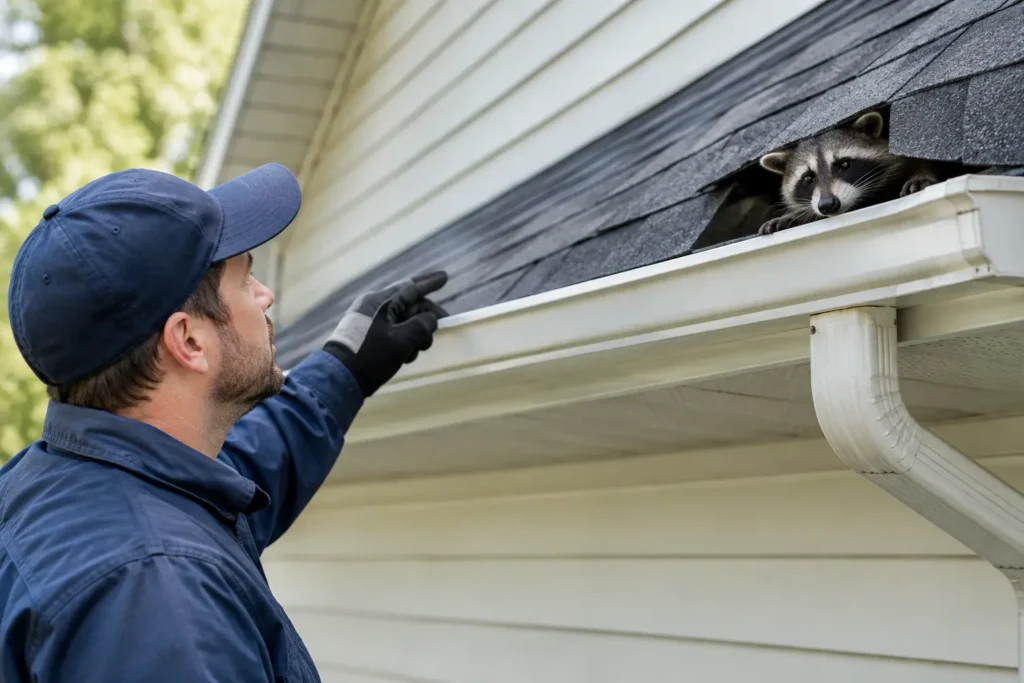
A raccoon in an attic rarely arrives quietly. You may hear heavy footsteps after dark, scratching above the ceiling, or a thump near the soffit that is too loud to be a mouse. To identify raccoon entry points before damage gets worse, start outside and work carefully around the roofline, vents, crawlspace, and any area where your home meets the forest.
For Big Bear, Lake Arrowhead, Running Springs, and other mountain communities, this matters especially in fall, winter, and spring. Cabins, vacation rentals, and homes bordered by pine trees give raccoons shelter from weather and easy access to roof structures. Finding the opening is only part of the job. The real goal is to confirm whether the opening is active, make sure no animal is trapped inside, and complete repairs that hold up to future wildlife pressure.
Why raccoon entry points are easy to miss
Raccoons are powerful, clever climbers. They do not need a large, obvious hole to begin exploring a structure. A loose vent cover, lifted roof edge, weak soffit panel, or small gap around a utility line can become an opening once a raccoon starts pulling and chewing.
Their damage often looks different from normal wear. Wind may bend a screen or loosen a shingle, but raccoon damage is usually rough, concentrated, and forceful. You may see torn metal mesh, splintered wood, claw marks, pulled insulation, or a vent cover bent outward. An opening that looks only a few inches wide can be large enough for a raccoon to widen and use repeatedly.
Do not assume the first damaged spot is the only one. A raccoon may use one opening as a main entrance while testing weak areas elsewhere. A full inspection should look for existing access and future access points.
How to identify raccoon entry points around your property
Begin your inspection from the ground in daylight. Binoculars can help you examine upper roof areas without climbing onto a steep, wet, or snow-covered mountain roof. If conditions are unsafe, keep your feet on the ground and call a wildlife removal professional.
Check roof edges, soffits, and fascia boards
The roofline is one of the most common access routes. Look beneath eaves for gaps where soffit panels meet the fascia board or exterior wall. Raccoons may pull down loose soffit material, especially where moisture has softened the wood or a previous repair was not secured properly.
Pay close attention to corners and sections behind gutters. Dark staining, hanging insulation, fresh wood splinters, or a visible opening under the eave can all point to attic access. On cabins with older construction, seasonal snow, ice, and wind can create small weaknesses that wildlife quickly finds.
Inspect attic, roof, and gable vents
Vents are designed to move air, not keep out a determined raccoon. Check gable vents, roof vents, turbine vents, and attic louvers for torn screens, missing covers, bent louvers, or gaps around the frame. A raccoon can rip through lightweight plastic or weak screening, then enlarge the opening.
From inside the attic, look for daylight around vent openings, disturbed insulation, droppings, and compressed pathways through insulation. Avoid entering a contaminated attic without proper protective equipment. Raccoon waste can carry parasites and other health hazards, and insulation may conceal damaged wiring or unstable framing.
Look around chimneys and roof transitions
An uncapped chimney can attract wildlife seeking a dark, protected space. Raccoons may also access gaps where flashing meets the chimney, where two roof planes connect, or where an addition joins the original home. These areas are often difficult to see from ground level but deserve professional attention when you hear activity above a fireplace, ceiling, or upper wall.
A chimney cap is not a decorative extra. It should be properly fitted, durable, and installed without blocking safe ventilation. Never close off a chimney if you suspect an animal is inside.
Examine crawlspaces, decks, and lower-level gaps
Not every raccoon enters through the roof. Raised cabins, crawlspaces, shed foundations, deck enclosures, and damaged lattice can offer ground-level access. Check for torn screens, displaced skirting, soil pushed aside near a foundation opening, and muddy paw prints around vents or access doors.
Raccoons commonly use crawlspaces for shelter, particularly when snow and cold reduce natural den sites. A crawlspace issue can lead to damaged ductwork, torn insulation, contaminated vapor barriers, and odors that move into living areas.
Follow the travel routes, not just the holes
A raccoon entry point often has a clear approach route. Look for branches touching or hanging over the roof, stacked firewood beside the house, dense shrubs against the siding, or a fence that creates an easy path to a deck or roof. These conditions do not prove a raccoon is inside, but they make access easier.
Trimming branches away from structures and moving stored materials away from exterior walls can reduce repeat visits. The right clearance depends on the property and surrounding terrain. In wooded mountain neighborhoods, removing every nearby tree is neither realistic nor necessary. The focus should be on reducing direct routes and securing the building itself.
Signs an opening is active
An old hole and an active den require different responses. Fresh damage, new debris below an opening, mud smears, paw prints, and repeated nighttime noise are strong signs of current activity. You may also notice a musky odor near a vent, ceiling, crawlspace, or exterior wall.
Check the area from a safe distance around dusk and again near dawn. Raccoons are usually most active at night, although a daytime sighting does not automatically mean the animal is sick or aggressive. Do not stand beneath an opening, shine lights into a den, poke at it, or try to force an animal out.
If you hear chirping, chittering, or multiple animals inside during spring or early summer, there may be a mother with young. This changes the removal plan. Sealing the opening too soon can separate a mother from her babies or leave animals trapped inside, creating a more serious odor, sanitation, and property-damage problem.
Do not seal the hole before removal
The most common mistake is covering an opening as soon as it is found. That may keep a raccoon out, but it can also trap one inside. An animal blocked from its usual exit may tear through another section of the roofline, wall, or ceiling to escape.
Effective exclusion follows a sequence: inspect the structure, determine whether the site is active, remove animals humanely, confirm that dependent young are not left behind, and then repair every viable entry point. In some cases, a properly installed one-way exclusion device can allow an adult raccoon to leave without re-entering. It should only be used after a professional assessment of the animal, the season, and the structure.
Store pet food indoors, secure trash, and do not feed wildlife while the issue is being addressed. Food sources can keep raccoons returning to a property even after repairs are complete.
When professional raccoon exclusion is the safer choice
Call for help promptly if you see an opening at the roofline, hear activity in an attic or wall, smell strong odors, find droppings, or suspect young animals are present. Professional wildlife removal is also the better choice for steep roofs, second-story vents, chimney access, and crawlspaces with contamination.
Outbackzack provides humane raccoon removal, exclusion work, block-out repairs, cleanup, and disinfection for mountain properties. The right repair is more than a patch over visible damage. It should use materials that resist pulling and chewing, fit the structure correctly, and address nearby weak points that could become the next entry route.
A quiet attic and a secure roofline start with a careful inspection. If you suspect raccoon activity, protect your home without putting wildlife or your family at risk: have the entry points assessed, the animals handled humanely, and the structure sealed only when it is safe to do so.