A raccoon may leave an attic quietly, but the damage rarely leaves with it. Torn insulation, compressed nesting material, urine staining, droppings, and damaged ductwork can turn a hidden space into a health and property concern. Proper cleanup after raccoon attic damage protects the people using the building, preserves its structure, and helps prevent another wildlife problem from starting at the same entry point.
For homes, cabins, vacation rentals, and commercial properties in Big Bear, Lake Arrowhead, Running Springs, and nearby mountain communities, the right response is not simply sweeping out the attic. Raccoon cleanup is a complete remediation process: confirm the animals are gone, remove contaminated material safely, sanitize affected surfaces, repair damage, and seal the routes raccoons used to get inside.
Start Cleanup Only After Humane Removal Is Complete
The first rule is simple: do not close an attic opening or begin major cleanup until you know every raccoon is out. Adult raccoons commonly enter attics to shelter or raise young. If babies are present, sealing the mother outside creates a different problem – distressed animals may damage roofing, soffits, vents, or siding as they try to return.
A professional inspection identifies the active entry points and checks for signs of a den, including nesting materials, vocalizations, tracks, and concentrated droppings. Humane removal should account for the season, the animal’s behavior, and whether dependent young are present. Once the attic is confirmed inactive, exclusion work can begin.
This step matters because cleanup without prevention is temporary. A raccoon that finds an open roof vent, loose fascia board, uncapped chimney, or broken soffit may return to the same warm, familiar space the next night.
Why Raccoon Attic Waste Requires Care
Raccoon waste is not ordinary household debris. Urine can soak into insulation, framing, drywall, and stored belongings. Droppings may carry bacteria and parasites, and dried fecal material can become a contamination concern when it is disturbed. A raccoon may also bring in food scraps, soil, leaves, and nesting materials that attract insects and create persistent odors.
The degree of contamination depends on how long the animals were present and how much access they had. A single raccoon that briefly sheltered near an opening may leave limited damage. A mother and litter that occupied an attic for weeks can contaminate a broad area, flatten insulation, chew wires, and leave strong odors that travel into living spaces.
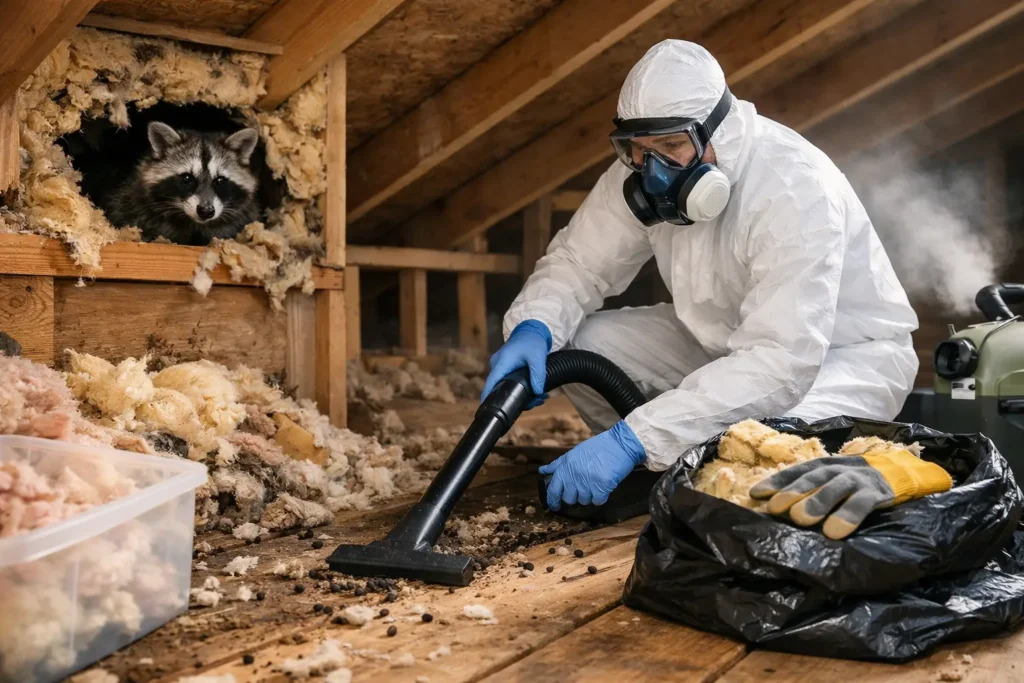
Do not dry-sweep, vacuum, or use a leaf blower on droppings and nesting debris. Those methods can spread contaminated dust. Homeowners should also avoid handling waste without appropriate protective equipment, especially in tight, poorly ventilated attic areas. If there is extensive waste, wet insulation, a strong odor, or possible duct damage, professional remediation is usually the safer choice.
What Professional Cleanup After Raccoon Attic Damage Includes
A thorough cleanup begins with an assessment of the attic, not a one-size-fits-all service. The technician should identify contaminated insulation, evaluate framing and sheathing, inspect electrical and HVAC components, and document structural entry points that need repair.
Removal of Contaminated Materials
Soiled insulation often needs to be removed rather than deodorized. Fiberglass and cellulose can hold urine and fecal contamination deep below the surface, where a surface treatment cannot reach. Nesting material, food waste, and heavily contaminated stored items should also be bagged and removed using controlled procedures.
Insulation removal is especially valuable when odor has entered bedrooms, hallways, or rental living areas below the attic. Replacing damaged insulation can improve both indoor comfort and energy efficiency after the wildlife issue is resolved.
Targeted Cleaning and Disinfection
After debris is removed, affected hard surfaces can be cleaned and treated with an appropriate disinfectant. This may include attic framing, decking, accessible surfaces, and areas around the former den site. The objective is to reduce contamination and odor at the source, not cover it with fragrance.
Treatment should be targeted. Not every board in an attic needs the same level of cleaning, and unnecessary chemical use is not the eco-conscious answer. The right method depends on the condition of the materials, the size of the affected area, and whether urine has penetrated porous surfaces.
Odor Control That Addresses the Cause
Raccoon odor is often strongest where urine soaked into insulation or wood. Removing the contaminated material is the primary solution. When odors remain in porous areas, professional odor-control treatments may help neutralize them.
Odor work can be particularly important for vacation rentals and second homes. An attic smell that seems minor during a brief inspection can become obvious after the building is closed up, heated, or occupied by guests. Addressing it correctly protects the property and avoids unpleasant surprises later.
Damage Inspection and Necessary Repairs
Raccoons are powerful animals. They can bend vent covers, tear open weak soffits, pull back roof materials, and enlarge gaps around eaves. Their weight can also damage fragile duct connections or compress insulation around mechanical equipment.
A complete inspection should look beyond the visible den. Check roof vents, gable vents, ridge areas, chimney caps, fascia boards, attic screens, ducts, wiring, and plumbing penetrations. If chewed wiring or damaged HVAC components are found, a qualified electrician or HVAC professional may be needed. Wildlife removal specialists can identify the damage, but specialized building repairs should be handled by the appropriate trade when required.
Exclusion Is the Part That Stops the Repeat Visit
Raccoon removal without exclusion leaves the property vulnerable. The best cleanup plan includes durable block-out repairs after all animals have safely exited. That may involve reinforcing vents, repairing soffits, securing roofline gaps, replacing damaged screening, and closing openings around utility lines or structural transitions.
Materials matter in mountain communities. Snow, wind, sun exposure, tall pines, and seasonal wildlife activity can weaken light-duty repairs quickly. A patch that looks adequate from the ground may fail under a raccoon’s pulling strength or after a winter storm. Repairs should be fitted to the structure and designed to withstand local conditions.
Tree limbs also deserve attention. Trimming branches that provide easy roof access can reduce opportunities for raccoons, squirrels, and other climbing wildlife. It will not replace sealing an opening, but it removes a convenient route to the roofline.
When a DIY Approach Is Not Enough
A homeowner may be able to clean a very small, isolated area after professional removal, provided there is no major contamination and proper safety precautions are used. But attic conditions make DIY work more difficult than it appears. Limited visibility, unstable footing, heat, exposed nails, electrical hazards, and hidden urine damage all raise the stakes.
Professional service is strongly recommended when droppings are widespread, insulation is wet or flattened, young raccoons were present, odors are entering living areas, or the animal damaged building materials. It is also the right call for property managers who need a documented, reliable process before turning over a rental unit or reopening a commercial space.
Protecting Mountain Homes After Raccoon Removal
Once repairs are complete, occasional checks can catch small problems before they become another attic infestation. After high winds, heavy snow, roof work, or tree trimming, inspect visible vents and roofline areas for loose screens, gaps, or shifted materials. Listen for nighttime activity above ceilings and pay attention to new odors, ceiling stains, or insulation debris near vents.
Keep garbage secured, avoid leaving pet food outdoors, and clean up fallen fruit or accessible food sources around the property. These steps will not eliminate wildlife from a wooded community, nor should they. They simply make your building less attractive as a shelter and food stop.
Outbackzack provides humane wildlife removal, attic cleanup, disinfection, exclusion, and block-out repairs for property owners throughout the mountain communities. The goal is to remove the immediate problem responsibly while protecting the building from the next one.
A clean attic should feel like the end of a wildlife issue, not a pause before it starts again. When removal, sanitation, repair, and exclusion are handled together, your property is better prepared for the wildlife that belongs outdoors.