
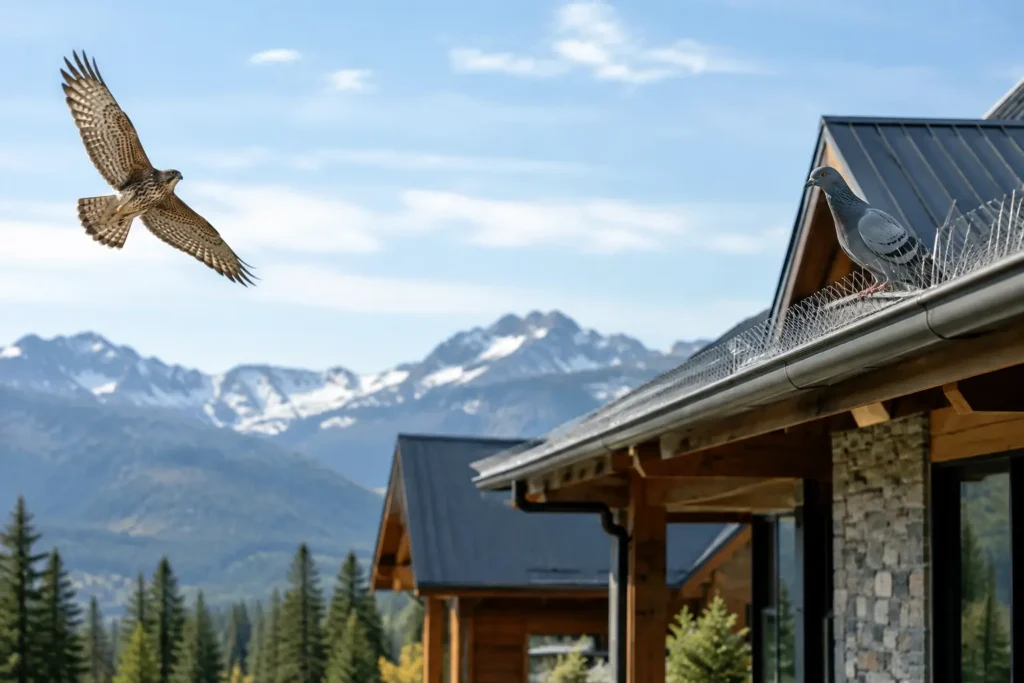
A woodpecker drilling into cedar siding, swallows nesting above a cabin entry, or pigeons gathering under a commercial awning can turn into more than a nuisance quickly. Effective bird control protects the building, the people using it, and the birds themselves by addressing why they chose the property in the first place. In Big Bear and surrounding mountain communities, that means looking beyond the visible nest or droppings and correcting the access points that keep the problem going.
Bird activity changes with the seasons, weather, food availability, and occupancy. A quiet vacation cabin may offer sheltered eaves and undisturbed ledges. A restaurant, retail building, or multifamily property may provide warmth, cover, and reliable food sources. The right response is species-specific, humane, and built around long-term prevention.
Why Birds Become a Property Problem
Birds are a natural part of mountain life, and most belong outdoors where they support the local ecosystem. Problems begin when they nest in vents, roost beneath rooflines, enter attics, peck exterior materials, or leave droppings on walkways and equipment.
Droppings are not simply an appearance issue. They can make decks, stairs, and entryways slippery, stain paint and stone, damage vehicle finishes, and contaminate areas where people live, work, or prepare food. Nesting material can block dryer vents and other openings, creating moisture and fire concerns. On commercial properties, repeated bird activity can also affect customer impressions and increase maintenance demands.
Woodpeckers create a different set of risks. Holes in fascia boards, trim, siding, and wood-framed structures may allow moisture, insects, or other wildlife into the building envelope. Sparrows and starlings can work their way into small gaps around vents and roof intersections. Pigeons often return to the same protected roosting areas unless those spaces are properly excluded.
Bird Control Starts With the Species and the Site
No two bird problems should be treated exactly alike. Swallows may build mud nests beneath eaves. Pigeons may settle on beams, signs, solar equipment, or covered loading areas. Woodpeckers can target certain sections of siding repeatedly. A professional inspection identifies the species, active areas, entry routes, structural damage, and conditions attracting the birds.
Timing matters, especially during nesting season. Many bird species and active nests are protected by federal or state regulations. Removing an occupied nest at the wrong time can be unlawful and can harm dependent young. Humane bird control considers nesting status before work begins and uses legal, appropriate measures to discourage future activity once it is safe to do so.
This is why a quick fix, such as knocking down a nest or filling a hole without inspection, often fails. Birds may rebuild nearby, become trapped inside a structure, or find another vulnerable opening. The goal is not to make a temporary mess disappear. It is to resolve the conditions that made the site attractive.
Common Signs You Need Help
You may hear scratching, chirping, wing movement, or tapping inside walls, ceilings, chimneys, or attic spaces. Other signs include fresh droppings beneath eaves, repeated pecking marks, nesting material around vents, feathers near exterior gaps, and birds flying in and out of the same opening.
For property managers, the pattern may be more visible outside: dirty storefront awnings, blocked drains, recurring nest buildup, damaged signage, or complaints about birds near entries. Addressing activity early usually limits cleanup and repair costs.
The Humane Approach: Remove, Clean, Exclude, Repair
Reliable bird control is a complete service, not a single device or removal visit. The work should begin with a careful assessment, then move through removal or nest management, sanitation, exclusion, and repairs based on the property’s needs.
Where birds have entered a building, humane removal methods are used to allow the animals to exit safely while preventing re-entry. If nesting restrictions apply, the work plan may need to wait until young birds have fledged. That can be frustrating when a nest is over a doorway or vent, but respecting wildlife laws and the birds’ life cycle is part of responsible service.
After activity is resolved, cleanup matters. Old nesting material, feathers, droppings, and contaminated debris should be removed safely. Cleanup and disinfection help restore affected attic, vent, ledge, and exterior areas while reducing odors that may attract other animals.
Exclusion is the lasting protection step. Depending on the building, this may include securing vents with appropriate covers, screening gaps, repairing damaged fascia, closing roofline openings, reinforcing chimney access, or protecting recurring roosting locations. Materials must be installed carefully. An improperly sealed vent can create ventilation issues, while a poorly placed barrier may trap wildlife inside.
Bird-Proofing Mountain Cabins and Vacation Rentals
Mountain cabins are especially vulnerable because they can sit vacant between visits. A small opening that goes unnoticed in fall may become an active nesting site by spring. Snow, wind, tree branches, and seasonal maintenance delays can also create new gaps around rooflines and exterior fixtures.
Check soffits, attic vents, gable openings, chimney caps, dryer vents, and gaps where utilities enter the structure. Look for loose screens, lifted flashing, cracked trim, and holes around roof edges. If you find nesting material or hear bird activity inside, avoid sealing the opening until you know whether birds are still using it.
Vacation-rental owners should pay close attention to guest-facing areas. Droppings on railings, patios, decks, hot tub covers, and entry paths can become a cleanliness and safety issue between turnovers. A prevention plan protects the property’s condition while helping guests feel comfortable from the moment they arrive.
Commercial Bird Control Needs a Maintenance Mindset
For businesses, bird problems can grow fast because large rooflines, awnings, signage, loading areas, and dumpster enclosures provide multiple protected surfaces. One location may need immediate cleanup, while another needs a structural modification to stop birds from returning.
Restaurants, retail properties, offices, storage facilities, and lodging businesses benefit from a clear inspection of both customer-facing and back-of-house areas. Food waste should be managed carefully, standing water should be corrected where possible, and exterior maintenance issues should not be left open for birds to exploit.
The best solution depends on the species, building design, and use of the area. Physical exclusion is often more dependable than visual scare devices, which birds can learn to ignore. Bird deterrents can have a role, but they work best as part of a broader plan that removes access and nesting opportunities.
Avoid DIY Bird Removal Mistakes
Property owners often want to act immediately, particularly when birds are noisy or droppings are accumulating. The wrong approach can create a larger problem. Sealing an active entry hole may trap birds in a wall or attic. Removing a nest without checking its status can violate protections for active nesting birds. Using adhesives, poisons, or harmful traps is not a humane answer and may create legal, environmental, and cleanup concerns.
It is also easy to underestimate contamination. Dry droppings and old nesting debris should not be swept casually into the air. Appropriate protective measures and cleanup practices are necessary, especially in enclosed spaces such as attics, garages, and vents.
If birds are repeatedly returning to the same place, take it as a sign that the structure needs attention. The visible birds are only one part of the issue. Access, shelter, nesting material, and food sources are the other part.
Local Bird Control Built for Mountain Conditions
Big Bear Lake, Big Bear City, Lake Arrowhead, Running Springs, Crestline, Green Valley Lake, Sugarloaf, Fawnskin, Cedar Glen, and Twin Peaks all have their own mix of wooded lots, seasonal homes, heavy snow exposure, and wildlife pressure. Local conditions affect where birds nest and how building materials hold up over time.
Outbackzack approaches bird issues with humane removal, eco-conscious practices, cleanup, exclusion, and practical repair recommendations. The focus is on protecting homes and businesses without treating wildlife as disposable. That means responding firmly to property damage while respecting the role birds play outside the building.
If you see repeated nesting, hear birds inside a wall or vent, notice fresh droppings, or find new woodpecker damage, act before the next nesting cycle makes the repair more complicated. A careful inspection can turn a recurring bird problem into a protected, cleaner property that is far less inviting to unwanted guests.