
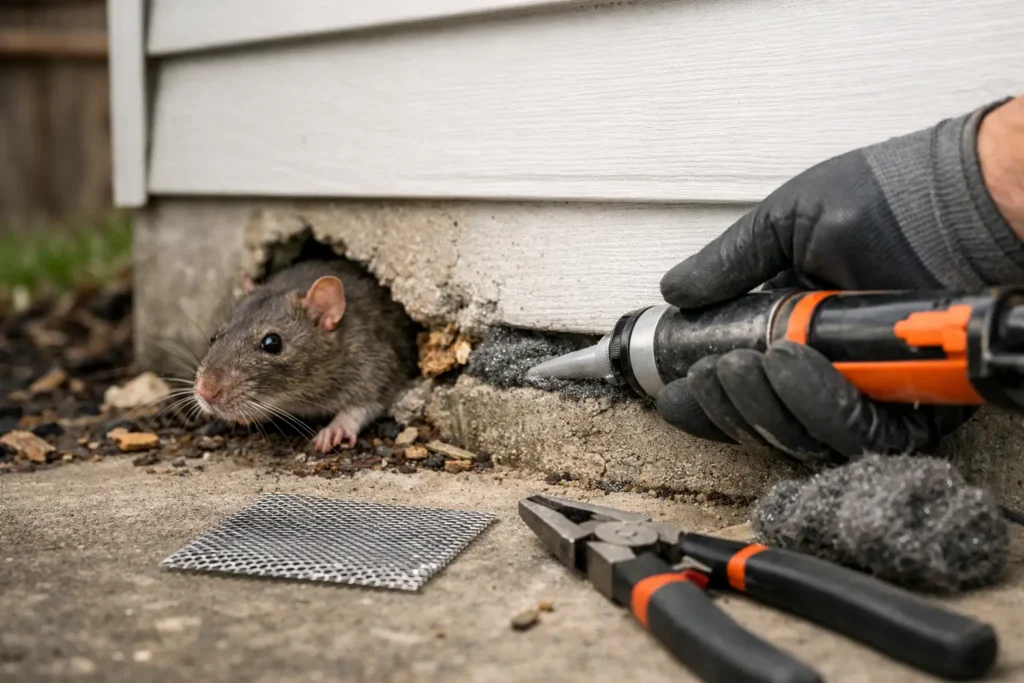
A mouse does not need much room to turn your attic, crawl space, or cabin wall into a nesting site. In mountain communities, that problem gets worse when temperatures drop and rodents start looking for heat, shelter, and steady food. If you are wondering how to seal rodent entry points, the most important thing to know is this: the job only works when you find the full pattern of access, not just the hole you noticed first.
That is where many property owners lose time and money. They seal one gap under a sink, but miss the roof return, the broken vent screen, or the utility line opening behind the water heater. A week later, the scratching comes back. Good exclusion is not about patching random holes. It is about closing the structure in a way that makes sense for the building, the environment, and the animals involved.
Why mountain homes get repeat rodent problems
Homes in Big Bear, Lake Arrowhead, Running Springs, Crestline, and nearby communities deal with conditions that make rodent pressure more persistent than it is in many suburban neighborhoods. Cabins and vacation rentals may sit empty for stretches. Snow, cold nights, wood piles, pine needles, and dense vegetation all create cover near the structure. Older buildings often have more settling, more layered repairs, and more hidden gaps.
That means entry points are rarely limited to one wall. Mice and rats commonly use rooflines, foundation gaps, attic vents, garage corners, plumbing penetrations, crawl space screens, and warped door sweeps. If a property has had previous pest activity, there may also be damage from chewing that widened a small opening into a dependable route.
How to inspect before you seal
Before you start closing openings, slow down and inspect the entire exterior. This part matters because sealing active entry points without understanding where rodents are already nesting can trap odor, contamination, and sometimes live animals inside wall voids or attic spaces. Humane, effective rodent control starts with identifying current activity first.
Walk the structure from top to bottom. Look closely at eaves, fascia boards, roof intersections, attic vents, crawl space vents, utility penetrations, garage door edges, and the joint where the foundation meets siding. Check for greasy rub marks, gnawing, droppings, shredded nesting material, and small trails through insulation or dust. At ground level, pay attention to gaps around pipes and conduit. Up high, focus on places where roofing meets trim or where weather damage has opened seams.
It also helps to think like a rodent. Mice usually exploit very small gaps and can travel through cluttered storage areas, wall voids, and attic insulation with ease. Rats need more space, but they are stronger chewers and often use roof access, overhanging branches, and larger structural defects. Squirrels can create similar damage around roof edges and vents, so species identification matters before repairs begin.
How to seal rodent entry points without making the problem worse
The best way to seal rodent entry points is to match the repair material to the opening. One reason DIY work fails is because people use materials rodents can chew through, push aside, or break down with weather exposure. Expanding foam by itself is a common example. It may fill space, but it is not rodent-proof on its own.
For small gaps around pipes and conduit, use a combination of metal mesh or copper mesh packed tightly into the opening and a durable sealant designed for exterior use. For larger holes, damaged vents, or broken crawl space covers, the repair usually calls for metal flashing, hardware cloth, or proper vent replacement. Around doors, replace worn sweeps and weatherstripping instead of trying to caulk over moving parts.
Wood rot, loose siding, and roofline deterioration should be repaired, not disguised. If rodents are getting in through soft or damaged building materials, surface sealing alone will not hold. They will return to the same weak point and reopen it.
Common entry points homeowners miss
The hole you see is often not the hole they use most. Rodents are opportunistic, and they will test multiple access points around a structure. Some of the most commonly missed areas include gaps under garage doors, attic louvers with torn screens, openings behind AC lines, uncapped utility penetrations, and junctions where deck attachments meet the home.
Another frequent issue in mountain properties is under-eave access. Wind, snow, sun exposure, and age can loosen trim or create narrow voids that are perfect for mice. The same goes for raised foundations and crawl spaces, especially when vent covers are bent or older screen material has rusted away.
Cabins and rental properties also tend to have hidden vulnerabilities around additions, remodels, and patchwork repairs. If one contractor ran a new line through the wall years ago and never properly sealed the penetration, rodents will eventually find it.
Timing matters when sealing rodent access
One of the biggest trade-offs in exclusion work is timing. You want to close the structure quickly, but you also need to avoid sealing animals inside. If there is active movement in the attic, fresh droppings, or visible nesting, direct sealing may not be the first step. In those cases, removal, trapping, or one-way exclusion devices may be needed before final repairs are completed.
This is especially important when the issue may involve more than mice or rats. In mountain communities, squirrels, bats, and other nuisance wildlife can use some of the same weak points. Humane control means confirming what is inside before permanently closing the opening.
A clean seal-up also works better after sanitation and cleanup in contaminated areas. Rodent droppings, urine, and nesting debris leave scent trails that attract future activity. If the odor remains, a sealed home can still draw animals to test the perimeter.
Materials that usually hold up best
Not every repair needs the same approach, but durability matters. In exposed mountain conditions, patch materials need to handle temperature swings, moisture, and snow. Metal-based exclusion materials generally perform better than soft fillers or thin plastic screens.
Good results usually come from using galvanized steel mesh, hardware cloth with the right gauge, sheet metal flashing, mortar or concrete patch for masonry gaps, and exterior-grade sealants for finishing edges. The goal is not just to block a hole. It is to create a finished barrier that rodents cannot chew through and weather cannot quickly break down.
That said, there is a balance. Over-sealing a building without considering ventilation can create moisture issues, especially in attics and crawl spaces. Vents still need to function. They just need proper screening and secure installation.
When a professional exclusion plan makes more sense
Some homes are straightforward. Others have layered rooflines, detached garages, crawl spaces, steep slopes, or years of deferred maintenance. If the structure has multiple suspected entry points, active infestation, contamination, or damage around the roof and attic, a professional inspection usually saves time.
A proper exclusion plan does more than identify holes. It connects the activity inside the structure to the access outside, then prioritizes repairs based on actual rodent behavior. That is a different service than simple handyman patching. It is also safer when droppings, urine, or damaged insulation are involved.
For homeowners and property managers in the San Bernardino mountain communities, local knowledge matters. Seasonal wildlife pressure, cabin construction styles, snow exposure, and wooded lots all change how rodent proofing should be handled. Companies like Outbackzack approach this with humane removal, block-out repairs, cleanup, and long-term prevention in mind, not just a quick seal and a bill.
What to do after the home is sealed
Once entry points are closed, keep pressure off the structure. Store food in sealed containers, clean pet food areas, reduce clutter in garages and utility rooms, and trim vegetation away from the home where possible. Move firewood off the structure and avoid stacking debris near crawl space openings or foundation walls.
Then monitor. Listen for scratching, check for fresh droppings, and inspect repaired areas after storms or seasonal weather shifts. A good exclusion job can last, but buildings move, materials age, and new weak points can appear over time.
If you want real protection, think of rodent proofing as part repair, part prevention. Sealing works best when it is done thoroughly, with the right materials, at the right time, and with respect for the animals and the environment. When that happens, your home gets quieter, cleaner, and a lot harder for unwanted guests to enter.