
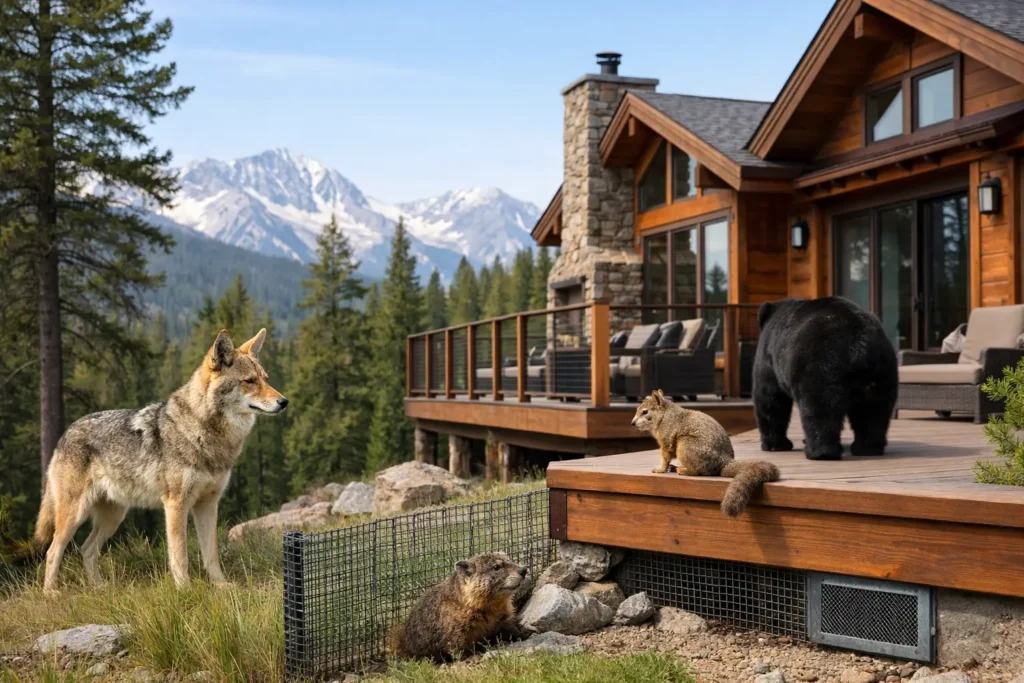
A mountain home can look sealed up tight from the driveway and still have half a dozen animal entry points hiding under the eaves, around the roofline, or behind the crawl space skirting. That is why wildlife exclusion for mountain homes matters so much in places like Big Bear, Lake Arrowhead, Running Springs, and Crestline. In high-country communities, the combination of pine cover, colder weather, and seasonal vacancy makes cabins and full-time residences especially attractive to rodents, bats, birds, raccoons, and squirrels looking for shelter.
Exclusion is not the same thing as chasing animals out and hoping they do not come back. It is the hands-on process of finding how wildlife is getting in, removing the current problem humanely, and closing those access points with materials and repairs built for mountain conditions. If that last part is skipped, the problem often returns fast.
Why wildlife pressure is different in mountain communities
Mountain properties deal with a different set of conditions than homes in dense suburban neighborhoods. Snow, ice, wind, tall trees, wood siding, raised foundations, and aging roof transitions all create weak spots. Even well-built homes shift over time, and small openings can turn into reliable animal entry routes.
Seasonal occupancy adds another layer. A vacation cabin that sits quiet for part of the week or part of the season gives wildlife time to explore. Mice can move in under a deck or into a wall void without much interruption. Bats may find a gap under flashing. Swallows and sparrows can return to familiar nesting spots year after year if those areas are not properly blocked after removal.
There is also the simple fact that mountain homes sit closer to natural habitat. That is part of the appeal, but it means you are sharing space with animals that are already established nearby. Humane exclusion respects that reality. The goal is not to punish wildlife for being wildlife. The goal is to keep your home from becoming part of their habitat.
What wildlife exclusion for mountain homes actually includes
A proper exclusion job starts with inspection, not guesswork. The technician looks for rub marks, droppings, nesting material, chewing, staining, tracks, and entry gaps. On mountain homes, that often means checking roof returns, attic vents, chimney intersections, fascia gaps, crawl space vents, deck voids, garage corners, and utility penetrations.
Once the species and activity are confirmed, removal has to be handled in a way that fits both the animal and the structure. That can mean one-way devices for certain situations, humane trapping where appropriate, and timing work carefully during nesting or maternity seasons. This is where experience matters. Sealing a structure before the animals are fully out can create odor, damage, and animal welfare problems.
After removal comes the block-out phase. This is the part homeowners often underestimate. Foam alone is rarely enough in active wildlife zones. Mountain homes need durable repairs and exclusion materials that stand up to chewing, weather, and repeated pressure. Depending on the location, that may involve screening, metal flashing, vent protection, hardware cloth, sealants used with reinforcement, or structural repair to damaged trim and siding.
Cleanup also matters more than many people realize. If rodents, bats, or birds have been inside, droppings and nesting debris can contaminate insulation and air spaces. Leaving that behind can keep odors in place and may continue to attract activity. A complete job addresses the access point and the mess the animals leave with it.
The most common problem areas on mountain homes
Attics are high on the list because they are warm, quiet, and protected from predators. Small roofline gaps can give mice, rats, squirrels, and even bats a way in. If you hear scratching after dark or just before sunrise, the attic is one of the first places to inspect.
Crawl spaces are another common target, especially on homes with raised foundations. Loose vent screens, gaps around pipes, and broken skirting can invite rodents and skunks. Once animals start using that space regularly, odors and contamination can build up fast.
Chimneys, gable vents, and eaves are frequent bird and bat trouble spots. Woodpeckers can damage siding and trim while searching for insects or creating nest cavities. Swallows often build mud nests on protected exterior surfaces. Raccoons are known for exploiting weak roof edges or torn vent covers when they want a denning site.
Garages and storage areas also deserve attention, especially in colder months. Pet food, trash, seed, and stored materials create shelter and a food source in one place. A garage door that does not sit flush to the slab can be enough to start a rodent problem.
Why quick fixes usually fail
A lot of exclusion failures come from treating the obvious hole and missing the full pattern of access. If one vent gets screened but the roof return on the other side of the house is still open, the animals simply reroute. The same thing happens when damaged areas are patched with materials that cannot handle chewing or weather exposure.
Another common problem is skipping species-specific strategy. Bat exclusion is not the same as rodent proofing. Bird control around eaves is different from keeping raccoons out of an attic. Good exclusion work depends on understanding who is using the structure, when they are active, and how they are getting in.
There is also a timing issue. In mountain communities, wildlife pressure changes with temperature and season. When colder weather hits, indoor shelter becomes more attractive. If exclusion is delayed until a minor issue becomes a full infestation, repairs are usually more involved and cleanup costs climb.
Humane exclusion protects your home and the surrounding environment
For mountain homeowners, humane wildlife control is not just a feel-good approach. It is the practical one. Killing or improperly trapping animals without solving the entry issue leaves the structure vulnerable. New animals move into the same opening, and the cycle starts again.
Humane exclusion focuses on getting animals out safely, then making the home inaccessible going forward. That approach protects your property while reducing unnecessary harm to local wildlife populations. In communities surrounded by forest and open land, that balance matters.
It also matters for your peace of mind. Most homeowners do not want animals suffering inside walls or young wildlife separated from a den because someone rushed the process. Professional exclusion work accounts for those risks and chooses a method that is effective without being reckless.
When to schedule an inspection
The right time is usually earlier than people think. You do not need to wait until an animal is running across the living room. Scratching in the attic, droppings in the garage, torn vent screens, strong odors in a crawl space, nesting around eaves, or grease marks near a gap are all reasons to act.
Preventive inspections are especially worthwhile before winter, after storms, and before opening a seasonal cabin for heavier use. Snow load, fallen branches, and temperature swings can create new entry points in a single season. A home that was secure last year may not be secure now.
For vacation rentals and commercial properties, regular inspections can prevent bad reviews, lost bookings, and safety complaints. Guests notice droppings, odors, and night noise quickly. Fixing those issues before occupancy is always easier than reacting mid-stay.
What mountain homeowners should expect from a real exclusion service
A real service should do more than set traps and leave. You should expect a detailed inspection, a clear explanation of what species are involved, where entry is happening, what repairs are needed, and what cleanup may be required. You should also expect humane methods and materials chosen for long-term performance, not just a temporary patch.
Local experience matters here. Homes in Big Bear, Fawnskin, Sugarloaf, Twin Peaks, Cedar Glen, and nearby mountain communities face similar wildlife patterns, but each structure has its own weak points. A company that understands how animals behave in these elevations and wooded neighborhoods can usually spot vulnerabilities faster and recommend more durable solutions. That is a big part of how Outbackzack approaches mountain property protection.
The best exclusion work is not flashy. It is quiet, thorough, and built to hold up through weather, wildlife pressure, and the wear that comes with mountain living. If your home has become a target for rodents, bats, birds, raccoons, or squirrels, the smartest move is not to wait for more damage. Seal the invitation, protect the structure, and let wildlife stay where it belongs – outside.