
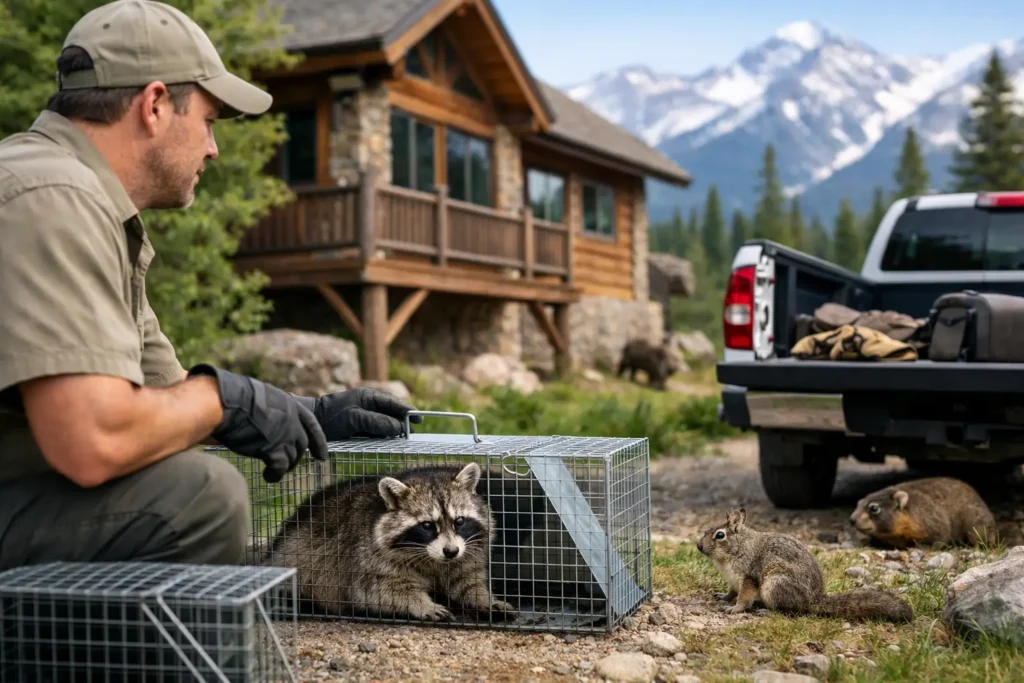
A scratching sound in the attic at 2 a.m. feels different in the mountains. Around Big Bear, Lake Arrowhead, Running Springs, and nearby communities, homes sit closer to trees, crawl spaces stay colder, and wildlife pressure is part of daily life. This humane animal removal guide is built for property owners who need a clear, responsible way to handle nuisance animals without making the problem worse.
The first thing to know is that humane removal is not the same as ignoring the issue. If raccoons are tearing into vents, bats are roosting in the eaves, squirrels are chewing wiring, or rats are contaminating insulation, the damage can spread fast. Humane removal means solving the problem in a way that protects people, protects the structure, and respects the animal as much as the situation allows.
What a humane animal removal guide should actually cover
A real humane animal removal guide goes beyond trapping. It starts with identifying what is on the property, how it got in, and whether young animals or nesting activity are involved. It also looks at contamination, structural weaknesses, and what conditions are attracting wildlife in the first place.
That matters because the wrong response often creates a second problem. Seal an entry point too early and you may trap animals inside a wall or attic. Use a one-size-fits-all trap and you may injure a non-target species. Remove an animal but skip sanitation and exclusion, and the next one may move in within days.
Humane work is effective work. It is built around inspection, species-specific removal methods, safe cleanup, and permanent block-out repairs.
Start with the species, not the symptom
Chewed soffits, droppings in the garage, torn ducting, and nesting debris can look similar from one animal to another. The details matter. Rats and mice leave different signs than squirrels. Bats require a different legal and humane approach than raccoons or skunks. Birds nesting under eaves create a different sanitation issue than gophers damaging the yard.
In mountain communities, season and elevation also change the picture. Colder weather pushes rodents indoors. Spring can mean active nests. Vacation homes and cabins may sit empty long enough for wildlife to settle in before anyone notices. A property manager handling short-term rentals has different timing pressures than a full-time homeowner, but the removal strategy still starts with proper identification.
If you are guessing, you are already behind. Humane removal depends on using the right method for the right animal in the right part of the structure.
Inspection is where long-term results begin
The inspection tells you whether the problem is active, how severe it is, and what needs to happen first. In many cases, the visible entry hole is only part of the story. Animals often use secondary gaps at rooflines, vents, crawl space screens, fascia boards, chimney intersections, and utility penetrations.
A good inspection also checks for safety issues. Rodent droppings, urine contamination, nesting material, and damaged insulation are not cosmetic concerns. They affect indoor air quality, cleanliness, and in some cases fire risk if wiring has been chewed. If bats or birds are involved, guano buildup may require careful handling and disinfection.
For mountain homes, weather exposure can turn small weaknesses into major access points. Snow load, freeze-thaw cycles, aging roof materials, and wood deterioration all make exclusion work more important. The removal is only one phase. The structure has to be hardened afterward.
Humane removal methods depend on the animal
There is no single humane method that fits every wildlife call. For some animals, one-way doors or eviction devices allow them to exit and prevent reentry. For others, live trapping and relocation rules may apply, depending on species and local regulations. In nesting situations, timing matters because separating mothers from young can create both welfare issues and odor problems inside the building.
Rodents are a little different. Humane rodent control still needs to be practical, because mice and rats reproduce quickly and carry contamination risks. In those cases, the humane standard is not to let an infestation continue unchecked. It is to use the most targeted control plan possible, reduce suffering, and pair removal with proofing and sanitation so the cycle stops.
Bird removal also requires species-specific handling. Swallows, pigeons, sparrows, and woodpeckers each create different challenges and may be protected or restricted in different ways. What works for a pigeon roost does not work for a woodpecker damaging siding. Humane bird control usually combines deterrence, exclusion, nest management where allowed, and cleanup.
Exclusion is the part most people skip
Here is where many do-it-yourself efforts fail. People remove the animal they can see, then leave behind the exact opening that allowed the entry. A week later, the scratching starts again.
Exclusion means sealing, screening, reinforcing, or repairing the vulnerable points animals use to get in. That can include attic vents, crawl space access points, roof returns, gable gaps, chimney caps, siding breaks, and damaged fascia. It may also involve rodent proofing around foundations, utility lines, and garage door edges.
A humane animal removal guide that does not emphasize exclusion is incomplete. Humane work is not just about how the animal leaves. It is about preventing repeated stress for both the property owner and the wildlife population around the structure.
Cleanup and disinfection are part of humane removal
Once animals have been removed, the site still needs attention. Droppings, urine, nesting debris, feathers, food waste, and dead organic material can continue to cause odor and health concerns. They also attract new animals and insects.
This is especially important in attics, crawl spaces, wall voids, and commercial storage areas. If contamination is left in place, your property may still smell occupied to wildlife. Safe cleanup and disinfection help reset the space. In severe rodent or bird cases, insulation replacement may also be necessary.
For families, renters, guests, and employees, this part matters as much as the removal itself. A clean, sealed property is safer and easier to keep pest-free.
When DIY makes sense, and when it does not
Some prevention steps are reasonable for property owners. Securing trash, trimming branches away from the roof, storing pet food indoors, screening simple openings, and watching for fresh damage can all help. Early action is always better than waiting until an attic is fully occupied.
But once animals are inside the structure, DIY gets riskier. You may be dealing with bites, scratches, disease exposure, hidden young, aggressive behavior, or legal restrictions tied to certain species. You can also force animals deeper into walls or drive them into living spaces if you block entries too soon.
For cabins, second homes, and vacation rentals, speed matters even more. A property sitting vacant for days or weeks can go from minor activity to major contamination before the next visit. In those cases, professional inspection, removal, cleanup, and repair are usually the most cost-effective path.
Why local mountain experience matters
Wildlife pressure in Southern California mountain communities is not the same as in dense urban areas. Homes back up to forest edges. Snow, cold nights, and seasonal food shifts change animal behavior. Roof design, under-deck spaces, sheds, and crawl spaces all create easy shelter if they are not protected.
That is why local knowledge matters. A team that regularly works in Big Bear Lake, Big Bear City, Crestline, Cedar Glen, Twin Peaks, Fawnskin, Sugarloaf, Green Valley Lake, Running Springs, and Lake Arrowhead understands how these properties are built and how nuisance animals use them. Humane removal has to match the environment.
Outbackzack approaches these jobs with that local mindset – solve the active problem, clean the mess, and close the structure so it stays protected.
Choosing the right response for your property
If you hear movement overhead, smell strong animal odor, notice droppings, or see wildlife entering at dusk or dawn, do not wait for a larger problem to prove itself. The right response depends on the species, the season, and the building, but the goal stays the same. Remove the animals responsibly, protect the people inside, and make sure the property is not left open for the next round.
That is the real value of a humane approach. It is not softer. It is smarter, cleaner, and more durable.
When wildlife moves into a home or commercial building, the best outcome is not just getting through tonight without noise. It is restoring the space so you can trust it again.