
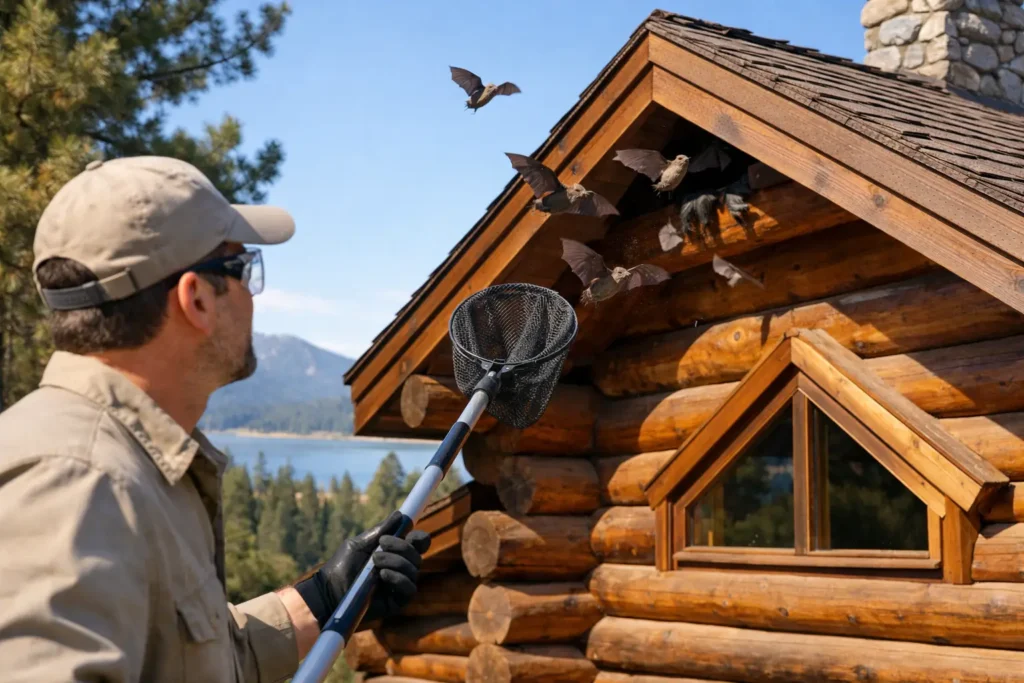
A scratching sound in the attic at dusk is easy to ignore once. By the third night, especially in Big Bear where cabins sit close to trees and rooflines offer perfect entry points, it becomes a real property issue. Bat removal Big Bear homeowners need is not about panic or poison. It is about finding where bats got in, removing them humanely, cleaning up the contamination they leave behind, and sealing the structure so the problem does not come back next season.
Why bat problems are common in Big Bear
Mountain communities give bats exactly what they look for – sheltered roosting spaces, nearby water, insect activity, and plenty of quiet structures. In Big Bear Lake, Big Bear City, Sugarloaf, Fawnskin, and surrounding areas, homes and cabins often have architectural gaps that go unnoticed for years. Roof intersections, attic vents, fascia gaps, chimney voids, and lifted flashing can all become access points.
That matters because bats do not need a wide opening to get inside. A small construction gap can be enough. Seasonal cabins and vacation rentals are especially vulnerable because minor activity can continue for weeks before anyone notices. By the time there is a strong odor, staining near an entry hole, or droppings in the attic, the colony may have been there for a while.
Bat removal in Big Bear is not a basic pest job
Bats are different from rodents and different from insects. They are protected wildlife in many situations, and humane removal matters for both legal and ethical reasons. A quick fix that ignores timing or excludes young bats inside the structure can create a much larger problem. Dead bats in walls, trapped pups in attics, and repeat intrusions usually trace back to bad removal methods.
That is why proper bat removal in Big Bear starts with inspection and strategy, not shortcuts. The goal is not to exterminate wildlife. The goal is to move bats out safely while protecting the people inside the property and the long-term condition of the building.
Signs you may need bat removal Big Bear service
Some signs are obvious, and some are easy to confuse with birds or rodents. If you see bats flying from the roofline around sunset, that is one of the clearest indicators. Guano below an eave, dark rub marks near a small opening, or chirping and fluttering sounds in the walls or attic can also point to bat activity.
Inside the building, the warning signs often become more serious. A sharp ammonia-like odor from accumulated droppings is common in larger infestations. Stains on insulation, contaminated attic spaces, and insects attracted to guano can follow. In commercial properties and vacation rentals, even a small amount of visible contamination can quickly become a health and reputation issue.
If a bat appears inside the living space, that changes the urgency. One bat in a room does not always mean a full colony, but it should never be dismissed. It may indicate an active entry point between the attic and interior spaces, and it raises safety concerns that require careful handling.
What humane bat removal should actually include
A real bat removal service is a process, not a one-visit spray treatment. First comes the inspection. That means identifying the species if possible, locating the primary and secondary entry points, checking attic conditions, and understanding how extensive the roosting activity is.
From there, humane exclusion is usually the core method. Bats are allowed to exit through properly installed one-way devices, but they cannot re-enter. This sounds simple, but timing matters. In maternity season, for example, there may be restrictions or practical reasons to delay full exclusion until dependent young can fly. That is one of the biggest reasons DIY removal goes wrong.
Once the bats are out, sealing the structure is what makes the job hold. Every active and potential access point needs attention, not just the main hole. If one gap is closed while three others are left behind, the colony often shifts rather than leaves.
The final piece is cleanup. Bat guano is not just unpleasant. It can damage insulation, create persistent odor issues, and contaminate attic environments. In some cases, cleanup also includes disinfection and removal of soiled material. For homeowners, that is about restoring a safe, usable structure. For property managers and business owners, it is also about liability and keeping the space fit for occupants.
Why mountain homes need stronger exclusion work
Big Bear properties deal with conditions that make exclusion more demanding than in many lower-elevation neighborhoods. Snow load, wind exposure, aging wood trim, and seasonal expansion and contraction all create small vulnerabilities in roofs and upper structure lines. Wildlife finds those weaknesses fast.
A temporary patch may hold for a few weeks, but mountain weather tends to expose weak repair work. That is why lasting bat control depends on durable block-out repairs and careful sealing, not just chasing the current opening. Cabins, detached garages, retail roofs, and multi-unit buildings all have their own weak spots. There is no one-size-fits-all answer.
The health and property concerns are real
Most people call because they hear noises or see a bat. What often pushes the issue from annoying to urgent is contamination. Bat droppings can accumulate in attics, wall voids, and insulation over time. That creates odor, attracts secondary pests, and leaves behind a mess that should be handled carefully.
There is also the simple reality that people do not want wildlife living over their heads. Families want peace of mind. Vacation rental owners want to avoid guest complaints. Commercial operators need clean, safe buildings that do not expose employees or customers to avoidable risks. Humane removal protects the animal, but it also protects the people using the property every day.
DIY bat removal usually costs more later
The biggest mistake property owners make is treating bats like a minor nuisance they can solve with hardware cloth and a ladder. Closing a hole at the wrong time can trap animals inside. Repellent products rarely solve the actual entry issue. And if cleanup is skipped, the odor and contamination remain even after activity drops.
The other problem is incomplete inspection. Bats often use high, hidden, or narrow gaps that are easy to miss from the ground. Without a full view of the structure, it is common to seal the obvious opening and leave the true access route untouched. Then the activity returns, and the property owner pays twice.
What to expect from a local specialist
In a place like Big Bear, local knowledge matters. Wildlife behavior, building styles, and seasonal conditions are not the same as they are in dense urban neighborhoods. A mountain property specialist understands how bats use cabins, attics, ridge vents, and eaves in this environment. They also understand that many customers are managing second homes, rentals, or older structures that need a practical plan, not a generic pitch.
A strong service approach includes a detailed inspection, a clear explanation of what is happening, humane removal methods, full exclusion recommendations, and cleanup options that match the level of contamination. If repairs are needed, those should support long-term prevention, not just same-day appearance.
For many property owners, the biggest relief is not just getting the bats out. It is knowing the building has been addressed in a way that reduces the odds of another wildlife issue in the same area later.
Bat removal Big Bear property owners should prioritize early
Waiting rarely improves a bat problem. Colonies can grow, contamination can spread, and warm attic spaces stay attractive year after year if access remains open. Early action usually means a cleaner removal process, less damage, and fewer surprises during cleanup.
That is especially true for homes that sit empty part of the week or part of the season. If your cabin is not occupied daily, small wildlife issues can become larger property problems before anyone catches them. Early inspection gives you a chance to solve the issue before it affects insulation, indoor air quality, or guest use.
Outbackzack serves mountain communities with a humane, eco-conscious approach because protecting property and respecting wildlife should go together. If you suspect bat activity, the best next step is simple: get the structure checked before a small access point turns into a much bigger repair.