
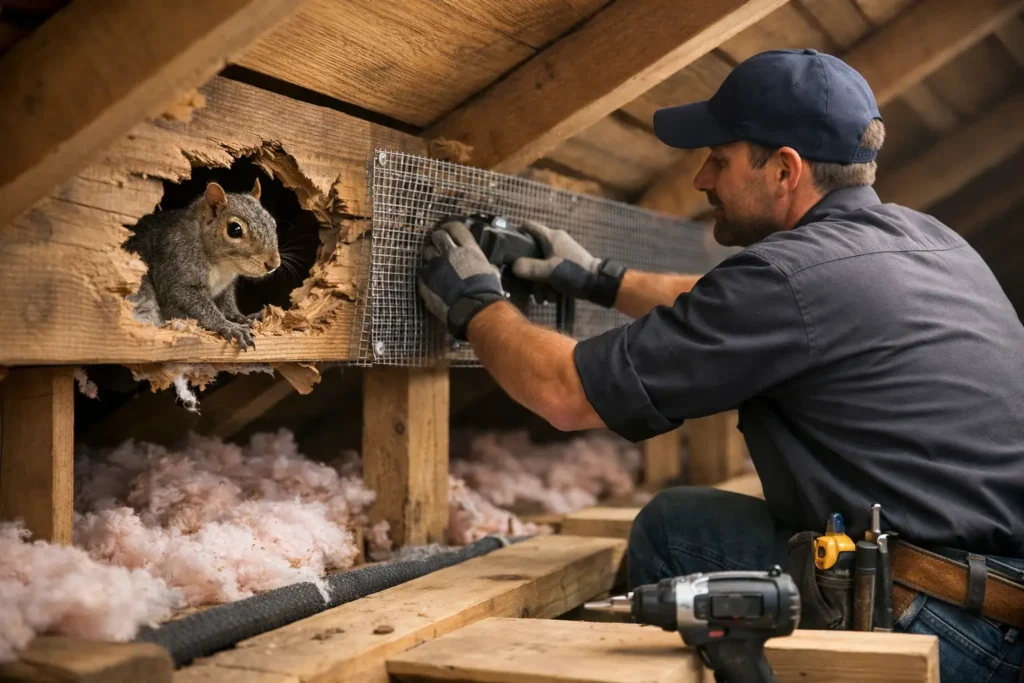
The scratching above the ceiling may be the first warning, but squirrel damage attic repair often becomes urgent when a homeowner finds chewed wiring, shredded insulation, or daylight around a roofline gap. In Big Bear and other Southern California mountain communities, squirrels can turn a small opening near the eaves, vents, or fascia into a direct route to the attic. Once they are inside, the damage can spread quickly.
A lasting repair is not simply closing a hole. The animals must be removed humanely, the attic needs to be inspected for contamination and hidden damage, and every practical entry point must be secured. Otherwise, a squirrel that is already familiar with the home can return, or another rodent can take advantage of the same weakness.
Why squirrels cause serious attic damage
Squirrels have strong front teeth that never stop growing. Chewing is natural behavior for them, but it is a costly problem when they chew wood framing, roof sheathing, plastic pipes, cable lines, and electrical wiring. Wiring damage deserves immediate attention because exposed or damaged insulation can create a fire hazard.
Insulation is another common target. Squirrels pull it apart to build nests, flattening the material and reducing its ability to hold heat. In a mountain cabin or full-time home, compromised insulation can mean uncomfortable rooms and higher heating costs during cold weather. Nesting materials may also include leaves, pine needles, paper, fabric, and debris brought in from outdoors.
Droppings and urine create a separate concern. Contaminated insulation can hold odors that draw other wildlife toward the attic. It can also leave homeowners and maintenance staff exposed to unsanitary conditions during repairs. The visible mess is not always the full story. Squirrels may nest behind stored items, around ducts, or in corners that are difficult to reach safely.
Start with humane removal, not a quick patch
Sealing an active entry hole before confirming the attic is clear can trap an animal inside. That can lead to more chewing, odors, and damage as the squirrel searches for a way out. It may also separate a mother from dependent young during nesting season.
The right approach starts with a professional inspection. A wildlife technician looks for active entry points, tracks, chew marks, droppings, nesting areas, and signs that more than one squirrel is using the attic. Inspection also helps distinguish squirrel activity from mice, rats, bats, birds, or other wildlife. The sounds can be similar, but the removal and repair plan should match the species.
Humane removal methods are selected based on the property, season, and the animal’s behavior. In many cases, one-way exclusion devices allow squirrels to leave without being able to get back inside. If young are present, the timing and method need extra care. The goal is to protect the home without treating wildlife carelessly.
This is one reason a homeowner should be cautious about tackling an attic intrusion with store-bought traps or poison. Poison does not solve the entry problem, can harm non-target animals, and may leave an animal dying in an inaccessible area. A sealed-up attic with a dead animal inside creates another expensive cleanup issue.
What squirrel damage attic repair should include
Once professionals confirm the squirrels are out, repairs can begin. The scope depends on how long the activity has been happening, where the animals entered, and whether moisture or older construction issues have weakened the area.
A complete squirrel damage attic repair plan usually addresses three connected needs: structural repair, sanitation, and exclusion. Leaving out any one of them can invite a repeat problem.
Repair the entry point and damaged materials
Common squirrel entry points include roof returns, attic vents, loose fascia boards, gaps along the eaves, damaged soffits, chimney openings, and areas where utility lines enter the structure. Squirrels can enlarge a small defect, especially where wood has softened from weather exposure.
Repair work may involve replacing damaged wood, reattaching loose boards, reinforcing vulnerable edges, or installing wildlife-resistant screening over vents and openings. Materials matter. Thin mesh, foam alone, or a patch that is not firmly fastened may not hold up against persistent chewing or harsh mountain weather.
The best repair is not always the biggest repair. If damage is limited to one small soffit section, targeted restoration may be enough. If the roofline has multiple gaps, aging vents, and widespread chew damage, a broader exclusion plan is usually the smarter investment. An experienced inspection prevents homeowners from paying for unnecessary work while still addressing the real weak points.
Remove contaminated nesting material and insulation
Nests, droppings, and urine-soaked insulation should be handled with appropriate protective equipment and containment practices. Sweeping or vacuuming dry droppings without precautions can stir contaminated dust into the air. The affected material needs to be removed carefully, bagged for disposal, and followed by cleaning and disinfection of accessible surfaces.
Not every attic needs all insulation replaced. When contamination is localized and the remaining insulation is dry and in good condition, selective removal may be appropriate. When squirrels have traveled across large sections of the attic, flattened insulation extensively, or repeatedly used the space, more substantial removal and replacement may be warranted.
Odor control matters here. A clean-looking attic that still smells like urine can remain attractive to wildlife. Proper sanitation helps protect indoor air quality and removes scent cues that encourage another animal to investigate the same space.
Seal the rest of the home against repeat entry
The hole the squirrels used is rarely the only vulnerability. Mountain homes, cabins, vacation rentals, and older commercial buildings often have several gaps created by snow, wind, tree contact, settling, or aging building materials. A repair that focuses only on the obvious opening can become a temporary fix.
Exclusion work looks beyond the active hole. Technicians inspect rooflines, attic and gable vents, chimneys, dormers, siding transitions, crawlspace vents, pipe penetrations, and garage connections. They also consider nearby branches and access routes. Trimming branches that overhang or closely approach the roof can reduce the easy paths squirrels use to reach the structure.
Exclusion is not about making a property hostile to wildlife. It is about keeping wildlife outdoors, where it belongs, while protecting the building envelope. That is the practical balance homeowners need in wooded communities.
Signs you should schedule an attic inspection
Squirrels are most active during daylight, so morning and late-afternoon scrambling sounds are common clues. You may also hear gnawing, rolling noises from stored nuts, or quick movement near a particular wall or ceiling area.
Other warning signs include chewed fascia or vent covers, debris below an entry hole, visible roofline gaps, droppings in the attic, a musty or urine-like odor, and insulation that appears tunneled or pulled apart. Exterior signs can be just as useful as attic signs, especially when the attic is difficult to access.
Do not wait for a ceiling stain, electrical issue, or strong odor to take action. Early inspection usually means a simpler repair and less contamination to remove. This is especially true for seasonal homes, where squirrel activity can continue unnoticed for weeks between visits.
Local attic protection for mountain properties
Mountain conditions put extra stress on roofs and exterior openings. Snow loads, freezing temperatures, wind, pine needles, falling branches, and wildlife traffic all take a toll on vents, trim, and roof edges. A repair approach that works in a dense suburban neighborhood may not be enough for a cabin surrounded by trees.
Outbackzack provides humane wildlife removal, attic cleanup, exclusion, and block-out repairs for property owners throughout the Big Bear Lake and Lake Arrowhead mountain communities. The focus is on stopping the immediate intrusion while helping protect the home from the next one.
If you suspect squirrels are in the attic, avoid sealing openings yourself or disturbing a nest. Keep pets away from the affected area, document any visible exterior damage, and arrange an inspection before the problem grows. A humane removal plan followed by careful repair gives both your property and the wildlife around it the right place to be.