
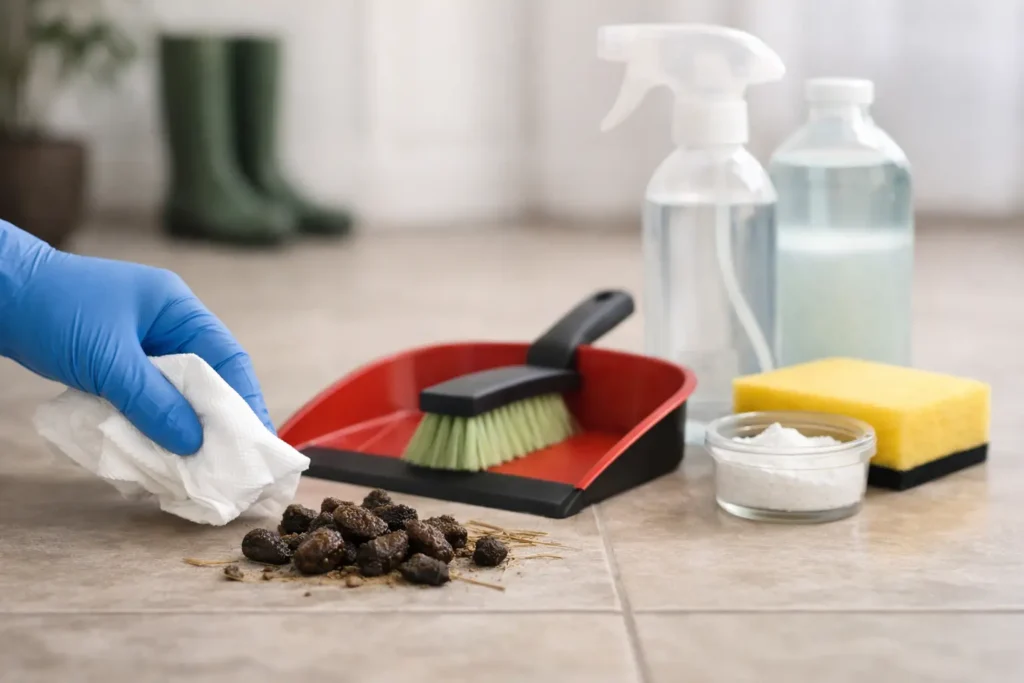
A few pellets in a garage corner may look like a small housekeeping job. In a mountain cabin, attic, crawlspace, shed, or vacation rental, they can also be a sign of an active rodent, bat, bird, raccoon, or squirrel problem. Knowing how to sanitize animal droppings safely protects the people using the building, but cleanup alone will not solve the source of contamination.
The first rule is simple: do not sweep, brush, or vacuum dry droppings. Those methods can push contaminated dust into the air, where it may be breathed in or spread onto nearby surfaces. The safer approach is to control the area, wet the material thoroughly, remove it carefully, disinfect the surface, and then identify how the animal got inside.
Start by Identifying the Risk
Different animals leave different messes, and the right response depends on where the droppings are located, how much is present, and whether the activity is current. Fresh mouse or rat droppings around food storage, under sinks, behind appliances, or in a pantry call for immediate action. Bat guano in an attic or bird droppings around vents can build up over time and may require more protective equipment and professional remediation.
Be especially cautious when droppings are in enclosed, poorly ventilated spaces. Attics, crawlspaces, wall voids, sheds, and cabins that have been closed for a season can hold contaminated dust. Large accumulations, urine staining, nesting material, dead animals, or damaged insulation are signs that this is more than a surface-cleaning project.
If you do not know which animal caused the problem, avoid guessing based on droppings alone. Size, shape, location, tracks, entry damage, and nesting materials all matter. Correct identification helps determine whether you need rodent control, bird exclusion, bat removal, or humane wildlife removal before cleanup begins.
How to Sanitize Animal Droppings Without Spreading Contamination
Before touching the affected area, keep children, pets, and unnecessary foot traffic away. Open doors and windows where possible, then allow fresh air to move through the space for at least 30 minutes. Do not use fans that blow directly across the droppings, since they can spread particles farther into the room.
Wear disposable gloves. For small, accessible cleanup jobs, add eye protection and a properly fitted respirator or mask rated for fine particles. Wear long sleeves and closed-toe shoes. If the contamination is in an attic, crawlspace, or another tight area, protective clothing is particularly helpful because droppings and urine can be present on insulation, joists, wiring, and stored belongings.
Prepare a disinfectant according to its label instructions. An EPA-registered disinfectant appropriate for the surface is a good option. A properly diluted household bleach solution may also be used on compatible hard, nonporous surfaces, but never mix bleach with ammonia, vinegar, or other cleaners. Mixing chemicals can create dangerous fumes.
Spray the droppings, surrounding nesting material, and visibly contaminated area until everything is thoroughly wet. Let the disinfectant sit for the required contact time listed on the product label. The goal is to keep particles from becoming airborne while allowing the disinfectant time to work.
Use paper towels, disposable rags, or a scoop that can be disinfected to lift the wet material. Place all waste directly into a plastic bag, seal it, then place that bag into a second bag before disposal. Wipe and disinfect the hard surface beneath the droppings, along with nearby areas the animal may have contacted.
Afterward, remove gloves carefully without touching their outside surfaces. Wash hands thoroughly with soap and warm water. Launder reusable work clothes separately using hot water and detergent. Clean and disinfect any reusable tools, shoe soles, or equipment before bringing them back into the home.
When DIY Cleanup Is Not the Right Call
A small amount of fresh rodent droppings on a garage floor can often be handled safely with the right precautions. The trade-off changes when contamination is widespread or hidden inside building materials. Trying to clean a heavily contaminated attic without the right protective equipment can expose you to dust, damage insulation, and leave odor or disease risks behind.
Professional sanitation is a better choice when you find large volumes of droppings, bat guano, bird nesting debris, extensive urine staining, contaminated insulation, or droppings in HVAC components. The same applies if someone in the property has respiratory concerns, a weakened immune system, or limited ability to safely work in a confined space.
Wildlife cleanup should also follow removal and exclusion work, not come before it. If a mouse, rat, bat, squirrel, raccoon, or bird still has access to the structure, new droppings can appear immediately after you clean. A complete solution closes entry points, removes attractants, repairs damage, and sanitizes the affected area once the activity is under control.
Disinfecting Common Problem Areas
Hard surfaces such as concrete, tile, sealed wood, metal, and plastic can usually be cleaned and disinfected after droppings are removed. Work from the least contaminated area toward the most contaminated area so you do not track debris across a larger section of the property.
Porous materials need more judgment. Cardboard, paper, fabric, unsealed wood, and heavily soiled insulation may not be fully disinfectable. In many cases, contaminated cardboard and nesting debris should be bagged and discarded. Washable fabrics may be laundered, but items with heavy urine or droppings contamination may need to be disposed of.
Attic insulation deserves special attention. Droppings and urine can settle deep into loose-fill or batt insulation, creating persistent odors and contaminating more material than is visible from above. Spot cleaning may be reasonable for a very limited area, but widespread contamination often calls for removal, sanitation of the structure beneath, and replacement insulation.
For food-preparation areas, remove exposed food and packaging that may have been contaminated. Disinfect counters, cabinet shelves, drawers, and appliance surfaces before restocking. Check under and behind appliances as well, since rodents commonly travel along walls and behind warm equipment.
Do Not Forget the Entry Points
Sanitation is only one part of protecting a home or commercial property. The strongest disinfectant cannot prevent the next animal from entering through a gap under the eaves, an uncapped vent, a damaged roofline, a garage-door gap, or an opening around utility lines.
Look for fresh droppings near likely travel routes: attic vents, foundation openings, roof intersections, chimneys, crawlspace access points, and exterior storage areas. Trim vegetation away from the building where it gives animals easy roof access. Keep trash secured, clean up fallen birdseed, and store pet food in sealed containers.
Do not seal an opening if you are not sure the animal is out. Blocking an active animal inside can lead to odors, damage, or young animals being separated from their mother. Humane removal and properly timed exclusion are especially important for bats, birds, and larger wildlife.
Mountain Properties Need Ongoing Prevention
Homes in Big Bear Lake, Lake Arrowhead, Running Springs, Crestline, and nearby mountain communities face different pressures than a typical suburban property. Seasonal vacancies, snow, dense tree cover, woodpiles, and older cabin construction can all create easy shelter and access for wildlife.
Check cabins and vacation rentals before and after periods of vacancy. A quick inspection of attics, garages, decks, sheds, crawlspaces, and utility rooms can catch an issue before droppings accumulate. Property managers should also document repeat locations, since recurring contamination usually points to an unresolved entry point.
Outbackzack handles humane removal, exclusion, cleanup, and disinfection as connected services because a clean property should stay clean. When contamination is extensive or animal activity continues, a trained local team can identify the species, remove it responsibly, sanitize affected areas, and help protect the building from the next intrusion.
A clean floor or attic is reassuring, but the real peace of mind comes from knowing why the animal entered and making sure it cannot return.