
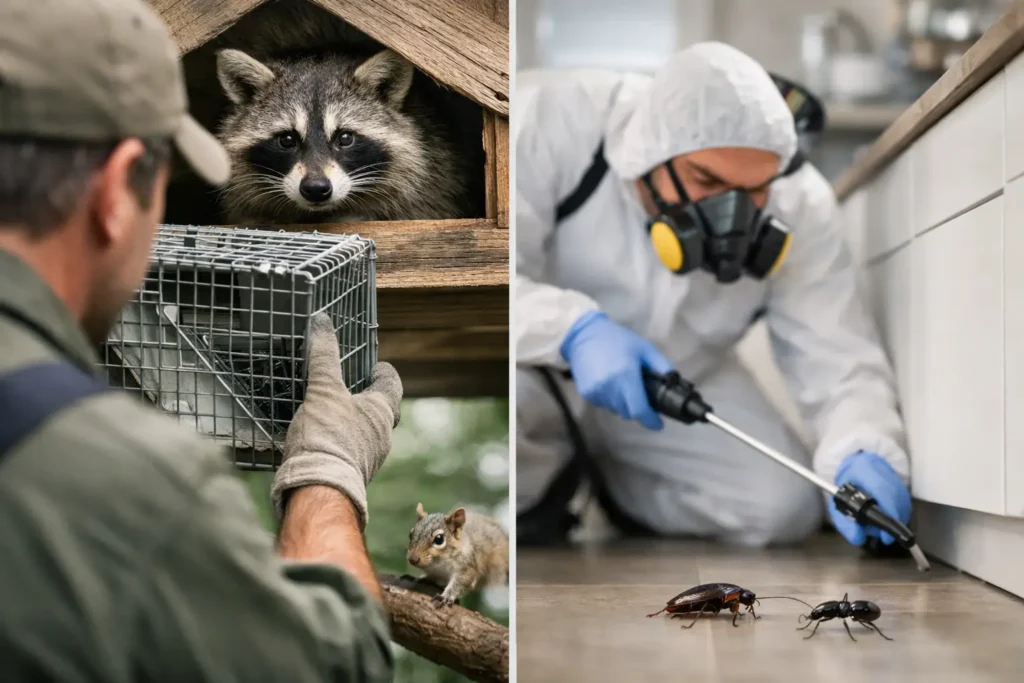
A scratching sound above the ceiling at 2 a.m. is not the same problem as ants along a kitchen counter. Both need prompt attention, but the right solution can be very different. Understanding wildlife removal versus pest control helps mountain homeowners, cabin owners, and property managers choose a service that protects the building, the people inside it, and the animals outside.
In Big Bear, Lake Arrowhead, Running Springs, Crestline, and nearby mountain communities, wooded surroundings put homes close to wildlife habitat. Raccoons, squirrels, bats, skunks, birds, mice, and rats can all find warmth, food, and shelter in a structure. Insects create their own set of risks. The goal is not simply to make the immediate problem disappear. It is to address why it happened and prevent a repeat visit.
Wildlife Removal Versus Pest Control: What Changes?
Pest control generally focuses on insects and commensal rodents, meaning animals that commonly live around people and structures. Ants, spiders, wasps, cockroaches, fleas, mice, and rats are typical examples. Treatment may involve targeted products, traps, monitoring, sanitation guidance, and sealing entry points.
Wildlife removal focuses on nuisance animals that normally live outdoors but have entered, damaged, or begun using a building. This often includes raccoons in attics, bats in walls, squirrels in eaves, skunks beneath decks, gophers damaging landscapes, or birds nesting in vents and rooflines.
The distinction matters because wildlife problems require species-specific knowledge, humane handling, and careful timing. A bat colony, for example, cannot be treated like a mouse issue. Sealing an opening at the wrong time can trap animals inside a wall or separate mothers from dependent young. A qualified wildlife technician identifies the species, determines how it is entering, evaluates conditions such as nesting or breeding activity, and develops a legal, humane removal and exclusion plan.
There is overlap. Mice and rats are often handled through pest control methods, yet a serious rodent infestation can also require the detailed cleanup, disinfection, damage repair, and exclusion work associated with wildlife services. The best approach depends on the animal, the location, the severity of activity, and the condition of the property.
When You Need Wildlife Removal
Wildlife removal is usually the right call when a larger animal, protected species, or nesting bird is in or around the structure. Signs often include heavy movement in an attic, loud thumping after dark, torn vent screens, chewed fascia boards, droppings concentrated in a roof void, or a strong odor under a crawl space.
A technician may use humane trapping where appropriate, one-way exclusion devices, hand removal, habitat adjustments, and structural block-out repairs. The objective is to get the animal out without creating a new problem inside the home.
Bats Require a Careful Exclusion Plan
Bats are valuable insect-eaters, but they do not belong in living spaces, attics, or wall voids. Their droppings can build up, and a bat encounter inside an occupied room should be handled cautiously. Bat work is not a job for sealing holes with foam and hoping for the best.
Professional bat removal typically centers on locating active entry points and installing exclusion devices that allow bats to leave but prevent reentry. Once the structure is clear, openings are sealed and affected areas may need cleanup and disinfection. Seasonal timing matters, especially when young bats may be present.
Raccoons, Skunks, and Squirrels Can Damage Structures Fast
Raccoons are strong enough to pull apart weak roof edges, screens, and vents. Squirrels can chew through wood and wiring, while skunks may settle under porches, sheds, and decks. These animals can create odors, contamination, insulation damage, and ongoing access routes for other pests.
Removal without repairs is rarely enough. If a raccoon gained access through a damaged roof vent, that opening needs a durable repair after the animal is out. If a skunk is using an open crawl-space entry, the space should be secured only after the animal has safely exited. That is the difference between a short-term response and lasting protection.
Bird Control Is Not Just About Noise
Woodpeckers, swallows, pigeons, and sparrows can all cause property problems in mountain communities. Nesting material can clog vents, droppings can damage surfaces and create sanitation concerns, and repeated pecking can harm siding or trim.
Bird removal and control must account for species and nesting status. Effective solutions may include exclusion, physical barriers, vent protection, cleanup, and repairs that make a structure less attractive for future roosting or nesting. A responsible plan protects the property without treating wildlife as disposable.
When Pest Control Is the Better Fit
Pest control is usually the better match for insect activity and routine rodent problems. A trail of ants, spiders in a garage, stinging insects around an entryway, or mice moving through a pantry calls for a different inspection and treatment strategy than a raccoon in an attic.
The first step is still identifying the source. Ants may be entering through gaps near plumbing or following moisture. Wasps may be using a wall void or eave. Mice may be getting in through openings no larger than a dime. Applying a product without correcting food, water, harborage, and access issues can leave the property vulnerable.
For many pest issues, a targeted treatment combined with sanitation and exclusion delivers the best result. This can include removing food sources, correcting moisture problems, placing traps in strategic areas, treating active insect zones, and sealing gaps around pipes, vents, doors, and foundations.
Rodents Sit Between Both Services
Mice and rats are where the line between wildlife removal and pest control often becomes less clear. They are small, but the damage can be serious. Rodents contaminate food and insulation, chew electrical wiring, leave droppings in kitchens and attics, and reproduce quickly when conditions are favorable.
A single mouse caught in a garage may be a straightforward pest control call. Evidence of widespread attic activity, damaged insulation, strong odors, or rodent droppings throughout a vacation rental is a larger remediation project. It may require trapping, removal, detailed rodent proofing, cleanup, disinfection, and repairs to restore safe conditions.
For mountain properties that sit vacant part of the year, prevention is especially valuable. A small opening left unsealed through winter can become an easy access point when cold weather pushes animals toward warmth.
Why Exclusion Is the Long-Term Answer
Whether the issue is wildlife or pests, exclusion is the work that changes the outcome. It means identifying and closing the openings animals use to enter a structure. This can involve repairing roof gaps, reinforcing attic vents, screening crawl-space openings, sealing utility penetrations, fixing damaged siding, and addressing worn weatherstripping.
Exclusion should never be rushed. Before an opening is sealed, the technician needs to confirm that animals are not trapped inside. This is particularly important with wildlife, where a blocked exit can lead to dead animals in walls, new damage as they search for a way out, or young animals left behind.
A thorough inspection also looks beyond the obvious hole. Animals often exploit multiple access points. A squirrel may enter through a roofline gap while mice use a pipe penetration below. Addressing only one opening can leave the structure exposed.
Choosing the Right Professional for a Mountain Property
Ask whether the company identifies the species before recommending treatment, explains how animals will be removed, and includes prevention in the scope of work. For wildlife, ask about humane practices, local regulations, exclusion timing, cleanup, and repairs. For pests and rodents, ask how treatment will be targeted and what conditions need to be corrected to prevent recurrence.
Outbackzack approaches both nuisance animal removal and pest services with this larger view: remove the immediate problem, protect the structure, and reduce the conditions that invited it in the first place. Eco-conscious methods and humane practices do not mean ignoring the damage. They mean solving it responsibly.
If you hear activity in the attic, find droppings near a vent, notice chewed entry points, or see repeated pest activity around a home or business, schedule an inspection before the problem expands. The right response starts with knowing what has moved in and making sure it cannot come back.