
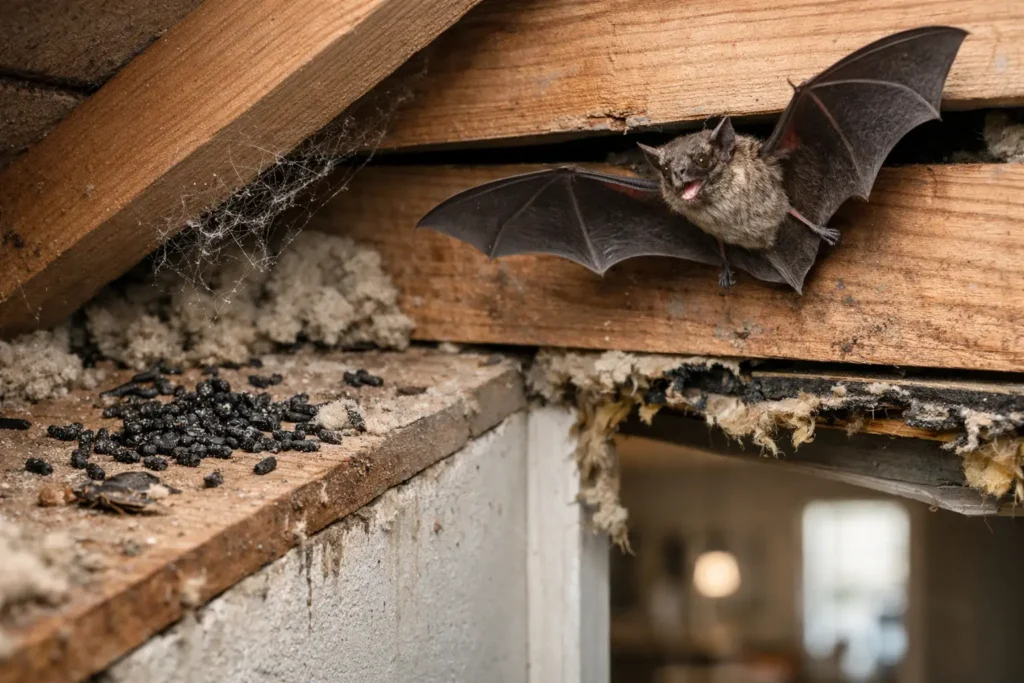
A scratching sound in the attic at dusk is easy to brush off the first time. In mountain homes, cabins, and rental properties, though, those small noises can be one of the earliest signs of bat infestation – and waiting too long usually means more contamination, stronger odors, and a harder cleanup.
Bats are protected wildlife in many situations, and they also play an important role in the local ecosystem by feeding on insects. That does not mean they belong inside your structure. Once a colony settles into an attic, roofline, chimney gap, or wall void, the problem becomes less about seeing a single bat and more about what follows – droppings, staining, noise, and health risks tied to waste buildup.
For property owners in places like Big Bear, Lake Arrowhead, Running Springs, and other mountain communities, bat activity is not unusual. Homes surrounded by trees, aging rooflines, dormers, vents, and seasonal occupancy create the kind of shelter bats look for. Knowing what to watch for helps you catch the issue early and handle it the right way.
Common signs of bat infestation
The most obvious clue is bat droppings, also called guano. These droppings are usually found below roof gaps, attic entry points, window ledges, insulation, or along exterior walls where bats enter and exit. Guano can look similar to rodent droppings at first glance, but it often crumbles more easily and may contain shiny insect fragments.
Another strong sign is staining around small openings. Bats squeeze through surprisingly narrow gaps, and over time, the oils and dirt from their fur leave dark brown or black marks around entry points. If you notice greasy smudges near soffits, vents, fascia boards, chimney joints, or under loose flashing, that can point to repeated bat traffic.
Noise is also a major indicator, especially in the evening and just before sunrise. Unlike the heavier scurrying you might hear from squirrels or rats, bat sounds tend to be lighter – scratching, chirping, rustling, or faint fluttering in attics and wall voids. In quiet cabins or vacant rentals, these sounds may be even more noticeable.
A persistent odor is another warning sign. A small number of bats may not create a strong smell right away, but once waste begins to accumulate, the odor becomes hard to ignore. In enclosed attic spaces, guano and urine can create a sharp, musty ammonia-like smell that can drift into living areas, especially during warm weather.
Then there is the most direct sign of all – actually seeing bats. If you notice bats flying out of your roofline around sunset, circling near vents, or appearing inside living spaces, there is a good chance they are roosting somewhere in the structure. A single bat indoors does not always mean a full colony, but it should never be ignored.
Where bats usually hide
In mountain properties, bats tend to choose quiet, elevated spaces with stable shelter and little disturbance. Attics are one of the most common roosting areas because they stay dark, warm, and protected from predators. Roof peaks, gable vents, and spaces behind fascia boards are frequent access points.
Wall voids can also become roosting sites, particularly in homes with aging siding, trim gaps, or construction joints that have opened over time. Chimneys, especially if they are uncapped or poorly screened, can attract bats looking for a vertical shelter space.
Cabins and vacation homes face a different kind of risk. A property that sits empty for stretches of time gives bats a better chance to establish themselves before anyone notices. By the time the owner arrives and hears noise or smells waste, the infestation may already be well underway.
Commercial buildings are not exempt either. Retail properties, storage areas, lodges, and maintenance buildings with high rooflines or service gaps can offer the same kind of protected entry points bats seek out in homes.
Signs of bat infestation outside the home
Some of the clearest signs show up before you ever step into the attic. If you stand outside at dusk and see small, fast-moving shapes repeatedly exiting from the same roof gap, vent edge, or eave line, that is a strong sign of a roost inside. Bats usually do not leave randomly from all over a structure. They follow consistent exit routes.
You might also find guano on decks, walkways, patios, window sills, or below exterior walls. This can be especially noticeable around entry holes beneath peaks and overhangs. On lighter surfaces, the buildup tends to stand out quickly.
Listen for chirping or squeaking near the roofline in the early evening. In maternity season, when young bats are present, vocal sounds can become more obvious. This is one reason proper timing matters so much. Humane removal has to account for whether flightless young are present, because sealing a structure too early can create a much bigger problem.
Why early action matters
A bat issue rarely stays small for long. Even if the colony itself does not become large, the waste it leaves behind can build up and spread contamination through insulation, attic surfaces, and air pathways. Guano can support fungal growth and attract insects, and heavy buildup may damage materials over time.
There is also the problem of repeated use. If bats have found a reliable entry point once, they may continue returning unless the structure is professionally sealed. Many property owners make the mistake of focusing only on the visible bat activity without fixing the access points that allowed it in.
That is where a lot of do-it-yourself efforts fail. Sprays, bright lights, noise devices, and casual patch jobs often do not solve the actual problem. Worse, sealing holes at the wrong time or trapping bats inside can create odor, contamination, and legal issues depending on the species and season.
What to do if you notice the signs
Start by staying calm and avoiding direct contact. Do not try to handle a bat with bare hands, and do not disturb droppings in a way that sends dust into the air. If a bat is found in a bedroom or near a sleeping person, child, or pet, that situation should be treated with extra caution.
The next step is inspection. A proper bat inspection is not just about finding where they are hiding. It also means identifying active entry points, checking for secondary gaps, estimating contamination, and determining whether exclusion can be done immediately or whether seasonal timing needs to be considered.
Humane removal is the standard approach that makes sense for both the property and the wildlife. In most cases, the goal is to let bats exit safely, prevent them from re-entering, and then address cleanup and sealing work so the structure is protected long term. That may include exclusion devices, block-out repairs, guano cleanup, insulation assessment, and disinfection of affected areas.
For mountain communities, local experience matters. Bat behavior, seasonal conditions, roof styles, and wildlife pressure vary from one area to another. A cabin in Sugarloaf does not always present the same access issues as a commercial building in Crestline or a home in Fawnskin. Outbackzack approaches these situations with humane removal methods and long-term exclusion in mind, because removing bats without protecting the structure is only half a job.
When the problem might not be bats
Not every attic noise points to a bat colony. Rodents, squirrels, birds, and even loose building materials can create similar sounds. Droppings can also be misidentified, especially by property owners seeing them for the first time.
That is why inspection matters more than guessing. The right solution depends on the species involved, the season, and the way the animal is using the building. A bat issue calls for a different plan than a rat infestation, bird nesting problem, or squirrel entry point.
If you are hearing fluttering at dusk, finding guano below roof gaps, noticing dark stains near eaves, or catching that sharp attic odor, your home is telling you something. The best move is to address it early, protect the structure, and make sure the animals are removed the humane way before a small nuisance turns into a much bigger repair and cleanup job.
When wildlife chooses your attic, fast action matters – but doing it responsibly matters just as much.