
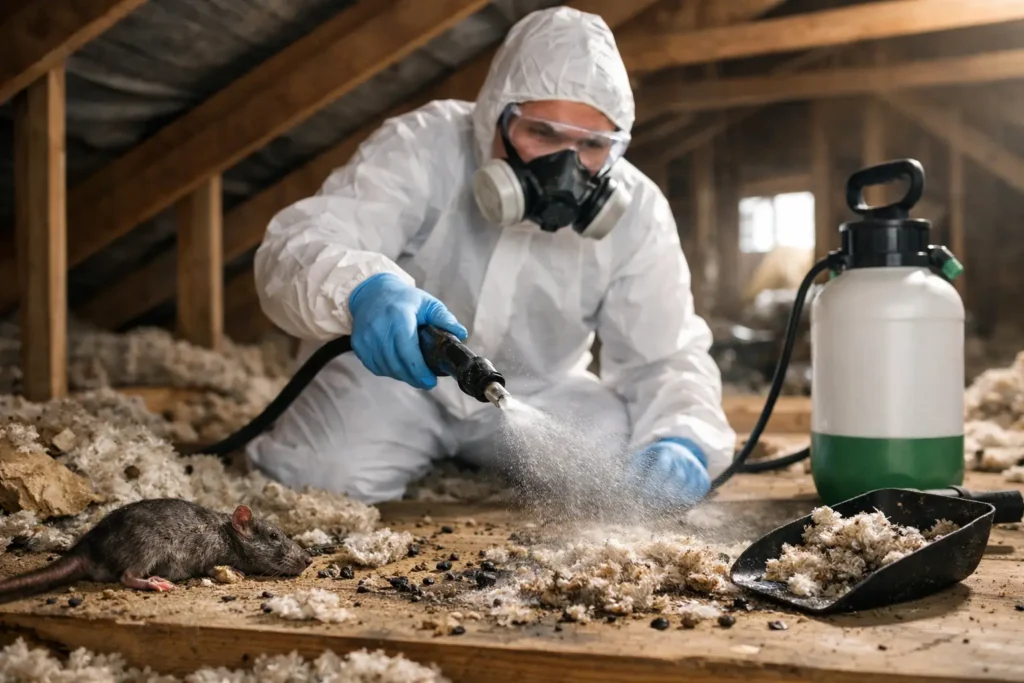
If you have ever pulled down an attic ladder and caught that sharp, stale smell of rodent urine, you already know this is not a simple sweep-and-go job. To sanitize attic after rodent infestation the right way, you need more than traps and a shop vacuum. You need to treat the space like a contamination zone, clear out hazardous nesting material, disinfect the affected areas, and fix the entry points that let the problem start.
In mountain homes, cabins, and vacation properties, attics are especially vulnerable. Cold nights push mice and rats indoors. Insulation gives them warmth. Quiet crawlspaces give them cover. By the time you hear scratching overhead, there is often already urine, droppings, chewed insulation, and nesting debris spread farther than most property owners expect.
Why attic cleanup has to be done carefully
Rodent infestations leave behind more than a bad odor. Droppings, urine trails, hair, and nesting material can contaminate insulation, wood framing, ductwork, stored items, and even the air moving through the home. If the infestation lasted for weeks or months, the damage is usually layered. You are not just cleaning surfaces. You are dealing with waste buildup, scent marking, and materials that may keep attracting new rodents if they are left behind.
The biggest mistake people make is disturbing contaminated material too aggressively. Sweeping dry droppings or vacuuming them with a standard household vacuum can send particles into the air. That raises the risk of breathing in contaminated dust. In a confined attic, that exposure gets worse fast.
This is also where the do-it-yourself approach has limits. A very small, isolated mouse issue may be manageable with the right protective steps. A larger infestation, heavy droppings, dead rodents, contaminated insulation, or strong urine saturation usually calls for professional cleanup and disinfection.
Before you sanitize attic after rodent infestation
Do not start cleanup until the rodents are gone and the access points are sealed. If active mice or rats are still moving through the attic, sanitation alone will not solve the problem. You will end up cleaning a space that gets recontaminated almost immediately.
Make sure the attic is safe to enter. Watch for exposed wiring, weakened drywall, low clearance, nails through roof decking, and poor ventilation. Rodents often chew electrical lines, and that turns an attic cleanup into a fire and shock risk if the area has not been inspected.
Wear proper protection before handling any affected material. At minimum, that means gloves, eye protection, and a respirator rated for fine particles. Disposable coveralls are a smart choice if insulation or droppings are widespread. You want to avoid carrying contamination back into the living space.
How to sanitize attic after rodent infestation safely
Start by ventilating the attic if conditions allow. Open access points and let fresh air move through for a while before beginning work. You do not want to create strong airflow directly over droppings, but you do want to reduce the concentration of stale air and odors.
Next, lightly mist droppings, nests, and contaminated areas with a disinfectant or sanitizer labeled for this type of cleanup. The goal is to dampen the material before removal, not soak the entire attic. This helps reduce airborne dust when you handle the waste.
Once the material has been dampened, remove droppings and nesting debris carefully with disposable towels or scoop tools that can be discarded or sanitized afterward. Bag the waste immediately in heavy-duty trash bags and seal it well. If the contamination is spread across insulation, especially blown-in insulation, spot cleaning is rarely enough. In those cases, damaged insulation often needs to be removed and replaced.
Surface cleaning comes after debris removal. Wood framing, attic flooring, access doors, and other hard surfaces should be treated with an appropriate disinfectant. Let the product sit for its labeled contact time. Wiping too soon can reduce its effectiveness. If urine staining is heavy, one round may not be enough.
Odor treatment is often the step people underestimate. Rodent urine leaves behind scent signals that can continue attracting new activity. Basic disinfecting may kill bacteria, but it does not always fully break down odor sources. Enzyme-based treatments can help on some surfaces, while severe contamination may require insulation removal and deeper remediation.
What to do about contaminated insulation
Insulation is often the real problem in an attic infestation. Rodents tunnel through it, nest inside it, and use it as a bathroom. If the contamination is light and localized, small sections may be removed. If there are broad urine trails, widespread droppings, or strong odor throughout the attic, partial cleanup can leave behind enough contamination to keep causing smell and sanitation issues.
This is where professional assessment matters. Pulling all insulation is a bigger job and a higher cost, but sometimes it is the only way to truly restore the attic. It also creates an opportunity to inspect hidden damage, seal gaps, and install fresh insulation after sanitizing the structure beneath it.
For homes in colder mountain communities, replacing compromised insulation is not just about cleanliness. It affects energy efficiency, comfort, and moisture control. A rodent-damaged attic can cost you in heating and cooling long after the animals are gone.
Areas people forget to disinfect
A rodent attic problem rarely stays neatly in one corner. Mice and rats travel along rafters, duct runs, pipe penetrations, and wall tops. They may contaminate stored boxes, holiday decorations, HVAC components, and attic access panels.
Ductwork deserves special attention. If flex ducts or insulation around ducts were chewed or soiled, cleaning the attic floor alone will not be enough. The same goes for wiring jackets, vapor barriers, and insulation baffles near eaves. These details matter because rodents use them as travel paths and nesting zones.
If you found dead rodents, carcass removal needs to be thorough. Even one hidden body can keep producing odor and attract insects. That is another reason sanitation should be paired with a full inspection rather than treated as a simple cleanup task.
When professional attic sanitation is the smarter move
There is a point where time, risk, and results all favor bringing in a specialist. If the infestation was heavy, if insulation is saturated, if odors remain after cleanup, or if the attic is difficult to access safely, professional service is usually the better path.
A qualified wildlife and rodent control company should do more than remove waste. The right service includes identifying entry points, humane removal or control measures, insulation assessment, disinfection, deodorizing, and exclusion work to keep rodents out for good. That full approach matters because sanitation without prevention is temporary.
For property managers and short-term rental owners, speed also matters. A contaminated attic can affect guest experience, tenant safety, and property reputation. Professional cleanup shortens downtime and helps document that the issue was handled properly.
Preventing the attic from being contaminated again
Once the attic is clean, keeping it that way comes down to exclusion and monitoring. Rodents can squeeze through surprisingly small openings around rooflines, vents, eaves, utility penetrations, and foundation-to-wall transitions. If those gaps are not sealed with durable materials, sanitation work loses value quickly.
Tree branches touching the roof should be trimmed back. Outdoor food sources should be controlled. Crawlspaces, garages, and sheds should be checked too, because attic infestations often connect to activity elsewhere on the property.
This is especially true in wooded communities where homes sit close to natural habitat. Humane, eco-conscious rodent control is not about ignoring the problem. It is about solving it responsibly, protecting the structure, and reducing repeat intrusions without creating unnecessary harm to surrounding wildlife. That is the standard companies like Outbackzack aim to bring to mountain properties every day.
A clean attic should also feel secure
If your attic has been used as a rodent nesting site, the goal is not just to make it look better. You want the space to be sanitary, odor-controlled, and sealed against future entry. Sometimes that means a careful DIY cleanup. Sometimes it means bringing in trained help before contamination spreads further. Either way, the right time to address it is now, while the problem is still above the ceiling and not moving deeper into the home.