
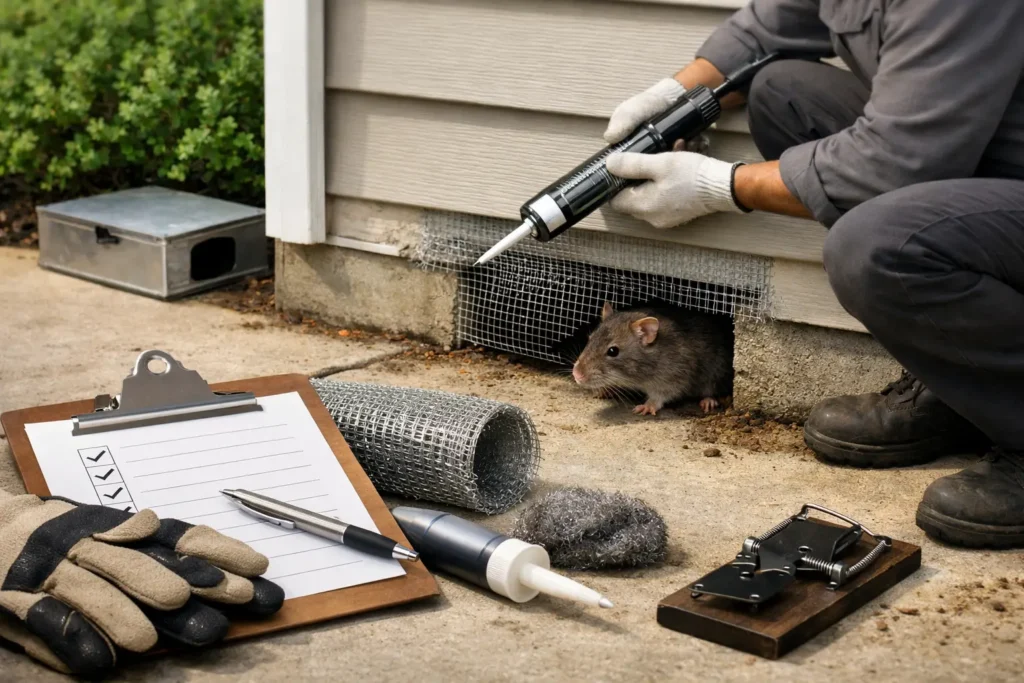
You usually do not find out you have a rodent issue when the first mouse arrives. You find out when insulation has been shredded, droppings show up in the pantry, or scratching starts in the walls after dark. A solid rodent proofing checklist for homes helps you catch the conditions that attract mice and rats before they turn into an active infestation, especially in mountain communities where cold weather, wooded lots, and seasonal vacancies make homes more vulnerable.
Why mountain homes need a stricter standard
In places like Big Bear, Lake Arrowhead, Running Springs, and Crestline, rodent pressure is not just a winter problem. Cooler temperatures drive mice and rats indoors, but food sources, crawl spaces, decks, sheds, and dense vegetation create year-round opportunities. Cabins and vacation rentals are at even higher risk because rodents thrive when a property sits quiet for days or weeks at a time.
That is why rodent proofing is not just about setting traps. If entry points stay open and attractants stay in place, removal becomes a repeat service instead of a long-term fix. The goal is to make the structure hard to enter, hard to nest in, and hard to feed from.
Rodent proofing checklist for homes: start outside
The exterior tells you a lot. Most rodent problems begin with a gap, crack, vent opening, or utility line penetration that looked too small to matter.
Start by walking the full perimeter slowly. Look at the foundation, siding transitions, roofline, eaves, vents, garage door edges, and areas where pipes or cables enter the building. Mice can squeeze through surprisingly small openings, and rats do not need much more. If light, air, or plant debris can get through, rodents may be able to as well.
Pay close attention to these trouble spots:
- Gaps around utility lines and conduit
- Damaged crawl space vents and attic vents
- Openings under decks, stairs, and porches
- Roof returns, fascia gaps, and loose flashing
- Garage door corners and worn weather stripping
- Cracks in foundations and separations around siding
Not every gap should be sealed the same way. A small utility opening may need metal mesh and sealant, while a larger construction gap may need hardware cloth, flashing, or repair work. Foam alone is usually not enough for active rodent pressure because rodents can chew through many soft materials. Good exclusion work uses durable materials that hold up in weather and stand up to chewing.
Trees, brush, and storage matter more than people think
Rodents use cover. If shrubs are pressed tightly against the house, wood piles are stacked by the wall, or stored items create dark protected spaces under decks, you are making the exterior safer for them than it should be.
Trim vegetation back from the structure. Raise lower tree branches away from the roof where possible. Move firewood off the house and keep it elevated and stored with space around it. Outdoor storage should stay organized, dry, and away from direct contact with exterior walls.
There is some trade-off here. Mountain homeowners often want natural landscaping and wood storage close at hand, especially in winter. That is understandable. The practical move is not stripping the property bare. It is creating a buffer zone around the home so rodents lose their protected travel paths.
Check the roofline, attic, and upper access points
Many homeowners focus only on the ground level, but roof rats and climbing rodents often enter from above. Even mice can take advantage of stacked materials, vines, fences, and tree limbs that lead them upward.
Inspect roof vents, ridge vents, chimney caps, and the junctions where roofing meets siding. Look for staining, rub marks, droppings, and disturbed insulation inside the attic. If you hear nighttime movement overhead, do not assume it is just normal settling.
Attics are ideal nesting spaces because they are dark, quiet, and insulated. Once rodents establish themselves there, they can chew wiring, contaminate stored items, and spread debris through ducting and wall voids. A proper inspection should not stop at visible openings. It should also look at evidence of current use.
Move indoors and remove what keeps rodents comfortable
Once the exterior is addressed, the inside of the home needs the same level of attention. Rodents stay where food, water, and shelter are easy to find.
The kitchen is the obvious place to start, but it is not the only one. Pantries, laundry rooms, garages, utility closets, and under-sink cabinets all deserve inspection. Dry goods should be stored in hard-sided sealed containers, not thin cardboard or loose plastic bags. Pet food should not sit out overnight, and bird seed should be treated like rodent food because that is exactly what it is.
Water matters too. A slow leak under a sink, condensation around pipes, or standing water near a water heater can support rodent activity longer than people expect. If a home has been vacant, check for plumbing issues before assuming the problem is only entry-related.
Garages, basements, and crawl spaces are common weak points
These transition spaces are where many infestations gain traction. Garages often have clutter, stored food, pet supplies, and gaps around doors. Crawl spaces offer warmth and protection. Basements and utility areas can hide activity for months before anyone notices.
Keep stored items off the floor when possible and avoid packing boxes directly against walls. Cardboard is easy to chew and easy to nest in. Plastic bins with secure lids are a better choice, especially in second homes and vacation rentals.
If you manage a rental property, this part of the checklist needs extra discipline. Guest turnover, inconsistent cleaning habits, and long vacancy windows can undo prevention work quickly. A simple between-stay inspection routine can catch droppings, gnaw marks, and door seal failures before they become a larger sanitation problem.
Know the signs that proofing alone is not enough
A checklist helps prevent problems, but it does not replace removal when rodents are already active. If you are seeing fresh droppings, hearing movement, smelling urine, or finding gnaw marks and nesting material, you may need a full inspection, trapping plan, sanitation work, and exclusion repairs together.
This is where people often lose time. They seal one obvious gap, set a few store-bought traps, and assume the issue is handled. Meanwhile, rodents may still be active in the attic, crawl space, or wall voids. Worse, sealing without a clear plan can trap animals inside and create odor, contamination, or desperate chewing in new areas.
Humane, eco-conscious rodent control still has to be decisive. The right approach depends on the species, the structure, the extent of activity, and whether young are present. That is why professional rodent proofing usually works best when paired with inspection and species-specific removal instead of treated as a one-step fix.
A practical maintenance rhythm for long-term protection
The best rodent proofing checklist for homes is not something you do once and forget. In mountain environments, weather, snow, wind, and normal wear can reopen access points over time.
A smart schedule is to inspect seasonally, with extra attention in early fall and after storms. Check weather stripping, vent screens, crawl space covers, and roofline details. Reassess landscaping growth and outdoor storage. Indoors, look behind appliances, in pantry corners, and around utility penetrations.
If the property is a cabin or part-time residence, inspections before and after vacancy periods are especially valuable. Rodents take advantage of quiet buildings fast. A short prevention visit can save you from a much bigger cleanup later.
For homes with past infestations, sanitation matters just as much as sealing. Rodent droppings, urine, and nesting debris can continue to attract activity if they are not cleaned and disinfected correctly. In those cases, proofing is only one part of restoring the property to a safe condition.
When it makes sense to bring in a specialist
Some homes are straightforward. Others have layered access points, hidden nesting zones, or structural conditions that make do-it-yourself proofing unreliable. Steep rooflines, complex crawl spaces, aging cabins, and multi-unit properties often need a more complete exclusion plan.
That is especially true if you have recurring activity despite traps, or if you are dealing with more than one nuisance species at the same time. A home with rodent issues may also have birds in vents, squirrels in the attic, or skunks and raccoons creating pressure around the structure. Real prevention means looking at the whole property, not just the first sign of mice.
For mountain homeowners and property managers, local experience matters. A company like Outbackzack understands how wildlife pressure changes across Big Bear, Arrowhead, and surrounding communities, and how to protect homes without falling back on careless, one-size-fits-all solutions.
A well-protected home does not happen by accident. It comes from noticing the small openings, fixing the conditions that invite trouble, and staying ahead of the next season before scratching in the walls reminds you.