
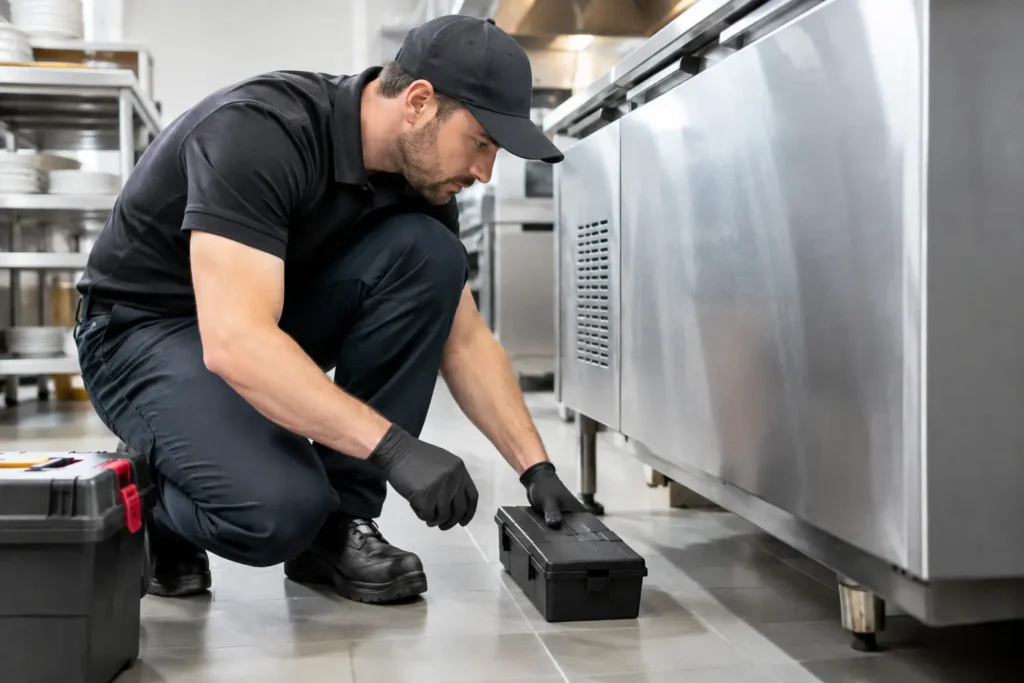
A single mouse sighting near a restaurant prep area can become a much bigger problem by the next service. In this restaurant rodent cleanup case study, a mountain-community dining property needed more than traps placed behind appliances. It needed contamination cleanup, a clear answer about where rodents were entering, and a prevention plan that could stand up to cold nights, wooded surroundings, and the steady food traffic of a working kitchen.
This is a representative case based on the conditions commonly found in restaurants, cafes, and hospitality properties throughout the Big Bear and Lake Arrowhead mountain areas. The goal was to protect guests, employees, food inventory, and the building itself while handling the rodent issue responsibly.
The Problem Started Behind the Kitchen Line
The property manager called after staff noticed small droppings near dry storage shelving and heard scratching behind the dishwasher wall after closing. A quick inspection by the restaurant team had also revealed torn packaging in a lower cabinet beneath the beverage station.
At first, the visible activity seemed limited. That is common with mice and rats. Rodents tend to travel along wall edges, hide behind equipment, and stay active when a restaurant is quiet. What staff sees during a shift is often only a fraction of the real activity.
The building was located near mature trees and seasonal vegetation, with utility penetrations, aging exterior trim, and a service door that did not close tightly at the threshold. These conditions gave rodents multiple routes from the exterior to warm, food-rich interior spaces.
The immediate concern was sanitation. Rodent droppings and urine can contaminate surfaces and stored products, while chewing can damage insulation, wiring, and plumbing access areas. The longer-term concern was operational: closing off a kitchen section or losing inventory can create costs that go far beyond the price of removal work.
Restaurant Rodent Cleanup Case Study: The Inspection
The first step was not setting bait or making assumptions. A proper commercial rodent inspection focused on identifying the species, the extent of activity, the likely travel routes, and the conditions supporting the infestation.
Technicians inspected the kitchen perimeter, dishwashing area, dry storage, utility room, exterior foundation, dumpster zone, roofline transitions, and gaps around plumbing and electrical lines. Evidence included fresh droppings beneath shelving, grease marks along a wall edge, gnawing on cardboard packaging, and a narrow gap near a rear utility penetration.
The inspection also found that the rear door sweep had worn down enough to leave an easy entry point. Outside, stored materials near the building gave rodents cover as they moved toward the restaurant. Neither issue alone explained every sign of activity, but together they created a reliable access route.
That distinction matters. Cleanup without exclusion may make a kitchen look and smell better for a short time, but it does not stop the next rodent from coming in through the same opening. Likewise, sealing a building without removing the existing population can trap activity inside walls and leave contamination behind.
Containment Came Before Deep Cleanup
Because this was an active food-service environment, the work had to be coordinated around kitchen operations. The restaurant could not simply shut down for days, but staff also could not continue using areas that showed possible contamination.
Affected food packaging was removed according to the restaurant’s internal food-safety procedures. Shelving and equipment-adjacent areas were cleared so that cleanup could reach the places rodents actually travel. The team avoided dry sweeping or vacuuming loose droppings, which can stir contaminated particles into the air.
Instead, contaminated material was carefully treated, collected, and disposed of. Hard, nonporous surfaces were cleaned and disinfected using appropriate commercial sanitation methods. In areas where droppings had accumulated near utility lines and behind equipment, the team worked carefully to reach hidden edges rather than cleaning only the open floor.
The cleanup also included odor control. Rodent urine odor can continue drawing other rodents to a site, particularly when the property sits near wooded habitat. Removing the scent trail is part of reducing future activity, not simply improving appearances.
Humane Removal and Targeted Control
The control plan was built around the evidence found during inspection. The response used targeted monitoring and removal methods in secured locations, away from food preparation surfaces and guest areas. Placement focused on active runways, wall intersections, and concealed access points rather than scattering products throughout the property.
For a commercial kitchen, the best method depends on the species, activity level, layout, sanitation conditions, and local regulations. There is no responsible one-size-fits-all answer. A small mouse issue in a contained storage room calls for a different response than an established rat problem involving exterior burrows, damaged infrastructure, or repeated nighttime activity.
Outbackzack approaches rodent problems with an eco-friendly, humane mindset while staying focused on property protection. That means identifying and addressing the conditions that attract rodents instead of relying only on repeated chemical applications. For restaurants, that approach supports cleaner operations and a more durable result.
Exclusion Was the Turning Point
The most valuable part of this case was not the initial removal. It was the work that prevented another entry cycle.
The rear door received a new, tight-fitting sweep. Openings around utility penetrations were sealed with durable materials selected to resist gnawing and weather exposure. Damaged trim along a low exterior section was repaired, and the manager moved stored materials away from the wall to reduce sheltered travel routes.
Inside, staff made small operational adjustments that supported the exclusion work. Dry goods were kept in sealed containers where practical, cardboard was not left on the floor overnight, and the cleaning routine included checking behind equipment and along wall bases. These are not dramatic changes, but they remove easy food and hiding opportunities.
In mountain communities, seasonality adds another layer. As temperatures drop, rodents search for warmth and stable food sources. A restaurant that appears clear during summer can become vulnerable in fall if door seals, vents, and foundation gaps are not checked before the weather changes.
The Result: A Cleaner Kitchen and a Better Plan
Follow-up visits showed no new fresh droppings in the original activity zones, and monitoring confirmed that interior movement had stopped after exclusion repairs were completed. The restaurant reopened the affected storage area with a documented cleaning process and a practical checklist for staff.
The result was not simply “no rodents seen.” The property had a clearer understanding of its vulnerabilities, a cleaner work environment, and a maintenance routine designed around the building’s real conditions. That is the difference between reacting to a rodent sighting and managing a rodent risk.
There were trade-offs. Complete exclusion and repair work costs more upfront than placing a few traps. It may also require scheduling around deliveries, kitchen prep, or tenant operations. But for a restaurant, repeated contamination events, product loss, negative reviews, and potential compliance concerns are far more expensive than fixing entry points correctly.
What Restaurant Owners Can Take From This Case
The key lesson is that rodent cleanup is not a single task. It is a sequence: inspect, remove active rodents, clean and disinfect contamination, seal entry points, and monitor the property afterward. Skipping any part weakens the rest.
Restaurant managers should take immediate action when they find droppings, chew marks, damaged food packaging, grease trails, unusual odors, or scratching sounds after hours. Staff should not handle heavy contamination casually or assume that a visible mouse is an isolated event. In a food-service setting, speed and correct documentation matter.
A local specialist can also account for the pressures unique to mountain properties, from snow-season gaps around older buildings to wildlife corridors near trees, sheds, dumpsters, and service alleys. The right response protects your business without treating the surrounding environment carelessly.
If your restaurant, lodge, cafe, or commercial kitchen has signs of rodents, do not wait for activity to spread behind walls or into inventory. A thorough inspection and professional cleanup can give your team a clean starting point – and give rodents far fewer reasons and routes to come back.