
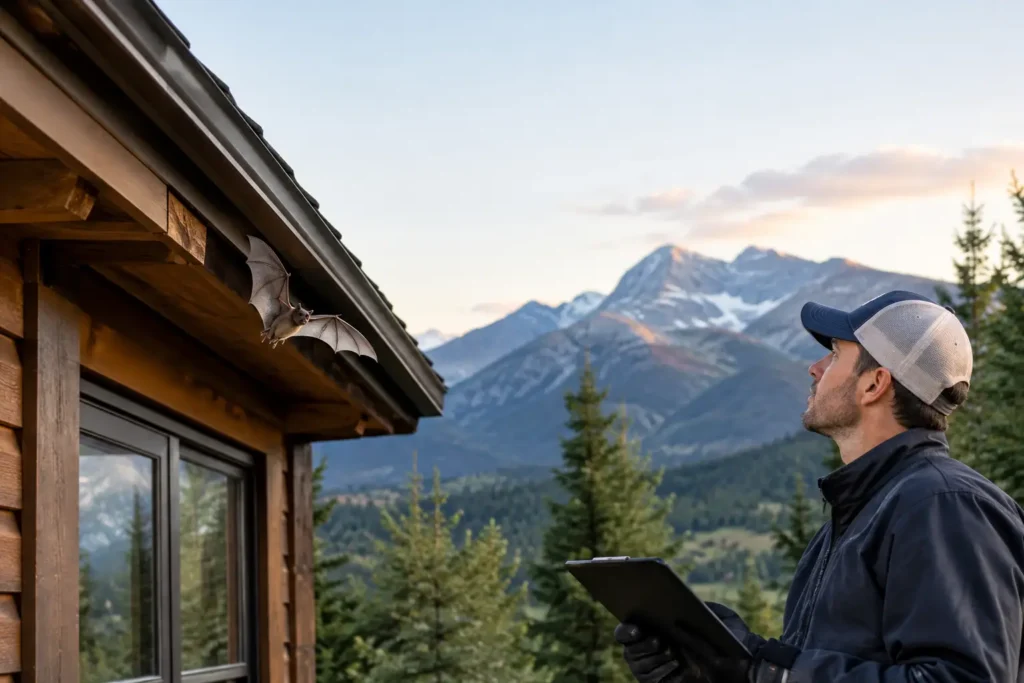
A bat slipping through a gap near a chimney or roofline can turn a quiet mountain cabin into a sanitation and safety concern. The difference between bat exclusion vs bat removal determines whether the immediate animal is handled properly and whether the building stays protected when the next colony looks for shelter. For homes, cabins, rentals, and commercial properties around Big Bear Lake and Lake Arrowhead, the right answer is usually not one service or the other. It is a humane process that handles the active problem, protects people, and closes the entry points bats are likely to use again.
Bat exclusion vs bat removal: the key difference
Bat removal addresses bats that are currently inside a structure. That may mean a single bat in a bedroom, several bats in an attic, or a colony using a wall void, roofline, or chimney. The immediate goal is to get bats out of the occupied space safely and avoid direct contact.
Bat exclusion is the prevention work that follows a careful inspection. It identifies the cracks, construction gaps, damaged vents, loose flashing, and openings around eaves that allowed bats to enter. Those secondary openings are sealed, while the active exit is managed so bats can leave without being trapped inside.
Think of removal as solving the active wildlife issue. Exclusion solves the building issue that made the wildlife issue possible. Removing bats without exclusion can leave a home open to repeat activity. Sealing a building without accounting for bats still inside can create a much worse problem, including trapped animals, odor, and contamination in inaccessible areas.
Why mountain properties need a careful approach
Bats can enter openings that look too small to matter to a property owner. A gap at a fascia board, an unprotected attic vent, separation around utility lines, or a worn roof transition can be enough. In wooded, high-altitude communities, cabins may sit vacant for part of the year, and seasonal weather can expand existing gaps or loosen building materials.
A bat sighting indoors does not automatically mean there is a colony in the attic. One bat may have entered through an open door, fireplace flue, or window. However, repeated sightings at dusk, chirping or scratching near the roofline, staining around an exterior opening, and droppings below a consistent entry point deserve a professional inspection.
The health concern is not something to guess about. Bats should never be handled with bare hands. If a bat is found in a room where someone may have been sleeping, or where a child, pet, or person unable to report contact was present, contact local public health guidance and a medical professional promptly. A wildlife specialist can address the animal and access point, but potential human exposure needs appropriate health guidance.
When bat removal is the immediate priority
Immediate removal is appropriate when a bat is inside a living area, business, garage, or other occupied portion of the property. The focus is on safely containing the situation, reducing the chance of contact, and determining how the bat entered.
If you find a bat inside, keep people and pets away from it. Close interior doors to limit where it can travel, avoid swinging at it or trying to catch it, and do not release it outside if there is a possible human or pet exposure concern. A bat that appears grounded, injured, or unusually active during daylight should also be left alone and assessed by a trained professional.
Removal is also needed when an inspection confirms active roosting in the structure. But a humane professional should not treat bats like rodents or insects. Poison, glue traps, and indiscriminate trapping are unsafe, inhumane, and can leave dead animals in walls. Bat work requires methods that let the animals leave while preventing their return.
When exclusion is the service that protects your property
Exclusion is the long-term defense. Once the active bat exit is identified, a technician seals every non-active entry point and installs an appropriate one-way exclusion device at the primary exit. Bats can leave to feed, but they cannot get back into the building.
After the bats have had time to exit, the final opening is sealed. The process should include a close inspection of the roofline, attic vents, chimney areas, gable ends, siding transitions, and other likely access points. The exact repairs depend on the construction and condition of the property. A historic cabin, a newer vacation rental, and a commercial lodge can each have different weak points.
Good exclusion work is more than pushing sealant into a visible crack. Materials must hold up to local weather, fit the structure, and prevent access without creating ventilation or moisture problems. That is why a full inspection matters. Closing the wrong opening first may force bats deeper into the structure or cause them to seek another gap nearby.
Timing matters, especially during maternity season
Humane bat exclusion is not always a same-day seal-up. During maternity season, flightless young may be present inside a roost. Excluding adult bats at that time can separate mothers from pups that cannot leave, resulting in animal deaths and a serious odor and sanitation issue inside the building.
The correct timeline depends on the species, local conditions, and whether dependent young are present. A qualified wildlife professional evaluates the activity and recommends a plan that respects wildlife protections while still addressing the property risk. In some cases, monitoring and temporary measures are the responsible choice until exclusion can be completed safely.
This is the biggest trade-off homeowners should understand. Fast action is appropriate when a bat is in a living space or there is a potential exposure issue. Permanent closure of an active roost, however, must be timed and performed correctly. Humane work protects your home without creating a hidden problem behind the walls.
Cleanup is part of a complete bat solution
Bat droppings, known as guano, can build up in attics, wall cavities, and areas below a roost. Beyond the odor, droppings can attract insects and contaminate insulation or stored belongings. Cleanup should not begin until the bat activity has been resolved and the access points have been secured.
A professional cleanup plan may include controlled removal of affected material, disinfection of contaminated surfaces, odor treatment, and recommendations for insulation replacement when the buildup is extensive. The scope depends on how long the bats were present and where waste accumulated. Light activity around an exterior perch is very different from a long-term attic colony.
Property owners should avoid sweeping or vacuuming dry droppings without proper precautions. Disturbing accumulated material can send dust into the air. A trained team uses appropriate protective measures and containment practices based on the conditions on site.
What a professional inspection should answer
Before approving bat removal or exclusion work, ask for a clear explanation of what the inspection found. You should know whether the issue appears to be one bat or an established roost, where the active entry point is, which secondary openings need repair, and whether timing restrictions affect the recommended plan.
You should also receive guidance on cleanup needs and practical prevention. Tree branches do not always create a bat entry point, but they can make roofline inspection and repair more difficult. Damaged screens, loose vents, and roof maintenance issues should be handled before another wildlife problem develops.
For property managers and vacation-rental owners, documentation matters. A clear service plan helps show that the issue was addressed responsibly, not simply hidden from view. It also gives maintenance teams a practical record of repairs to monitor over time.
Choose humane removal with permanent prevention
The best answer to a bat problem is rarely a quick capture or a quick patch. It is a coordinated plan: inspect the structure, address bats already inside, use humane exclusion at the right time, seal access points, and clean affected areas when needed. That approach respects an animal that plays a valuable role in the environment while protecting the people who live and work under the roof.
Outbackzack helps mountain-community property owners take that full-service approach, from inspection and humane bat removal to block-out repairs, cleanup, and disinfection. If you have seen bats entering your home at dusk, found droppings near the attic, or discovered a bat indoors, act before the next seasonal shift turns a small opening into a repeat problem. A careful inspection now can protect your property and give wildlife a safer place to remain outdoors.