
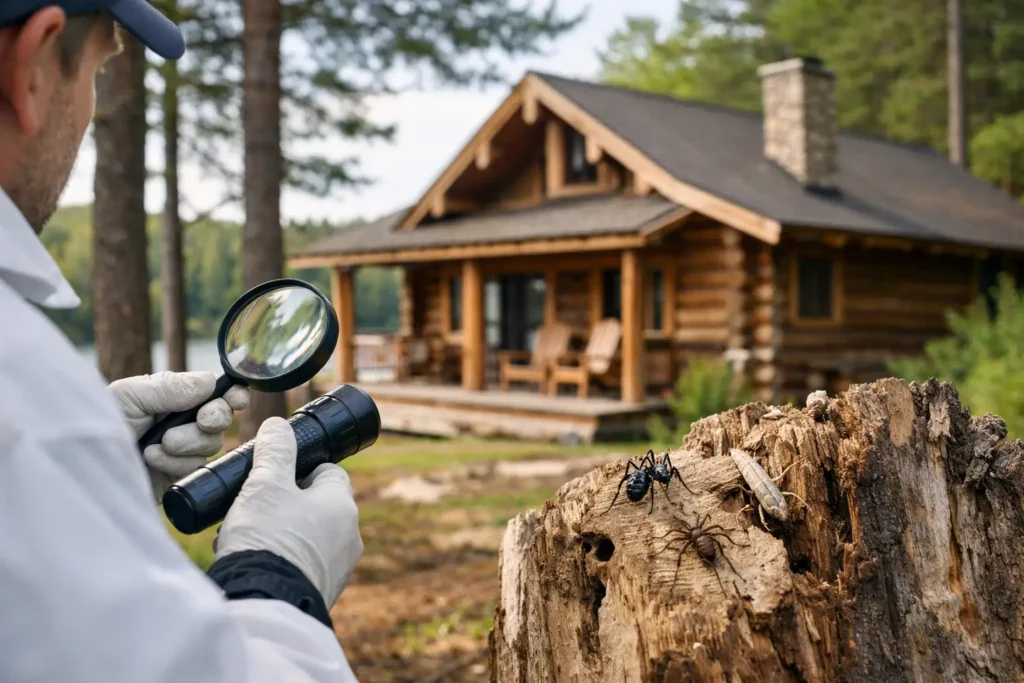
A mountain cabin can look perfect during a showing: warm pine walls, a stone fireplace, a quiet view through the trees. What you cannot see in a 30-minute walk-through may be mice in the insulation, bats in the attic, carpenter ants in damp framing, or an old raccoon entry point behind the eaves. A pest inspection before buying a cabin gives you a clear picture of the property before its hidden problems become your repair bill.
For buyers in Big Bear Lake, Lake Arrowhead, Running Springs, Crestline, and surrounding mountain communities, this is not an optional extra. Cabins sit close to forests, seasonal food sources, snow, and wildlife travel routes. Long vacancies and limited maintenance can turn a small opening under a roofline into a recurring animal access point.
Why Cabin Pest Risks Are Different
A cabin is often exposed to conditions that a typical suburban home is not. Tall pines can give squirrels and rodents a direct route to the roof. Deep winter weather can drive mice, rats, and other animals toward warm crawl spaces, walls, and attics. Seasonal owners may not notice activity for weeks or months.
Older cabins also tend to have more gaps around utility lines, roof intersections, vents, chimneys, decks, and foundations. Those openings may be easy to miss from the ground, yet they can allow ongoing access. A property can be clean and staged for sale while evidence of a past or active issue remains behind insulation, stored furniture, paneling, or attic flooring.
The goal is not to assume every animal near a cabin is a problem. Wildlife belongs in mountain communities. The concern is whether animals or insects have entered the structure, caused damage, or created conditions that put the building and future occupants at risk.
What a Pest Inspection Before Buying a Cabin Should Cover
A useful inspection goes beyond looking for a few droppings. It should evaluate active pest activity, old evidence that may point to recurring access, and the building conditions that invite the problem back.
Rodents and their damage
Mice and rats are among the most common cabin concerns. Their droppings can contaminate shelves, insulation, stored belongings, and HVAC areas. They also chew wires, pipes, vapor barriers, wood, and insulation. A few droppings in a detached shed may be manageable. Heavy attic contamination, gnawed electrical wiring, or multiple active entry points is a very different issue.
Ask whether the evidence appears current. Fresh droppings, nesting material, rub marks, grease trails, sounds in walls, and damaged food storage areas can indicate active rodents. Old droppings still matter because they show that access was possible, but the inspection should distinguish a historic issue from one that needs immediate removal and sanitation.
Wildlife in attics, crawl spaces, and rooflines
Cabins can attract squirrels, raccoons, skunks, bats, birds, and other nuisance wildlife. Each leaves different clues. A squirrel may chew an opening near a roof edge. A raccoon can damage fascia or vent covers. Bats may leave staining and droppings beneath a roosting area. Birds can block vents or create nesting debris around eaves and chimneys.
A professional should inspect likely entry points and evaluate whether the animal is currently inside, has left, or may return. This matters because sealing an opening without confirming the space is empty can trap an animal inside and create a larger problem. Humane removal and carefully timed exclusion protect the structure while treating wildlife responsibly.
Insects and moisture-related threats
Not every cabin insect is a deal-breaker, but some need a closer look. Carpenter ants can signal moisture-damaged wood. Termites, wood-boring beetles, and other insects may affect structural materials. Wasps may be nesting behind siding, under decks, or in attic voids.
Moisture is often the underlying issue. Leaks, poor drainage, wet crawl spaces, damaged flashing, and blocked vents can create conditions that support insects and wood decay. A pest inspection is strongest when it identifies both the pest evidence and the building condition that needs correction.
Contamination and cleanup needs
Droppings, urine, nesting material, carcasses, and insect debris are not just unpleasant. They can affect indoor air quality and create sanitation concerns, especially in attics, crawl spaces, wall voids, and vacation-rental properties.
The inspector should identify where cleanup or disinfection may be needed and whether insulation has been damaged or contaminated. A seller may agree to handle removal but leave behind soiled insulation or a dirty crawl space. Make sure the scope includes cleanup, not just getting the animal out.
What the Inspection Can Change in Your Purchase
Inspection findings do not automatically mean you should walk away from a cabin you love. They give you leverage and help you make a decision with open eyes. The right response depends on the type of pest, the extent of damage, whether activity is active, and how quickly access points can be repaired.
For a minor issue, you may simply budget for exclusion work after closing. For example, replacing a damaged vent screen and sealing a small utility gap may be straightforward. If the inspection finds extensive rodent contamination, chewed wiring, damaged insulation, decayed wood, or repeated wildlife entry, ask for estimates before removing contingencies.
You may be able to request that the seller complete repairs using a qualified professional, provide a credit at closing, reduce the purchase price, or allow more time for further evaluation. Get any agreement in writing. A verbal promise that a problem was handled is not enough when future safety, sanitation, and repair costs are involved.
Questions to Ask Before You Remove Your Contingency
Bring the inspection findings into a practical conversation with your agent, seller, and pest professional. Ask whether the activity is active, where animals or insects entered, and whether the proposed repair actually prevents re-entry. Also ask whether evidence of damage is visible only, or whether more investigation is needed behind walls, in the attic, or below the cabin.
Four questions are especially useful:
- Has the pest issue been confirmed as active, inactive, or impossible to determine without further monitoring?
- Which entry points need repair, and are there additional vulnerable areas around the roof, foundation, vents, and utilities?
- Is cleanup, disinfection, insulation replacement, electrical repair, or wood repair needed after removal?
- Are there seasonal factors that could make the issue worse after you move in, such as winter rodent pressure or spring nesting activity?
These answers help you compare a manageable maintenance project with a property that needs significant remediation.
Do Not Rely on a General Home Inspection Alone
A home inspector may spot obvious droppings, damaged screens, wood damage, or staining. That is valuable, but a general inspection is not always designed to identify species, trace entry routes, assess contamination, or create a removal and exclusion plan.
The best approach is to use the home inspection as a starting point and bring in a pest and wildlife specialist when evidence appears or when the cabin has been vacant, heavily wooded, older, or previously used as a rental. A focused evaluation can prevent a vague note such as “possible rodent activity” from becoming an expensive surprise after closing.
In Southern California mountain communities, local experience matters. The animals using a cabin in Fawnskin or Sugarloaf may create different access patterns than pests in a dense urban neighborhood. Outbackzack evaluates the whole problem: humane removal when needed, cleanup and disinfection, and the block-out repairs that help keep animals from returning.
Timing Matters Before You Buy
Schedule the pest inspection early enough to act on the results. Do not wait until the final days of escrow, when there may be little time to obtain estimates, negotiate repairs, or inspect a difficult attic or crawl space again.
Try to attend if possible. You will learn where the vulnerable areas are and what routine prevention will look like after closing. Keep in mind that weather can limit access to roofs, crawl spaces, and exterior areas. Snow, heavy rain, or stored belongings can hide evidence, so an inspector may recommend a follow-up when conditions allow.
A cabin should feel like a place to rest, not a place where you wonder what is scratching above the ceiling on your first night. Before you commit, have the property checked, understand what the findings mean, and make sure there is a realistic plan to remove, clean, repair, and prevent. That small step can protect your investment while respecting the wildlife that belongs outside your cabin walls.