
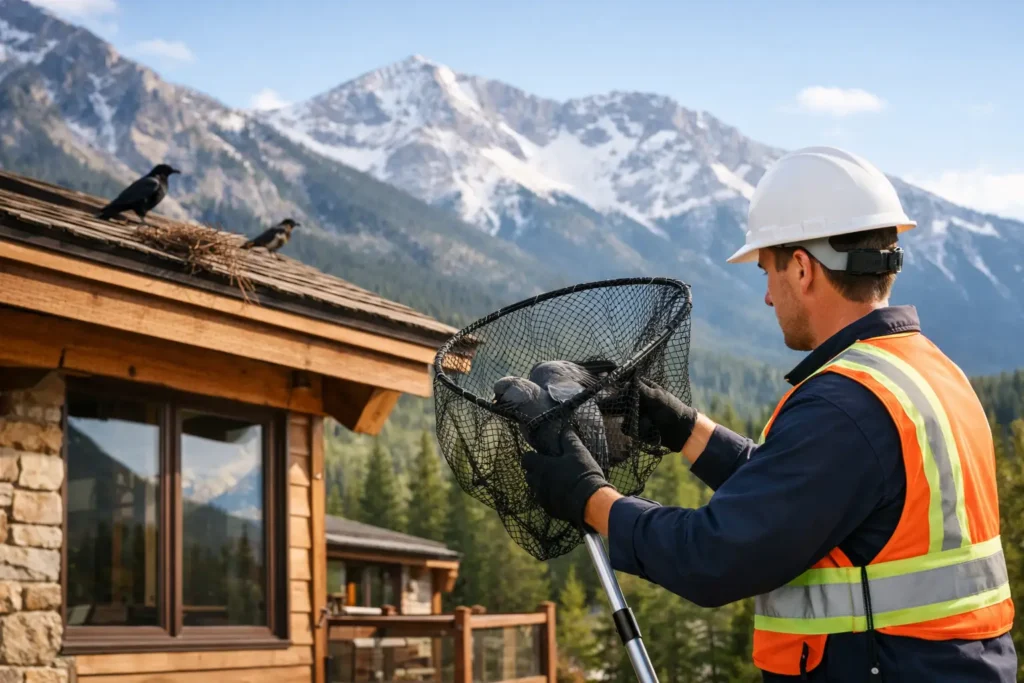
A swallow nest above the entryway, pigeons in an attic vent, or a woodpecker working the same section of siding each morning can become more than a nuisance. Birds may be part of mountain life, but when they settle into a home, cabin, rental, or business, the mess and damage can escalate quickly. Professional bird removal services address the active problem while protecting the property from the next flock, nest, or roost.
For property owners around Big Bear Lake, Lake Arrowhead, Running Springs, Crestline, and nearby mountain communities, the right solution is not simply chasing birds away. It is identifying why they selected the building, removing them humanely and lawfully, cleaning affected areas, and closing the access points that invite them back.
When Birds Become a Property Problem
A few birds on a roofline are not always cause for concern. The problem starts when birds consistently roost, nest, or enter protected parts of the structure. Eaves, chimney caps, attic vents, solar panels, signs, awnings, sheds, and crawlspace openings offer shelter from wind, snow, rain, and predators. In wooded and high-altitude communities, vacant cabins and seasonal properties can be especially attractive because bird activity may go unnoticed for weeks.
Droppings are often the first visible sign. They can stain siding, decks, walkways, vehicles, and outdoor furniture. Over time, accumulated droppings can damage finishes, clog gutters, create slippery walking surfaces, and contaminate areas around entrances, patios, storage spaces, and HVAC equipment.
Nesting material brings its own set of concerns. Dry grass, twigs, feathers, and debris can block vents or gutters and may create a fire concern near certain equipment. Birds can also carry mites, lice, fleas, and other parasites that may move into nearby living or work areas after a nest is disturbed or abandoned.
The species matters. Woodpeckers can leave repeated holes in wood siding, trim, and fascia. Swallows commonly build mud nests under eaves and over doorways. Pigeons may establish persistent roosting areas on ledges, roofs, and covered structures. Sparrows can enter small gaps around vents, soffits, and rooflines. Each situation calls for a different response.
What Professional Bird Removal Services Include
Effective bird control begins with an on-site inspection, not a one-size-fits-all product. A technician looks for species activity, entry points, nest locations, droppings, structural damage, and conditions that make the property appealing. This helps determine whether the main issue is nesting, roosting, attic entry, food access, water access, or a combination of problems.
A professional plan may include humane removal or relocation measures where appropriate, species-specific deterrents, nest management when legally permitted, sanitation, and exclusion repairs. The goal is to resolve the immediate issue without relying on methods that create unnecessary harm to birds or the surrounding environment.
Safe, species-aware removal
Not every bird can be handled the same way. Many native birds and active nests are protected under federal, state, or local regulations. Eggs, young birds, and active nests can affect what work can be performed and when. A responsible wildlife professional evaluates the situation before removal begins, rather than making promises that ignore wildlife laws or breeding season restrictions.
This is one reason DIY nest removal can backfire. Removing a nest without understanding the species or nest status can create legal concerns, leave young birds trapped inside a structure, or cause adult birds to rebuild immediately nearby. Humane bird control works with the situation, timing, and property conditions.
Cleanup and disinfection
Removal alone does not solve contamination. Droppings, feathers, nesting debris, and animal waste should be handled carefully, especially in enclosed areas such as attics, vents, garages, and crawlspaces. Disturbing dry droppings can send dust into the air, and contaminated insulation or debris may need to be removed.
Cleanup typically involves removing nesting material and waste, treating affected surfaces as needed, and addressing odors that may attract future birds or other wildlife. If birds have entered an attic or wall void, an inspection should also check for damaged insulation, blocked ventilation, and insect activity associated with old nests.
Exclusion that protects the building
Long-term bird control depends on exclusion. This means sealing or screening openings and modifying vulnerable areas so birds cannot return to the same sheltered space. Common solutions include properly fitted vent screens, chimney caps, soffit and fascia repairs, bird-proofing around roofline gaps, and protective barriers for ledges or other repeat roosting sites.
The details matter. A screen installed too loosely can be pulled aside. A gap that seems too small for a larger bird may still allow sparrows or other small birds inside. Exclusion should maintain ventilation and drainage while preventing animal entry. It also needs to be installed in a way that does not trap birds already inside.
Why Mountain Properties Need a Local Approach
Mountain homes face different pressures than dense urban buildings. Snow, wind, tall pines, seasonal vacancy, and changing temperatures can loosen materials and expose new gaps around roofs, vents, chimneys, and siding. A cabin that is secure in summer may develop an opening after a winter storm, creating a protected nesting site by spring.
Properties used as vacation rentals require particular attention. Guests may report noise in the walls, droppings near a doorway, or birds entering through a vent, but turnover can make it hard to track how long the issue has been developing. Quick inspection and clear repairs help protect both the building and the guest experience.
Commercial properties have their own concerns. Bird droppings near storefronts, outdoor seating, loading areas, signage, and employee entrances can create a sanitation and slip hazard. For a business, visible bird activity can also affect customer confidence. The right plan should limit disruption while addressing the source of the activity, not just cleaning the mess each morning.
What Not to Do When Birds Move In
It is tempting to block a hole as soon as birds are seen entering it. Do not seal an opening until you know whether birds, eggs, or young are inside. Trapping birds in a vent, attic, or wall can create odor, contamination, noise, and a more difficult removal problem.
Avoid handling droppings or nests without appropriate protective equipment. Sweeping dry waste can spread contaminated dust, while pressure washing can send debris into surrounding areas. Do not use poisons, glue products, or improvised traps. These methods can harm non-target wildlife, create legal issues, and do nothing to correct the access point that allowed the problem to start.
Visual scare devices may offer short-term results in some open areas, but established birds often adapt quickly. A plastic owl or reflective object is not a replacement for repairing the vent, screening the opening, or correcting the ledge where birds roost every day.
How to Prevent Repeat Nesting and Roosting
Prevention starts with regular observation. During spring and early summer, inspect eaves, vents, gutters, and rooflines for the beginning of nest construction. After storms, check for loose screens, shifted chimney caps, damaged siding, and gaps around utility lines. Early repairs are generally easier and less expensive than dealing with an established nesting site.
Keep outdoor food sources controlled as well. Secure trash, avoid leaving pet food outside, and clean spills around grills or outdoor dining areas. While food is not the only reason birds choose a property, easy access can encourage repeated activity around the same building.
For homes with recurring bird issues, a professional inspection can identify small weaknesses that are easy to miss from the ground. Outbackzack takes a humane, eco-friendly approach to bird problems, combining removal, cleanup, and block-out work to help property owners protect their homes without treating wildlife carelessly.
Choose a Solution That Lasts Beyond the First Visit
The best time to call is when you first see repeat activity, not after droppings have accumulated or birds have reached an attic. A prompt inspection can clarify whether the issue is a temporary nest, a persistent roost, or an access problem that will continue through the season.
A clean entryway and a quiet attic are the visible results. The real value is knowing the building has been checked, cleaned, and protected so birds can remain part of the mountain landscape instead of becoming tenants in your property.