
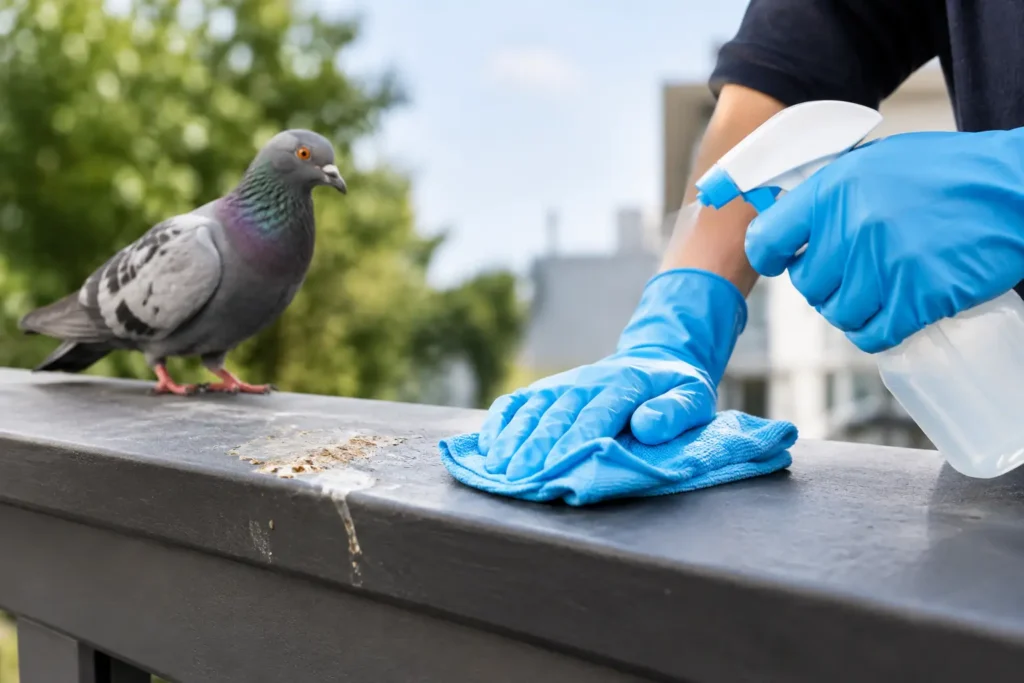
A small patch of bird droppings on a patio is one thing. A buildup in an attic, under solar panels, around a storefront sign, or across a vacation rental balcony is a sanitation problem that needs a careful response. Knowing how to disinfect bird droppings protects the people using the property while helping prevent contamination from being spread through the air, onto surfaces, or into nearby living spaces.
In mountain communities, bird activity can become persistent around cabins, eaves, chimneys, decks, sheds, and commercial buildings. Pigeons, sparrows, swallows, and other birds often return to the same sheltered roosting areas. Cleaning the mess without addressing that pattern can leave property owners doing the same unpleasant job again a few weeks later.
Why Bird Droppings Need Careful Cleanup
Bird droppings can contain bacteria, fungi, parasites, and other contaminants. The greatest concern is often dust. When dry droppings are scraped, swept, blown with a leaf blower, or disturbed by an ordinary vacuum, fine particles can become airborne and be inhaled.
Risk depends on the amount of material, the location, ventilation, and who may be exposed. A few fresh droppings outdoors can usually be handled safely with basic precautions. Heavy accumulations, dried guano in enclosed spaces, and contamination near HVAC equipment require a more controlled approach. Older adults, children, people with respiratory conditions, and anyone with a weakened immune system should not take on a significant cleanup project.
Droppings also create practical property issues. They can stain painted surfaces, corrode metal fixtures, clog gutters, damage roof materials, make walkways slippery, and leave a poor impression on customers or guests. For vacation rentals and businesses, sanitation and appearance are both part of protecting the property.
How to Disinfect Bird Droppings Safely
The guiding rule is simple: do not create dust. Before touching the affected area, keep pets, children, tenants, and customers away from it. If droppings are inside an attic, crawlspace, garage, or other enclosed area, improve ventilation if it can be done without stirring the material.
Wear disposable gloves, protective eyewear, and a properly fitted respirator rated for fine particles, such as an N95 or better. For a larger cleanup, disposable coveralls and shoe covers help prevent contaminants from being tracked through the building. A basic dust mask is not the same as a respirator and should not be relied on for substantial accumulations.
Start by lightly wetting the droppings. Use a spray bottle, pump sprayer, or low-pressure applicator with water and a suitable disinfectant solution. The goal is to dampen the material thoroughly enough that it stays in place. Do not use a pressure washer, high-powered hose nozzle, or compressed air. Those methods can spread contaminated particles across the property.
Let the disinfectant sit for the contact time stated on its label. For household-scale cleanup, use an EPA-registered disinfectant that is approved for the surface you are treating and follow all label directions for dilution, dwell time, ventilation, and protective equipment. Never mix cleaning chemicals. In particular, bleach should never be combined with ammonia, acids, or other cleaners because dangerous fumes can result.
Once the material is wet, carefully lift it with disposable paper towels, a scoop, or a scraper that can be cleaned and disinfected afterward. Place waste directly into a heavy-duty trash bag, seal it, then place that bag into a second bag before disposal. Avoid carrying an open container of droppings through the home, lobby, or occupied work area.
After the visible material is removed, clean the surface with soap and water when appropriate, then apply disinfectant again according to the label. Hard, nonporous surfaces such as concrete, metal, sealed tile, and painted trim are generally easier to disinfect than unfinished wood, insulation, fabric, or raw masonry. Let the area dry completely before allowing people or pets back into it.
Remove gloves and other disposable protective gear carefully, turning them inside out as they come off. Wash hands thoroughly with soap and warm water. Reusable tools should be washed and disinfected before being stored or used elsewhere.
What Not to Do During Cleanup
The wrong cleanup method can turn a contained mess into a wider exposure issue. Do not dry sweep bird droppings, vacuum them with a household vacuum, or use a shop vacuum unless it is specifically equipped and intended for hazardous particulate cleanup. Do not scrape dried material without wetting it first.
It is also a mistake to assume every surface can tolerate the same disinfectant. Bleach-based products may discolor fabric, damage some metals, and affect certain roof or deck materials. Read the product directions and test a small, hidden section when appearance matters. For delicate finishes or specialty materials, professional guidance is often the safer choice.
When Bird Dropping Cleanup Should Be Left to Professionals
A homeowner can often manage a small outdoor spot cleanup. The situation changes when droppings have built up over time or are located where air circulation, access, or building materials make cleanup more complicated.
Professional sanitation is strongly recommended when there is a large volume of droppings, nesting debris, dead birds, maggots or insect activity, strong odors, or visible contamination in an attic, crawlspace, duct area, or chimney. It is also the better option when droppings are on a steep roof, high ledge, solar array, commercial sign, or any surface that cannot be reached safely from the ground.
Cleanup should be paired with an inspection when birds are actively roosting or nesting. Removing droppings alone does not solve entry points, attractive ledges, damaged vents, open eaves, or roof gaps that keep birds coming back. In some cases, active nests and certain bird species are protected, which means timing and removal methods matter. A humane bird-control specialist can identify the activity before exclusion work begins.
For properties in Big Bear Lake, Lake Arrowhead, Running Springs, Crestline, and nearby mountain communities, Outbackzack provides bird cleanup, disinfection, humane removal, and exclusion work designed to address the source of the problem as well as the mess it leaves behind.
Prevent Bird Droppings From Returning
Disinfection restores a usable surface, but prevention keeps it that way. The best method depends on the bird species, the structure, and whether birds are nesting, feeding, or simply using the area as a nightly roost.
Start by removing attractants. Keep trash lids closed, clean outdoor eating areas promptly, avoid leaving pet food outside, and repair leaky fixtures that provide reliable water. If bird feeders are close to a problem area, consider relocating them away from the building and maintaining them regularly to reduce spilled seed.
Next, inspect the building itself. Birds often gain access through damaged soffits, uncapped vents, loose siding, open chimney tops, and gaps where rooflines meet walls. Durable exclusion materials can close these openings while allowing the building to ventilate as intended. The work must be species-specific. Blocking an opening while birds, chicks, or an active protected nest remain inside can create a worse problem and may violate wildlife protections.
On ledges, signs, beams, and other habitual perching areas, physical bird deterrents can reduce repeat droppings without harming wildlife. Netting, properly installed bird wire, sloped covers, and other humane exclusion options are often more effective than temporary visual scare devices. Reflective tape, plastic predators, and similar products may work briefly, but birds commonly adapt when the underlying shelter and food sources remain available.
A Cleaner Property Starts With the Right Next Step
Bird droppings should be treated as a cleanup and prevention issue, not just an eyesore to hose away. Handle small outdoor deposits cautiously, keep dust down, use the right protective equipment, and disinfect surfaces according to product directions. When buildup is extensive or birds are still active around the structure, a professional inspection can protect your property, the people in it, and the wildlife that shares these mountain communities.