
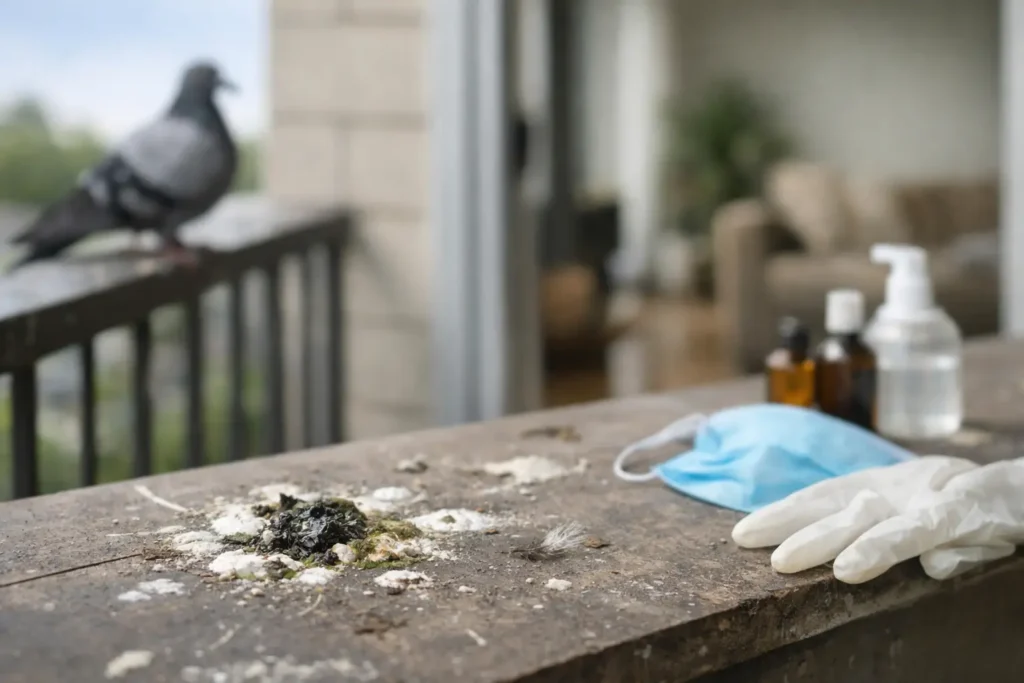
That white splatter on a deck rail or attic vent does not look like an emergency. But bird droppings health risks become very real when waste builds up around roofs, attics, entryways, garages, and HVAC equipment. In mountain communities where cabins sit near trees, ledges, and nesting zones, a small mess can turn into a sanitation problem fast.
For property owners in places like Big Bear Lake, Lake Arrowhead, and Running Springs, the issue is rarely just appearance. Bird waste can carry disease organisms, damage building materials, attract insects, and create unsafe cleanup conditions. The longer droppings sit, the more likely they are to dry out, spread, and contaminate surrounding surfaces.
Why bird droppings health risks should be taken seriously
Fresh droppings are unpleasant enough, but the bigger concern often comes after they dry. Once waste becomes dusty and disturbed by sweeping, foot traffic, wind, or maintenance work, tiny particles can move into the air. That is where exposure risk increases, especially in enclosed spaces like attics, crawl spaces, sheds, and covered patios.
Bird droppings may contain bacteria, fungi, and parasites that are not visible to the eye. Not every pile of droppings carries disease, and not every exposure leads to illness. Still, repeated contact or cleanup without proper protection raises the odds of a problem. People with asthma, allergies, weakened immune systems, or existing lung conditions are usually more vulnerable.
Children, older adults, tenants, employees, and guests may not even realize contaminated areas are unsafe. A vacation rental entryway, restaurant loading zone, warehouse beam, or rooftop unit can quietly become a recurring health and liability issue if droppings are allowed to accumulate.
What illnesses are linked to bird droppings health risks
The most commonly discussed hazards involve fungal and bacterial exposure. Histoplasmosis is one of the better-known concerns. It is associated with a fungus that can grow in soil or debris contaminated by bird or bat droppings, especially where waste has built up over time. When those spores become airborne, they can be inhaled.
Cryptococcosis is another fungal illness tied to bird waste, especially pigeon droppings in large quantities. Psittacosis, though less common, is a bacterial infection associated with birds and can affect people who breathe in contaminated dust. Salmonella and E. coli contamination are also possible in certain settings where droppings contact surfaces people touch.
This does not mean every bird problem turns into a medical event. It does mean accumulated waste should be handled like a potential biohazard rather than a basic housekeeping task. Risk depends on the bird species, the amount of droppings, moisture levels, ventilation, and how cleanup is performed.
Airborne exposure is often the hidden hazard
Many property owners think the main danger is touching droppings. Direct contact matters, but inhalation is often the bigger issue. Sweeping dry droppings, using a leaf blower, scraping a ledge without wetting the area first, or entering a poorly ventilated attic can all send contaminated dust into the air.
That is why casual cleanup can backfire. What starts as an attempt to handle the problem quickly may increase exposure for the person cleaning and anyone nearby.
Outdoor messes can still affect indoor health
Bird waste on roofs, solar panels, vents, balconies, and window ledges often seems like an outside-only problem. In reality, outdoor buildup can migrate indoors through ventilation systems, tracked debris, or roofline gaps. If birds are nesting near soffits or attic openings, waste can collect where people do not see it until odors, stains, or insect activity appear.
Where bird droppings cause the most trouble
Some areas are higher risk simply because waste accumulates unnoticed. Attics are one of the biggest examples. Birds entering through damaged vents or openings may leave droppings near insulation, framing, and ductwork. That creates a sanitation problem and can complicate future repairs.
Commercial properties often see trouble on signage, roof edges, loading docks, awnings, and service entrances. Vacation rentals and cabins may have repeated activity around chimneys, decks, and covered porches, especially when properties sit vacant between visits. Woodpeckers, swallows, pigeons, and sparrows all create different patterns of activity, but the end result is similar – contamination, odor, and recurring mess.
Moisture changes the equation too. Wet droppings can seep into porous materials, stain siding, and accelerate rot or corrosion. Dry droppings are more likely to become airborne when disturbed. Neither situation is ideal.
Why DIY cleanup is not always the safe option
A single dropping on a railing is one thing. Heavy accumulation under a roost, inside an attic, or around active nesting sites is another. The problem with DIY cleanup is not just missing a spot. It is using the wrong method.
Dry sweeping, power washing without containment, or handling waste without gloves and respiratory protection can spread contamination. Standard household vacuums are also a poor choice because they may blow particles back into the air unless they are designed for hazardous fine debris. People often underestimate how much droppings have soaked into insulation, wood, fabric, or vent screens.
There is also the wildlife side of the issue. If birds are still roosting or nesting on the structure, cleanup alone will not solve the problem. Waste will return, and disturbing active nests may create legal or ethical issues depending on the species and season. Humane removal and exclusion matter just as much as sanitation.
What proper cleanup and remediation should include
Safe remediation starts with identifying where the droppings are, how extensive the contamination is, and whether birds are still active on the property. The next step is controlled removal using methods that reduce dust and limit cross-contamination.
In many cases, the area should be dampened appropriately before waste is disturbed. Contaminated material may need to be bagged and removed rather than simply brushed aside. If insulation, nesting material, or porous debris has been heavily affected, replacement may be the safer route. After removal, surfaces may need disinfection based on the location and level of exposure.
The final step is prevention. Without sealing entry points, screening vulnerable areas, or addressing the ledges and gaps birds are using, the health issue comes right back. That is why cleanup and exclusion should be treated as one job, not two separate problems.
Protecting homes, rentals, and businesses in mountain communities
Mountain properties face a different set of pressures than tightly packed urban buildings. Cabins and homes near forest edges often have more roof angles, eaves, outbuildings, and quiet seasonal periods that make nesting easier. Snow, wind, and temperature swings can also loosen vents, lift flashing, and create small openings birds use.
For homeowners, the concern is family health, odors, and damage. For rental owners and property managers, it is also about guest experience and liability. For commercial sites, sanitation issues around customer entrances, storage zones, and rooftops can quickly become a business problem.
That local context matters. A humane, eco-conscious approach is especially important in wildlife-heavy areas where the goal is not just removal, but responsible control that protects both people and the surrounding environment. Outbackzack works with that balance in mind, handling nuisance bird issues with a focus on safe cleanup, exclusion, and long-term prevention.
When to call a professional
If droppings are light and isolated on an easy-to-clean exterior surface, basic caution may be enough. But if you are dealing with repeated buildup, attic contamination, nesting activity, strong odors, stains around vents, or droppings near air intake areas, it is time for professional help.
The same goes for properties where occupants have respiratory issues, where contamination affects shared spaces, or where cleanup would require climbing, crawling, or disturbing enclosed debris. In those situations, the cost of doing it wrong is higher than the cost of bringing in someone equipped to handle it safely.
Bird problems tend to grow quietly. The droppings show up first, then the odor, then the staining, then the insects, and eventually the question of what has been spreading through the space all along. Taking it seriously early is not overreacting. It is how you protect the people using the property and keep a manageable problem from becoming a much bigger one.
If bird activity has left behind more than a surface mess, the safest move is to treat it like a health issue, not just a cleanup chore.