
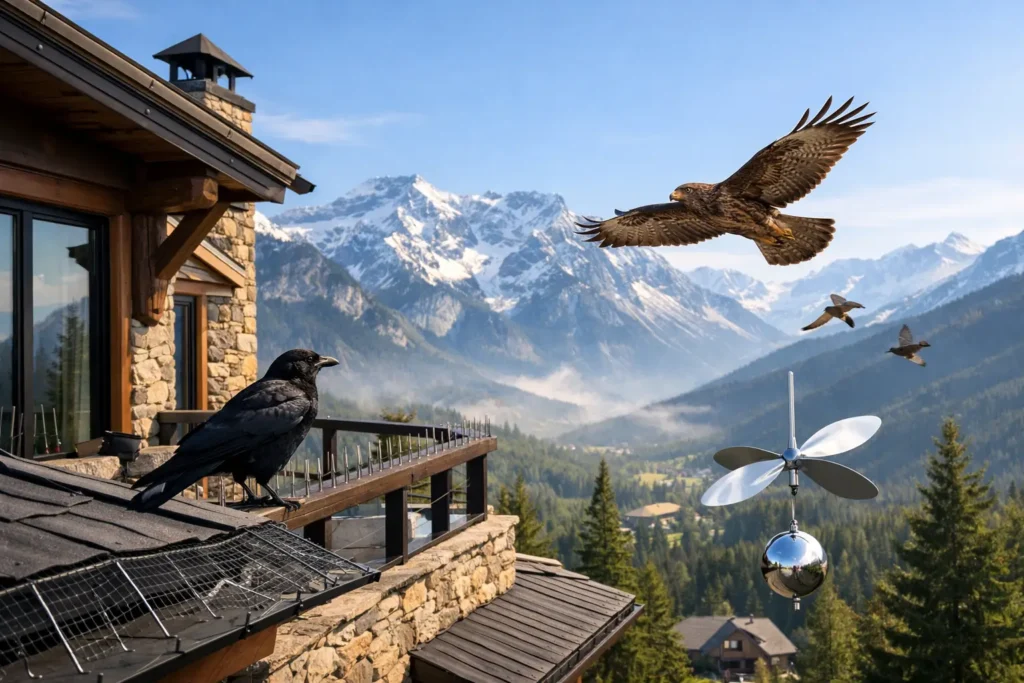
A swallow nest over a cabin entry, pigeons under a solar array, or a woodpecker opening up cedar siding can turn into more than an inconvenience. The best bird control solutions address the species, the damage, and the reason birds chose the structure in the first place. For Big Bear, Lake Arrowhead, and other mountain properties, that means protecting buildings without treating wildlife carelessly.
Bird problems are rarely solved by simply chasing birds away. If the same ledge, vent, eave, or attic opening remains available, the birds often return or another species moves in. Effective control starts with a close inspection, then combines humane removal, cleanup, repair, and prevention that fits the property.
Start With the Bird and the Damage
Bird control is not one-size-fits-all. Pigeons may roost on rooflines and create heavy droppings around commercial entrances, balconies, and equipment. House sparrows can move into vents, attic spaces, and gaps around exterior trim. Swallows build mud nests along eaves and covered patios. Woodpeckers may repeatedly peck siding, fascia boards, and trim while looking for insects, storing food, or defending territory.
The type of activity matters as much as the bird itself. A few birds feeding in a yard may need no intervention. Nesting over a doorway, droppings near a food-service area, blocked ventilation, or birds entering a roof void require a faster response. Droppings can create slip hazards, stain finishes, contaminate surfaces, and attract insects. Nesting materials can clog vents and create conditions that encourage moisture damage.
Some bird species and active nests are protected under federal or state rules. Timing and identification matter. A responsible bird control plan never assumes that a nest can be removed immediately. It considers whether eggs or young are present and uses legal, humane methods to prevent future access once the site can be safely addressed.
Best Bird Control Solutions Use Layers of Protection
The strongest bird control plan combines exclusion with site-specific deterrents. The goal is to make the building unsuitable for nesting or roosting while leaving birds the option to relocate naturally.
Exclusion repairs stop birds from getting inside
For birds entering attics, crawlspaces, chimneys, or wall cavities, exclusion is usually the most valuable long-term solution. A technician identifies access points around roof returns, damaged screens, open vents, loose siding, gaps under eaves, and other vulnerable areas. Those openings can then be repaired or protected with durable materials designed to allow airflow where needed while keeping birds out.
Exclusion must be done carefully. Sealing an opening while a bird is trapped inside creates a new problem and can lead to odor, noise, or interior damage. Proper work confirms that birds have exited and that no active nest or dependent young will be affected before final block-out repairs are completed.
Physical barriers protect ledges, eaves, and equipment
Bird netting, wire systems, properly fitted screens, and other physical barriers can be highly effective in the right location. They are often useful around open loading areas, covered patios, carports, rooftop equipment, solar panel gaps, and large roosting zones. A barrier works best when it is tightly installed, maintained, and chosen for the shape of the structure.
There is a trade-off: barriers can be more visible than small deterrent devices, especially on historic cabins or highly visible storefronts. But on problem areas with repeat nesting or substantial pigeon activity, a well-installed barrier often provides more dependable protection than temporary scare tactics.
Ledge deterrents discourage repeat roosting
Narrow ledges, signs, beams, parapets, and roof edges can sometimes be protected with humane anti-roosting systems. The right option depends on the ledge width, the bird species, weather exposure, and how visible the installation will be. These systems are designed to make landing less comfortable, not to injure birds.
They are not appropriate everywhere. A device that works for pigeons on a flat commercial ledge may not solve a swallow nesting issue under an eave. Installing the wrong deterrent can also trap leaves, snow, or debris, which is a real concern in mountain communities. Inspection and correct placement make the difference.
Remove attractants where practical
Food sources, standing water, open trash, and sheltered roosting areas can keep birds close to a property. For homes, this may mean cleaning up spilled birdseed, securing garbage, and avoiding outdoor pet food. For commercial properties and vacation rentals, it may include reviewing dumpster areas, loading zones, patio dining spaces, and outdoor storage.
Attractant reduction will not replace exclusion when birds are already nesting in a building. It does, however, make every other control method more effective. If a site continues to offer food and an easy place to roost, birds have little reason to move on.
Cleanup Is Part of Humane Bird Control
Removing birds without addressing droppings and nesting debris leaves a property vulnerable to recurring activity. Birds are drawn back to familiar roosting and nesting areas, especially when old materials remain in place. Cleanup also protects the people who use the building.
Bird droppings should not be dry-swept or casually blown off a surface. Disturbing dried droppings can spread dust and contaminants into the air. Professional cleanup uses appropriate protective procedures to remove waste, nesting material, and affected debris safely. Disinfection may be needed in attics, vents, storage areas, patios, or other spaces where contamination is significant.
After cleanup, repairs are easier to assess. Water-stained insulation, damaged screens, chewed or pecked wood, loose fascia, and blocked vents can be identified and corrected before they become a larger maintenance issue.
What Works in Mountain Communities
Mountain homes and businesses face bird pressure that differs from dense urban areas. Cabins may sit empty for part of the year. Tall pines and wooded lots give birds easy cover near rooflines. Snow, wind, and seasonal weather can damage screens, loosen trim, and expose small entry points that go unnoticed until birds move in.
Vacation rentals need particular attention between guest stays. A nest above an entry, droppings on a deck, or birds in an attic can quickly become a sanitation concern and a guest complaint. Property managers benefit from scheduled exterior inspections of vents, eaves, decks, chimney caps, and roof transitions, especially before peak rental periods and after storms.
Older homes may need a more tailored approach than newer construction. Preserving the character of a wood-sided cabin matters, but so does stopping woodpecker damage before repeated holes allow moisture or other wildlife into the structure. In these situations, the best result often combines repair, deterrence, and an inspection for insects or other conditions attracting the bird.
When Professional Bird Control Is the Better Choice
A homeowner can handle simple maintenance, such as securing a loose trash lid or removing an unused feeder. But professional help is a safer choice when birds are inside a structure, droppings have accumulated, active nesting may be involved, or access requires ladders and roof work.
A qualified wildlife control specialist can identify the species, check for legal nesting restrictions, locate every entry point, and recommend methods that fit the building. The work should focus on humane removal and prevention, not quick fixes that force birds elsewhere on the property. Outbackzack provides this kind of local, eco-conscious bird control for homes, cabins, rentals, and commercial properties throughout Southern California mountain communities.
Avoid relying on noise makers, plastic predators, reflective objects, or other visual scares as a permanent answer. Birds frequently adapt to them, particularly when a reliable food source or protected nest site remains available. These products can sometimes support a larger plan, but they rarely replace repairs and exclusion.
If birds are returning to the same spot, treat that pattern as useful information. It usually points to a gap, a sheltered ledge, a food source, or a maintenance issue worth fixing now. A careful inspection and humane prevention plan can protect your property while giving local wildlife the respect it deserves.