
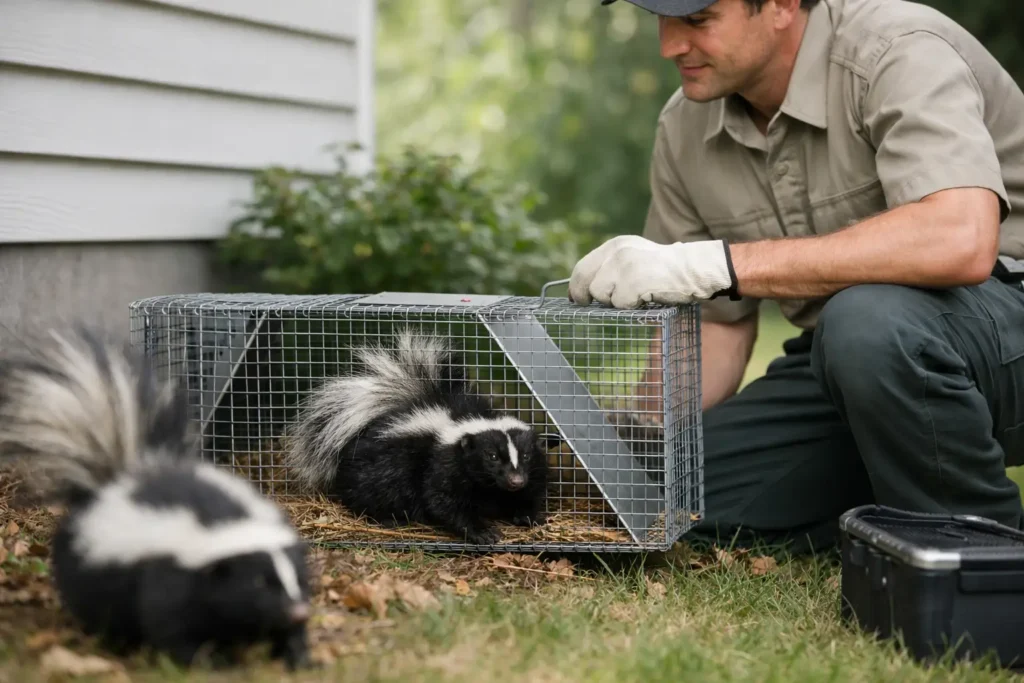
The odor can move through a cabin faster than most homeowners expect. It can settle into insulation, crawlspaces, stored belongings, and the spaces beneath decks before you even see the animal responsible. A professional skunk removal service addresses more than the skunk in your yard. It identifies where the animal is sheltering, removes it humanely, cleans up the affected area, and closes the openings that could bring the next one in.
For homes, vacation rentals, and commercial buildings across the San Bernardino mountain communities, a skunk problem is rarely just a one-night nuisance. Wooded lots, open crawlspaces, sheds, trash storage areas, and quiet seasonal properties create ideal shelter. Fast, responsible action protects your property without treating wildlife carelessly.
When a Skunk Removal Service Is Urgent
A skunk crossing the yard after dark is not always an emergency. Skunks are common in mountain and semi-rural areas, and they usually prefer to avoid people. The concern starts when a skunk repeatedly appears near the structure, spends daylight hours around the property, or disappears beneath a deck, porch, shed, cabin, or crawlspace.
Strong, lingering odor is another clear sign. A skunk may spray when startled by a pet, trapped near a doorway, or surprised in a garage. If the smell is strongest inside a crawlspace, wall void, or lower level, the animal may be sheltering close to the building. That is a situation worth inspecting promptly, especially if guests, children, pets, or tenants use the property.
Call for help quickly if a skunk appears injured, unusually aggressive, disoriented, or active during the day. These behaviors do not automatically mean the animal is sick, but they are not situations to handle yourself. Keep people and pets away, avoid cornering the animal, and let a trained wildlife professional assess the conditions safely.
Why Skunks Settle Near Mountain Homes
Skunks are looking for the same things every nuisance animal wants: shelter, food, and a quiet place to raise young. A gap under a deck can offer protection from weather and predators. An open crawlspace may be dry, dark, and undisturbed. Pet food left outside, unsecured garbage, birdseed, fallen fruit, and accessible compost can make the same property even more appealing.
Mountain cabins and second homes can be especially vulnerable. A building that sits empty for stretches of time gives wildlife an opportunity to investigate and move in without interruption. Snow, cold weather, and changing seasons can also push animals toward warmer protected spaces around foundations and outbuildings.
Skunk activity often overlaps with other property issues. A damaged vent screen, loose foundation panel, or opening created by rodents can become a route under the building. That is why removal alone is not enough. If the entry point remains open, another skunk, raccoon, squirrel, or rodent may use it later.
What a Skunk Removal Service Should Include
Effective skunk work begins with an on-site inspection. The goal is to determine whether the animal is simply passing through or has established a den beneath the structure. A trained technician looks for tracks, droppings, disturbed soil, fur, odor concentration, feeding sources, and vulnerable openings around the home or commercial property.
The inspection also matters because skunk problems can be seasonal. A female may be using a sheltered area as a den with young. In those cases, removal has to be planned carefully so animals are not separated and the property is not left with a more complicated odor or wildlife issue. Humane wildlife removal is not a one-size-fits-all trap placement.
Humane Removal With Property Protection in Mind
Professional removal methods should be selected for the location, the animal’s behavior, and applicable wildlife rules. The objective is to resolve the nuisance issue while minimizing stress to the animal and reducing the chance of spraying near your home.
Trying to chase a skunk away with loud noises, bright lights, garden hoses, or household chemicals can backfire. So can blocking an opening before confirming that every animal has left. A trapped skunk may spray inside a crawlspace, damage materials while trying to escape, or leave young animals behind.
A qualified technician can determine the right approach, monitor the situation, and make sure the structure is ready for exclusion only after removal is complete. That protects the animal, your property, and anyone who has to work or live nearby.
Cleanup and Odor Control
Skunk odor is not just unpleasant. It can cling to porous building materials, ventilation pathways, fabrics, and stored items. If a skunk has sprayed under a deck or inside a crawlspace, surface-level deodorizing is rarely enough. The source area may need targeted cleanup and treatment to reduce persistent odor.
Droppings and soiled nesting material should also be handled with care. Wildlife waste can contaminate surfaces and attract insects or other animals. Professional cleanup and disinfection help restore the area after an active den or repeated skunk activity.
The right level of remediation depends on where the problem occurred. A brief spray in an open yard may need very little work. A den in an enclosed crawlspace, under a rental cabin, or beside an HVAC intake may require more detailed cleanup. An inspection gives you a clear picture of what is necessary instead of paying for unnecessary work.
Exclusion Repairs That Prevent Repeat Visits
After removal, exclusion is the step that turns a temporary fix into long-term protection. This may include securing crawlspace entrances, repairing foundation gaps, screening vents, reinforcing access beneath decks, and addressing damaged areas around sheds or garages.
The repair needs to fit the property. A mountain cabin with uneven terrain, older construction, or multiple additions may have several low-level gaps that are easy to miss. Commercial properties can have loading areas, utility penetrations, trash enclosures, and landscaping features that create their own access points.
A good wildlife professional looks beyond the obvious opening. The goal is to reduce the conditions that made the property attractive in the first place. Removing food sources, managing garbage, keeping pet food indoors, and maintaining clear access around the foundation can all support exclusion work.
What Not to Do When You Suspect a Skunk Den
Do not crawl under the structure to investigate. Skunks usually avoid confrontation, but a confined animal has limited options and may spray if it feels threatened. Keep dogs leashed, especially at dawn and dusk, and do not let them investigate brush piles, deck gaps, or openings around sheds.
Avoid using poison, smoke, mothballs, ammonia, or other home remedies. These methods can be unsafe for people, pets, and non-target wildlife, and they do not solve the access problem. They can also make odor contamination worse by causing an animal to die in an inaccessible area.
Do not seal an opening just because you saw a skunk enter it once. There may be more than one animal inside, and a denning mother may have young that are not visible. A professional inspection helps determine when and how an opening can be closed responsibly.
Local Experience Matters for Skunk Problems
Wildlife behavior is shaped by the property and the terrain around it. Homes in Big Bear Lake, Big Bear City, Sugarloaf, Fawnskin, Lake Arrowhead, Running Springs, Crestline, Cedar Glen, Twin Peaks, and Green Valley Lake face different conditions than dense urban neighborhoods. Steep lots, heavy tree cover, seasonal occupancy, snow, and nearby open space all affect how animals move and where they den.
That local knowledge matters when deciding whether a skunk is likely traveling through, feeding nearby, or living beneath the building. It also matters when planning repairs that can stand up to weather and wildlife pressure over time.
Outbackzack approaches skunk issues with a practical, eco-friendly focus: remove the nuisance animal humanely, address contamination where needed, and help protect the property from another entry. That approach is tough on the problem without losing respect for the wildlife that belongs in the mountain environment.
If a skunk has made your deck, crawlspace, shed, or rental property part of its routine, do not wait for odor, damage, or a pet encounter to force the issue. A timely inspection can give you a clear plan and help keep your home or business comfortable, clean, and protected.