A scratching sound above the bathroom ceiling, a bird fluttering in the attic, or debris collecting below a gable vent usually points to one thing: an exterior opening has become a wildlife entry point. Knowing how to wildlife proof vents protects your home without resorting to poison, traps that injure animals, or repairs that block the ventilation your building needs.
In mountain communities, vents are especially vulnerable. Cold weather sends mice, squirrels, and other animals toward warmth, while cabins and vacation homes may sit empty long enough for a small opening to become an active nesting site. The right solution is not simply covering every vent with whatever material is on hand. It is identifying the species, confirming animals are out, and installing exclusion that is durable, humane, and safe for the vent’s purpose.
Start With the Vent Type and the Animal Activity
Not all vents should be protected the same way. Attic gable vents, roof vents, soffit vents, foundation vents, dryer vents, and bathroom exhaust vents each have different airflow and safety requirements. A screen that works well over a gable vent can create a serious lint buildup problem on a dryer vent.
Before sealing anything, inspect the area from the ground and, when it is safe, from inside the attic or crawlspace. Look for droppings, nesting material, staining around the vent, chewed wood, oily rub marks, feathers, and insulation that has been pulled aside. Fresh signs tell you the opening may still be in use.
The size and type of damage can offer useful clues. Small gaps and chew marks may point to mice or rats. Torn screens and displaced vent covers are common with squirrels. Birds often leave visible nesting material at louvers or gable vents. Bats can enter through remarkably narrow gaps near rooflines, vents, and siding transitions.
Do not seal a vent just because you see signs of past activity. Closing an active entry can trap animals inside walls or attics, creating odor, damage, and a more difficult removal problem. It can also separate young animals from their mothers. A humane exclusion plan always starts by making sure occupants have safely left.
How to Wildlife Proof Vents With the Right Materials
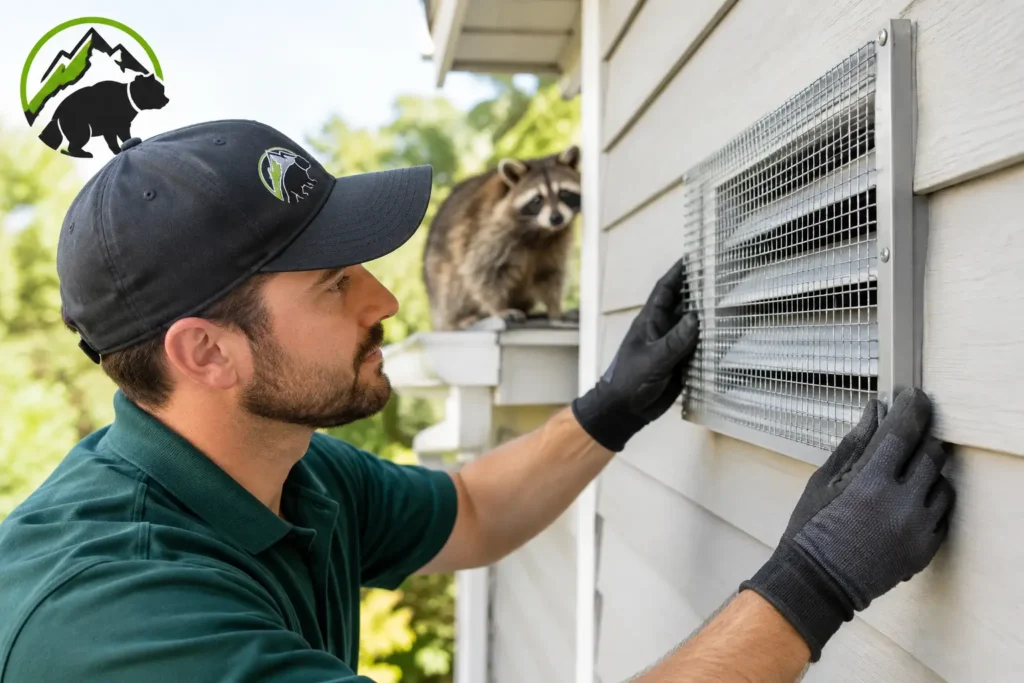
For most attic, gable, soffit, and foundation vents, the goal is to place a durable barrier over the opening while preserving ventilation. Galvanized steel mesh or heavier welded wire mesh is generally more reliable than plastic screening, which can be chewed, torn, or weakened by weather. The correct mesh opening depends on the animal pressure and the vent design, but the material must be small enough to stop mice and sturdy enough to resist squirrels and raccoons.
The barrier should be securely fastened to solid framing or masonry, not loosely attached to thin louvers alone. Exterior-grade screws and washers help hold mesh in place and prevent animals from pulling up an edge. Cut edges should be folded or finished so they do not create sharp hazards for people, pets, or wildlife.
Avoid sealing a vent with solid wood, foam, caulk, or expanding spray foam unless a qualified professional has determined that the opening is not needed for airflow. Attics, crawlspaces, and exhaust systems need ventilation to help control moisture, heat, and condensation. Blocking that airflow can contribute to mold, wood deterioration, and premature roof problems.
A good wildlife-proofing repair also addresses the area around the vent. Animals often exploit loose trim, dry-rotted fascia, warped siding, or gaps where a vent housing meets the structure. Reinforcing only the screen while leaving a half-inch gap beside it does not solve the entry issue.
Dryer and Exhaust Vents Need Special Care
Dryer vents are not a place for standard wire mesh. Lint can collect on mesh, restrict airflow, and increase fire risk. Instead, use a dryer vent cover designed to keep wildlife out while allowing the damper to open freely during operation. Clean the vent line regularly, because even the best exterior cover cannot compensate for a duct already restricted by lint.
Bathroom and kitchen exhaust vents also need covers designed for their specific use. If birds or rodents have nested in an exhaust duct, the nest should be removed only after confirming it is inactive and after considering any applicable wildlife protections. Then the duct and exterior hood should be cleaned and checked for damage before a proper wildlife-resistant cover is installed.
Use Humane Exclusion Before Permanent Repairs
When an animal is actively using a vent, the repair process matters as much as the material. The humane approach is to give the animal a way to exit, then prevent re-entry once the space is empty. One-way exclusion devices can be effective for certain animals, but they must be fitted to the exact entry point and monitored carefully.
Bats require particular caution. They provide valuable insect control, and many species are protected. Bat exclusion should be planned around seasonal timing so flightless young are not trapped inside. A bat issue is not a job for sealing holes at random or using toxic products. A professional inspection can identify entry gaps, determine whether bats are present, and establish the appropriate exclusion window.
Bird nests also require a careful response. Some native birds and their active nests are protected by law. If eggs or young are present, removal may need to wait until nesting is complete. Once the nest is inactive, the vent can be cleaned, disinfected as needed, and fitted with an appropriate guard to prevent another nesting attempt.
Rodents may seem easier to handle, but the same principle applies: do not close the last opening until you know the animals are out. Mice and rats can find alternate ways through wall voids, wiring gaps, or roof intersections if an exclusion repair is incomplete. Their droppings and nesting material should be handled with proper protective equipment and sanitation procedures rather than swept or vacuumed dry.
Inspect the Whole Building, Not Just One Vent
Wildlife rarely enters through only the most obvious weak spot. Once an animal has found shelter around a vent, inspect the rest of the structure for related vulnerabilities. Check roof intersections, attic louvers, eaves, crawlspace openings, utility penetrations, damaged screens, garage corners, and gaps around pipes and cables.
Pay close attention to branches near the roofline. Squirrels and rodents use overhanging limbs as access routes, while raccoons can climb gutters, downspouts, and nearby structures. Trimming branches away from the roof can reduce access, though the appropriate clearance depends on the tree species, slope, and property conditions.
Outdoor attractants should also be managed. Secure trash, clean up fallen fruit when applicable, store birdseed carefully, and avoid leaving pet food outside. These steps do not replace exclusion, but they reduce the reasons wildlife keeps investigating the building.
For vacation properties in Big Bear Lake, Lake Arrowhead, Crestline, and nearby mountain areas, a seasonal inspection is worth the effort. Check vents before winter weather arrives and again after heavy snow, wind, or storms. Snow load, ice, fallen branches, and shifting materials can damage screens and vent covers that looked secure only months earlier.
Know When a Professional Inspection Is the Safer Choice
A simple, inactive vent opening may be an appropriate repair for a handy property owner. But a professional should assess the situation when there are bats, active birds, repeated rodent activity, difficult roof access, contamination in an attic or crawlspace, or evidence that animals are inside walls.
The trade-off is straightforward: a quick patch may cost less today, but an incorrect repair can trap animals, damage a ventilation system, or lead to another infestation through an overlooked gap. Humane wildlife removal and exclusion work are designed to solve the current problem while protecting the animal and reducing the chance of a repeat entry.
Outbackzack helps property owners identify active entry points, remove nuisance wildlife humanely, complete exclusion repairs, and address the cleanup left behind. If you are hearing movement near a vent or seeing fresh damage, act before a small opening becomes an attic, wall, or ductwork problem.