
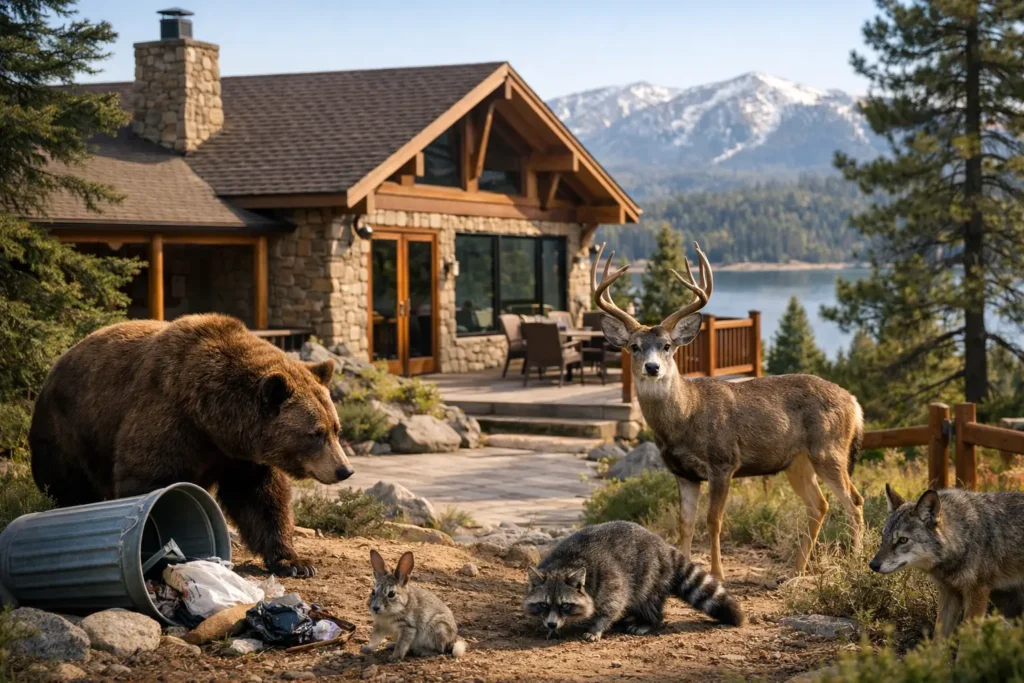
A mouse in the pantry, a raccoon in the crawl space, or a woodpecker working the siding can turn a quiet mountain property into a costly problem fast. Mountain wildlife prevention is not about making your home hostile to every animal outside. It is about keeping wildlife in the forest where it belongs while protecting the people, structures, food, wiring, insulation, and air quality inside.
For homes, cabins, vacation rentals, and commercial properties in Big Bear Lake, Lake Arrowhead, Running Springs, Crestline, and nearby mountain communities, prevention has to account for changing seasons, heavy snow, dense tree cover, and periods when buildings sit vacant. A city-style pest-control approach often misses the conditions that make mountain properties especially vulnerable.
Why Mountain Properties Attract Wildlife
Mountain homes are often built close to the habitat animals already use for shelter and food. Pine needles, woodpiles, boulders, sheds, decks, crawl spaces, and rooflines create natural travel routes and hiding places. When temperatures drop, the warmth behind a wall or beneath a cabin can be more appealing than the outdoors.
Rodents can enter through gaps that look insignificant to a homeowner, then chew wiring, contaminate stored items, and nest in insulation. Squirrels may use roof edges or branches to reach attic openings. Raccoons and skunks look for protected spaces beneath decks, additions, and sheds. Bats can slip into narrow roofline gaps and leave droppings that require careful cleanup. Birds such as swallows, pigeons, sparrows, and woodpeckers create their own problems around vents, eaves, signs, chimneys, and siding.
The risk is not limited to older cabins. Well-maintained homes can develop an opening after a storm, a roof repair, seasonal settling, or damage from another animal. Prevention works best when it treats wildlife pressure as an ongoing property-maintenance issue, not a one-time emergency.
Mountain Wildlife Prevention Starts With an Inspection
Effective prevention begins with finding the actual access points and conditions that are attracting animals. Closing one visible hole may not solve the issue if rodents are entering through a separate foundation gap or if a raccoon is using a damaged vent cover nearby.
A thorough inspection should look at the roofline, attic vents, chimney areas, eaves, crawl-space entries, foundation penetrations, utility lines, garage door corners, decks, sheds, and detached structures. It should also consider evidence inside the building, including droppings, rub marks, nesting materials, gnawed wiring, odors, scratching sounds, and stains near ceilings or walls.
This step matters because exclusion must be species-specific. The materials and methods used to block mice are different from the work needed to prevent bats, squirrels, or raccoons. Timing also matters. Sealing an active entry without confirming whether animals are inside can create a worse problem, especially when young animals may be present.
Exclusion Work Protects the Structure
Exclusion means physically preventing animals from entering without causing unnecessary harm. Depending on the property, that can include repairing damaged screens, securing vents, sealing construction gaps, reinforcing vulnerable openings, installing chimney protection, and completing block-out repairs around rooflines or foundations.
Good exclusion work is not simply foam in a hole. Wildlife can chew, pull, bend, or work around weak materials. Mountain weather adds another challenge. Repairs need to hold up against snow, wind, sun exposure, moisture, and normal building movement.
The goal is to make the building a poor option for nesting or shelter while allowing wildlife to continue using the natural environment outside. That is the balance behind a humane, eco-conscious prevention plan.
Remove Food, Water, and Shelter Near the Building
Exclusion is the backbone of prevention, but the area around the property matters too. If animals find easy food or a protected den site beside the house, they will keep testing the structure for a way in.
Keep trash in secured containers and avoid leaving pet food outdoors, even overnight. Clean barbecue grease and food residue, and pick up fallen fruit, birdseed, or other edible debris when possible. If you feed birds, place feeders away from the structure and be aware that spilled seed can attract mice, rats, squirrels, and larger nuisance animals.
Firewood should be stacked off the ground and away from the home. Dense brush, stored materials, and clutter near foundations create cover for rodents and make inspections more difficult. Trim branches that touch or overhang the roof, particularly where squirrels and rodents can use them as a bridge to attic openings.
Water sources deserve attention as well. Leaking hose connections, standing water, clogged gutters, and poorly drained areas can support pest activity. You do not need a perfectly bare landscape to protect your property, but you do need a clear buffer that makes it harder for animals to approach unnoticed.
Protect Vacant Cabins and Vacation Rentals
Seasonal occupancy creates a distinct prevention challenge in mountain communities. A cabin may be quiet for weeks, giving rodents, birds, or wildlife time to establish themselves before anyone notices. By the time the owner arrives, the problem may include nesting, odors, droppings, damage, and contaminated insulation.
Before closing a property for an extended period, inspect doors, windows, vents, and utility openings. Store food in hard-sided sealed containers or remove it entirely. Check that fireplace dampers, crawl-space doors, and garage doors close securely. A regular exterior check is especially useful after windstorms, heavy rain, snow, or tree damage.
Property managers should also pay attention between guest stays. Scratching in walls, unusual odors, droppings in utility rooms, and debris below vents should be addressed before the next booking. Prevention protects the building, but it also helps preserve guest comfort and avoids last-minute maintenance disruptions.
Cleanup Is Part of Prevention, Not an Afterthought
Removing an animal does not automatically make a space safe or protected. Droppings, urine, nesting material, parasites, and damaged insulation can continue to affect the property after wildlife is gone. Odors may also draw other animals back to the same area.
Professional cleanup and disinfection are often necessary after rodent, bat, bird, raccoon, or other wildlife activity, particularly in attics, crawl spaces, garages, and wall voids. The right response depends on the species, the amount of contamination, and whether insulation or building materials have been damaged.
Cleanup also gives the prevention plan a clean starting point. Once evidence is removed and damaged materials are addressed, it becomes easier to monitor for new activity. If fresh droppings, scratching, or new entry damage appears, the issue can be investigated quickly rather than getting lost in old contamination.
When Prevention Needs Professional Help
Home maintenance can handle some basics, such as securing trash, trimming access branches, and keeping stored food sealed. However, active wildlife in an attic, wall, chimney, crawl space, or occupied nesting area calls for a careful approach. Wildlife behavior, local regulations, and the risk of trapping animals inside the structure all need to be considered.
Professional help is particularly valuable when there are repeat infestations, signs of chewed wiring, strong odors, extensive droppings, roofline access issues, or uncertainty about the animal involved. A species-specific plan can combine humane removal, exclusion, cleanup, disinfection, and repair rather than relying on temporary deterrents.
Outbackzack helps mountain property owners address the full problem, from nuisance animal removal to rodent proofing and block-out repairs. The focus is tough protection for your property with respect for the wildlife that shares these mountain communities.
A Seasonal Prevention Routine That Works
Mountain wildlife pressure changes throughout the year. In warmer months, birds may nest around eaves and vents, while squirrels and rodents take advantage of open storage areas and outdoor food sources. As colder weather arrives, animals seek indoor shelter, and small gaps become more urgent vulnerabilities.
Plan a visual property check at least seasonally, with extra attention before winter and after severe weather. Look for loose vent screens, gaps under siding, displaced roof materials, fresh gnaw marks, droppings, and branches that now reach the roof. Listen for nighttime sounds in walls or ceilings instead of assuming they will stop on their own.
A protected mountain home does not require harsh treatment of animals. It requires early attention, durable exclusion, clean conditions, and a local professional when the problem moves beyond a simple repair. Acting while the first signs are small is usually the most humane choice for wildlife and the least expensive choice for your property.