
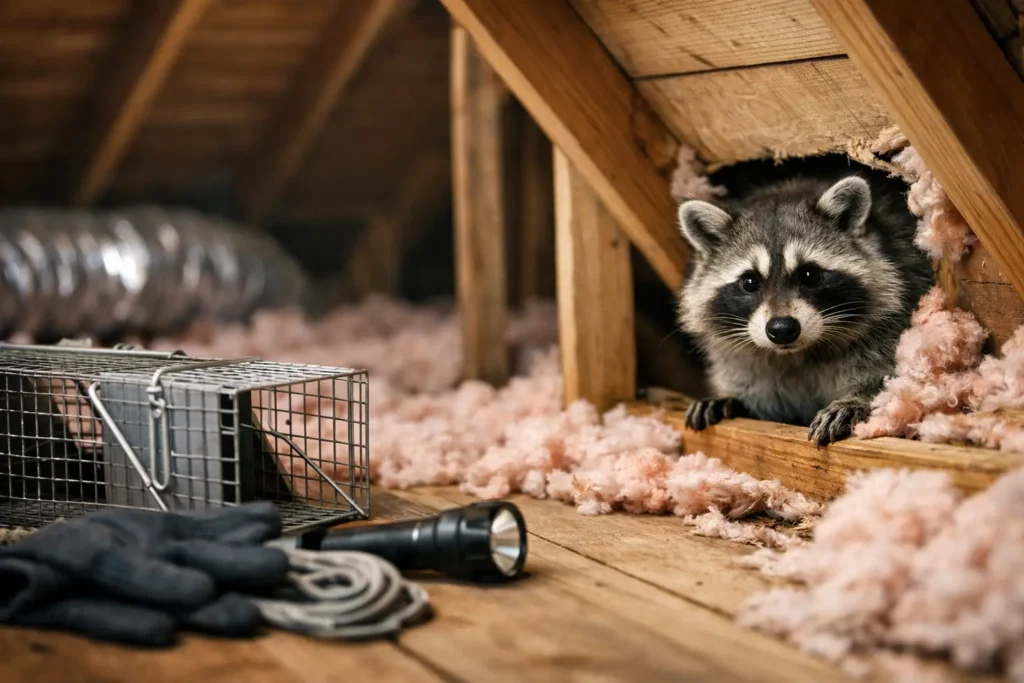
A quiet scratching sound above the ceiling can turn into torn insulation, damaged ductwork, and a contaminated attic faster than many homeowners expect. When raccoons enter attics, they are not simply passing through. They have usually found a sheltered space that feels safe from weather, predators, and activity around the property – especially in wooded mountain communities where cabins and homes sit close to wildlife habitat.
Raccoons are intelligent, strong, and determined animals. They can pull apart weak vent covers, widen gaps at rooflines, tear through damaged soffits, and force their way under loose shingles. The right response protects your home while treating the animal responsibly: identify the entry point, confirm whether young are present, remove the raccoon humanely, clean the affected area, and permanently seal the structure.
Why Raccoons Choose Attics
An attic gives a raccoon almost everything it needs: darkness, warmth, quiet, and protection from rain, snow, wind, and cold nighttime temperatures. In Big Bear Lake, Lake Arrowhead, Running Springs, Crestline, and nearby mountain communities, seasonal weather can make an accessible attic particularly attractive.
Female raccoons often seek enclosed denning spaces in late winter and spring, when they may be preparing to raise kits. That timing matters. A mother raccoon may leave the attic at night to forage, then return before daylight. If a homeowner closes the opening while the mother is outside and young remain inside, the situation can become much more serious. The mother may cause additional damage trying to get back in, while the young can be left distressed inside the structure.
Attic activity can also occur outside the denning season. A raccoon may use the space as temporary shelter, return repeatedly to sleep, or establish it as a dependable food-and-shelter location. Homes with accessible garbage, pet food, bird feeders, fruit trees, or outdoor grills can make the property even more appealing.
Signs Raccoons Are in Your Attic
Raccoons are heavier and louder than mice, rats, or squirrels. Homeowners often hear slow walking, thumping, scraping, or a rolling sound overhead, most commonly after dark. They may also hear chattering, crying, or repeated vocal sounds if a mother is caring for young.
Outside, look for a damaged roof vent, bent metal screening, separated fascia boards, broken soffits, or a gap around a chimney, dormer, or roofline. Raccoon entry holes are often larger than people expect because the animal needs enough room for its body and can enlarge weak openings with its front paws.
Inside the attic, common evidence includes flattened or disturbed insulation, urine staining, strong odors, droppings, nesting material, and paw prints in dust or insulation. Raccoon droppings should never be handled casually. Their waste can carry parasites and bacteria, and dried material can become a health concern when disturbed during cleanup.
Do not assume that one night of noise means one animal. A female with kits, or a pair using the attic at different times, requires a different removal plan than a single adult raccoon.
What to Do When Raccoons Enter Attics
Start by keeping people and pets away from the suspected entry area. Do not climb into the attic to investigate a raccoon, attempt to corner it, or place a household trap inside the home. A frightened wild animal can bite or scratch, and an attic is a confined area with poor footing, exposed wiring, and contaminated insulation.
Avoid sealing the hole immediately. This is one of the most common mistakes homeowners make, particularly during spring. The visible opening may be the raccoon’s main route, but closing it before confirming the attic is empty can trap animals inside or separate a mother from her young.
It is also wise to remove easy food sources around the exterior of the property. Secure trash containers, bring pet food indoors, clean grill residue, and pause bird feeding if raccoons are regularly visiting the area. These steps will not remove an established attic intruder, but they can reduce the reason for the animal to return after exclusion work is complete.
A professional wildlife inspection should determine where the raccoon entered, whether additional openings exist, whether kits are present, and how extensive the contamination or damage has become. Humane removal is not just about getting an animal out. It is about making sure the removal method fits the season, the animal’s behavior, and the condition of the building.
Why DIY trapping can make the problem worse
A trap may catch an adult while leaving dependent young behind. It can also result in an agitated animal in a residential area, create handling risks, and fail to address the opening that allowed entry in the first place. Relocation and trapping rules may also apply depending on the situation and location.
Even if a homeowner successfully removes one raccoon, the same opening can attract another animal. Raccoons have an excellent memory for reliable shelter sites. Without repairs, an attic can become an ongoing wildlife entry point for raccoons, squirrels, rats, bats, or birds.
Humane Removal Requires a Complete Plan
A responsible removal plan begins with inspection and species confirmation. From there, the approach may include a one-way exclusion device that allows an adult to leave but prevents re-entry, carefully timed removal, or specialized handling when young are present. The safest method depends on what is happening inside the attic.
If kits are found, the priority is to reunite them with their mother whenever possible. Removing or excluding the mother without a plan for the young is neither humane nor effective. Wildlife professionals account for the age of the young, the den location, and the mother’s access so the family can be handled appropriately.
Once the raccoon activity has stopped, every active entry point should be addressed. This often includes reinforcing roof and gable vents, repairing soffits and fascia, securing chimney gaps, replacing damaged screens, and closing construction gaps along rooflines. Good exclusion work uses durable materials and repairs the underlying weakness rather than covering a hole with a temporary patch.
Outbackzack approaches nuisance wildlife removal with that full-property mindset: humane removal, practical block-out repairs, and prevention designed for the conditions mountain property owners face.
Cleanup Matters After the Raccoon Is Gone
Removal alone does not restore an attic. Raccoons can leave behind urine, droppings, nesting debris, parasites, and damaged insulation. Odor may linger long after the animal has left, and the smell can attract other wildlife to investigate the same space.
Professional cleanup may involve removing contaminated insulation, collecting droppings with proper protective equipment, disinfecting affected surfaces, treating odor sources, and inspecting nearby materials for damage. Ductwork, wiring, stored belongings, and ceiling areas below the attic may need attention if the raccoon was present for an extended period.
The scope depends on the amount of activity. A raccoon that entered briefly through a vent may require limited sanitation and repair. A mother raccoon that used an attic as a den for weeks may require more extensive cleanup and insulation replacement. An inspection gives property owners a clear picture of what is necessary rather than guessing based on odor alone.
Preventing the Next Attic Intrusion
Wildlife proofing works best when it is done before an animal finds a weakness. At least twice a year, inspect the roofline, attic vents, chimney areas, eaves, and exterior trim. Pay close attention after high winds, heavy snow, falling branches, or roof repairs, since these events can loosen screening and expose small gaps.
Trim branches that provide easy roof access, but remember that raccoons are capable climbers and may use downspouts, fences, stacked firewood, or nearby structures as routes. Keep garbage secured and do not leave pet food outdoors overnight. If you manage a vacation rental or seasonal cabin, arrange regular exterior checks when the building is vacant. Wildlife often takes advantage of properties where damage goes unnoticed for weeks.
A clean, sealed attic protects more than insulation. It protects indoor air quality, limits damage to structural materials, and reduces the chance that one wildlife problem turns into several.
If you hear heavy nighttime movement above your ceiling, act before the animal has time to settle in. A humane, well-timed inspection can protect your home, prevent needless harm to wildlife, and keep your mountain property from becoming a dependable den site.