
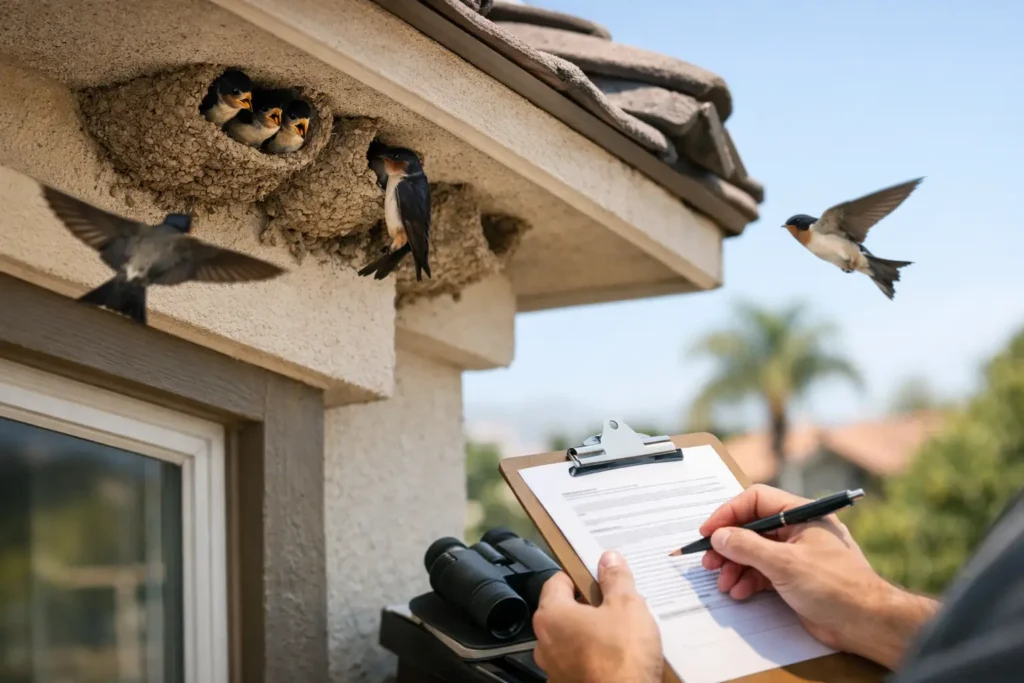
A mud nest under the eaves can quickly become a bigger property concern when droppings collect on decks, walkways, entry doors, and rental patios. But swallow nest removal laws are not the same as ordinary bird-control rules. In California, swallows are native migratory birds, and removing a nest at the wrong time can put eggs, chicks, and the property owner at risk.
For homes, cabins, vacation rentals, and commercial buildings in Big Bear Lake, Lake Arrowhead, Running Springs, Crestline, and nearby mountain communities, the right response starts with timing. A nest that looks abandoned may be active, while a small mud cup can hold eggs or young birds out of sight. Humane bird control protects your building without turning a nuisance problem into a legal or wildlife emergency.
Why Swallows Choose Mountain Properties
Barn swallows, cliff swallows, and other swallow species often build mud nests beneath roof overhangs, porch ceilings, carports, bridges, awnings, and covered entries. These locations offer shelter from rain and predators, while open areas nearby provide easy access to flying insects.
Mountain homes can be especially attractive because they often have deep eaves, quiet seasonal occupancy, wood-sided structures, and exterior beams that provide a solid nesting surface. Once a swallow successfully raises young at a location, it may return the following season. Other birds may follow, particularly where old nests remain attached to the structure.
The birds themselves are beneficial insect eaters. The problem is not that swallows are present outdoors. The problem begins when nesting activity creates unsanitary conditions, stains building materials, blocks vents, damages finishes, or places droppings directly over entrances and gathering areas.
Swallow Nest Removal Laws: What Protects These Birds?
Most swallows found in California are protected migratory birds. Federal and state wildlife rules can apply to the birds, their eggs, and their nests, especially when nesting is underway. The practical rule for property owners is straightforward: never assume an occupied swallow nest can be knocked down because it is on your building.
Federal Migratory Bird Protections
Swallows are generally covered by the federal Migratory Bird Treaty Act. The law protects migratory birds and their eggs, and actions that harm birds or destroy active nests can create serious legal concerns. A nest containing eggs, chicks, or an incubating adult should not be removed, relocated, blocked, or disturbed without direction from the proper wildlife authority.
Federal rules are nuanced, and protections may differ depending on the species, the activity involved, and whether a nest is active. That is why a visual inspection matters. A nest can be active even when no bird is sitting on it at the moment you look.
California Rules Can Be Broader
California law also protects birds, nests, and eggs. California Fish and Game Code includes restrictions on taking, possessing, or needlessly destroying bird nests or eggs. For a homeowner or property manager, the safest interpretation is not to treat an inactive-looking nest as automatically removable.
A licensed wildlife professional can help identify the species, assess whether nesting is active, and determine whether removal, cleanup, or exclusion should wait. If there is any uncertainty, contact the appropriate state or federal wildlife agency before taking action. Rules and agency guidance can change, and special circumstances may require permits or specific approval.
When Can a Swallow Nest Be Removed?
The answer depends on whether the nest is active, which swallow species is involved, and the applicable rules at the property. Removal may be considered after young birds have fully fledged and the nest is confirmed inactive, but confirmation is the key word. Do not rely on a single quick look or assume that a quiet nest is empty.
Adult swallows may leave the nest repeatedly to feed. Nestlings can also remain low inside a deep mud nest where they are difficult to see. Removing a nest too early can trap, injure, or expose young birds, even if the adults are not visible.
There is no single calendar date that makes every swallow nest removable. Nesting periods vary with weather, elevation, species, and local food conditions. In Southern California mountain communities, spring and summer are the periods when nesting activity is most likely, but a property should be evaluated individually.
If droppings or nest material are creating an urgent sanitation issue, focus first on managing the area without disturbing the nest. Restrict access beneath the nest, cover vulnerable surfaces where appropriate, and schedule a professional assessment. Temporary management is often far safer than rushing into removal.
A Humane Response to an Active Nest
An active nest does not mean you have to accept avoidable mess or property damage. It means the solution needs to be phased correctly.
First, keep people and pets away from the immediate area when possible, especially under a nest above an entryway or outdoor dining space. Droppings can create slip hazards and may contaminate furniture, railings, or walkways. Avoid dry sweeping or pressure washing directly beneath an occupied nest, since both can spread debris and disturb the birds.
Next, have the nesting status evaluated. A trained bird-control specialist can look for adult activity, feeding patterns, eggs, young birds, and signs that a nest has completed its cycle. This assessment also identifies every nest on the structure, which matters because swallows often nest in groups.
Then, plan removal and sanitation for the legal window after nesting is complete. Old nests and accumulated droppings should be handled with appropriate protective equipment and cleaning methods. Simply knocking down mud nests without addressing the residue, access points, and future landing surfaces leaves the property vulnerable to repeat problems.
Finally, install prevention measures only when they will not trap birds, block an active nest, or interfere with fledglings leaving the area. The goal is to prevent next season’s nesting, not to force birds out during the current one.
Prevention Works Best Before Nesting Starts
The most effective way to avoid a nest-removal conflict is to make favored nesting spots unavailable before swallows begin building. Early-season inspections are especially useful for cabins and vacation properties that may sit empty for part of the year.
Humane exclusion options depend on the building design. Bird netting can protect open carports, covered breezeways, and recessed patios when installed correctly. Physical barriers can prevent access to ledges and sheltered cavities. In some locations, carefully placed bird-control systems make it difficult for mud nests to adhere to the surface without harming the birds.
Installation quality matters. Loose netting, poorly positioned barriers, and do-it-yourself materials can entangle wildlife or create gaps that birds still use. They can also affect building appearance, roof access, and maintenance needs. A site-specific approach is usually the best fit for historic cabins, commercial storefronts, lodges, and properties with complicated rooflines.
Cleaning old nest residue can also reduce the appeal of a previous nesting site. Swallows may return to successful locations, so removing inactive nesting material at the proper time and securing the surface before the next breeding period gives prevention work a much better chance of holding.
Special Concerns for Rentals and Commercial Buildings
For vacation rentals, restaurants, retail properties, and multifamily buildings, a swallow nest can become a guest-experience and liability issue fast. Droppings over a front door, deck, dumpster area, or outdoor seating area create a cleanliness concern that staff may feel pressured to solve immediately.
That pressure is exactly when mistakes happen. Maintenance teams should have a simple policy: do not remove, hose down, or block a swallow nest until its status has been evaluated. Document the location, take clear photographs from a safe distance, and arrange an inspection. This protects the business, the birds, and the employee asked to handle the issue.
Property managers should also inspect buildings before peak nesting activity rather than waiting for complaints. Preventive bird control is usually less disruptive and less expensive than responding after multiple mud nests, droppings, and returning birds are already established.
Get Help Before Removal Becomes a Violation
Swallow control requires more than a ladder and a scraper. It requires a careful look at species, nest activity, sanitation needs, building access, and future exclusion. Outbackzack provides humane bird-control solutions for mountain properties, including inspections, cleanup planning, exclusion work, and block-out repairs designed to stop repeat nesting without unnecessary harm to wildlife.
If a nest is above a doorway, deck, vent, or occupied work area, act early and act carefully. Protect the space beneath it, avoid disturbing the birds, and get qualified guidance on the next legal step. A well-timed prevention plan lets you take back your eaves and entryways while giving swallows the respect protected wildlife deserves.