
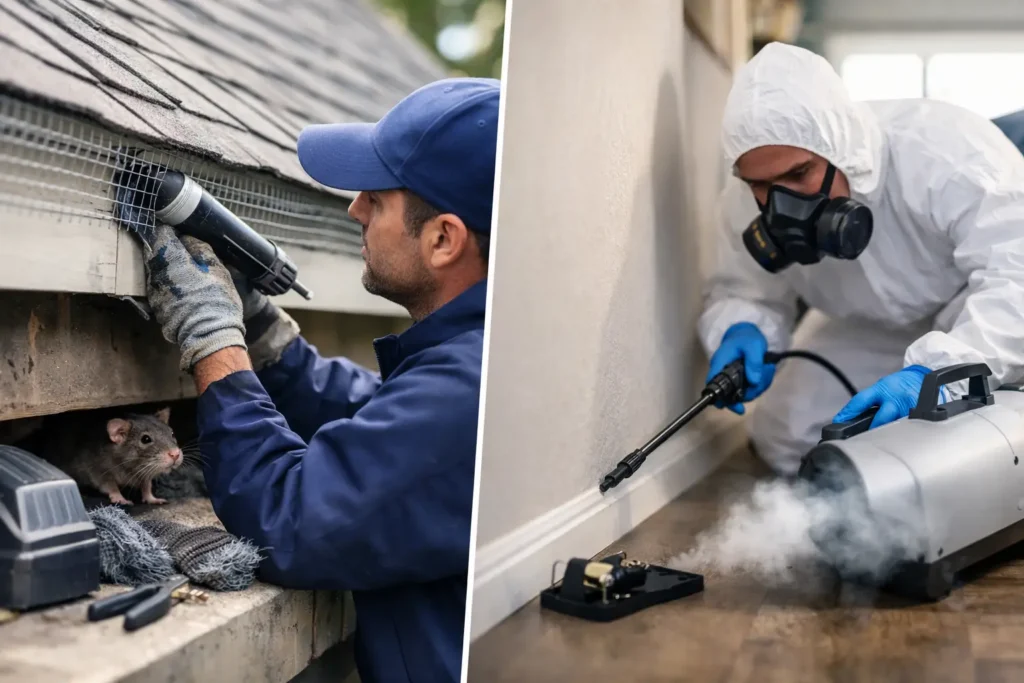
A mouse can enter through a gap no wider than a pencil. A squirrel can turn a loose roof return into a nesting site. A raccoon can pull apart damaged fascia in a single night. For mountain property owners, the exclusion repair versus extermination approach is not just a question of how to get an animal out. It determines whether the problem ends at removal or returns with the next cold front.
Homes, cabins, vacation rentals, restaurants, and retail buildings around Big Bear Lake, Lake Arrowhead, Running Springs, and Crestline sit close to the habitat wildlife needs. Trees touch roofs, snow and cold push rodents indoors, and older structures often have small openings around vents, pipes, chimneys, and eaves. A successful pest solution has to account for those local conditions.
What Is Extermination?
Extermination generally means reducing or eliminating a pest population through traps, bait, insecticide applications, or other lethal control methods. It can be an appropriate tool in specific situations, especially for certain insect pests or when rodent activity creates an immediate health and safety concern.
For example, a targeted rodent trapping program can quickly reduce active mouse or rat activity inside a kitchen, crawlspace, garage, or commercial storage area. Insect treatments may also be needed when an established population of ants, wasps, or other insects is affecting the property.
The limitation is simple: extermination addresses the animals or insects currently present. If the building still offers an easy route inside, food access, warmth, or protected nesting space, another animal can take its place. In wooded mountain communities, that can happen sooner than many owners expect.
Extermination also is not the right answer for every animal. Bats, raccoons, skunks, squirrels, and many bird species require species-specific handling. Wildlife removal should be humane, lawful, and timed carefully to avoid separating dependent young from their mothers. A one-size-fits-all extermination mindset can create avoidable animal welfare issues and leave property damage unresolved.
What Is Exclusion Repair?
Exclusion repair means identifying how animals are getting into or onto a structure, removing them safely, and then closing those access points with durable materials. It is often called animal proofing, rodent proofing, block-out repair, or wildlife exclusion.
The work may involve repairing damaged fascia, screening attic or foundation vents, sealing pipe penetrations, reinforcing roof gaps, closing openings beneath decks, repairing chimney caps, or securing gaps where siding meets roofing. The exact repair depends on the species, the construction of the building, and the location of the activity.
Good exclusion is more than filling a hole with foam. Rodents can chew through weak materials. Raccoons can tear at poorly secured repairs. Birds may return to familiar ledges or vents season after season. A lasting repair uses appropriate materials and addresses the route the animal actually uses, not just the most visible damage.
For active wildlife, timing matters. A professional may install a one-way exit device that allows an animal to leave but prevents re-entry, then permanently seal the opening after confirming the structure is clear. This approach protects the building without trapping an animal inside.
Exclusion Repair Versus Extermination Approach: The Real Difference
The central difference is prevention. Extermination focuses on population reduction or immediate control. Exclusion repair focuses on denying access to the property in the first place.
Neither method should automatically replace the other. A home with an active mouse infestation may need trapping to remove animals already inside, followed by detailed rodent proofing to stop new entry. A bird issue may require humane removal, cleanup of nesting debris, and vent screening. A raccoon in an attic may call for a humane exit strategy, attic inspection, repair of the entry point, and sanitation of contaminated materials.
The strongest approach is usually a sequence: inspect, remove or control the active problem, clean affected areas, repair entry points, and monitor for new signs. That sequence handles the immediate stress of having animals in the building while protecting the property over the long term.
When Extermination May Be the Right Tool
There are times when direct pest control is necessary. Active rodent populations can contaminate food areas, chew electrical wiring, damage insulation, and spread droppings through attic or crawlspace spaces. Waiting for exclusion alone to solve a heavy infestation may leave animals inside the structure and allow contamination to continue.
Targeted control can also make sense for insect pests. The treatment should match the pest, its nesting or feeding location, and the level of activity. Broad, unnecessary chemical use is not the goal. Effective pest service uses the least disruptive method that can safely control the problem.
Even in these cases, control without repairs is incomplete. If mice are entering through gaps along the foundation, around utility lines, or at garage-door corners, trapping alone becomes a recurring service instead of a lasting solution. The same principle applies to rats using roofline access and birds nesting in unprotected vents.
When Exclusion Repair Delivers the Better Long-Term Value
Exclusion repair is especially valuable when wildlife is repeatedly entering attics, walls, crawlspaces, or roof areas. It protects the investment in the structure by stopping the behaviors that cause ongoing damage.
For vacation homes and cabins, this matters even more. A building left vacant for several weeks may offer rodents a quiet place to nest. By the time an owner returns, a minor access gap can turn into chewed wires, torn insulation, nesting material, odor, and widespread droppings. Sealing vulnerable areas before seasonal vacancy reduces that risk.
Property managers also benefit from exclusion because it helps reduce repeat tenant complaints and emergency calls. A repaired entry point, screened vent, or reinforced roof gap is often more valuable than repeated short-term removal visits. Commercial properties benefit as well, particularly where food, inventory, guests, or sanitation standards are involved.
Exclusion does have trade-offs. Comprehensive repair work can cost more upfront than setting a few traps. Some access points are difficult to reach, particularly on steep roofs, tall structures, or older mountain homes with multiple additions. Yet the upfront investment often prevents repeated damage, repeat infestations, and ongoing control costs.
Why Cleanup and Sanitation Belong in the Plan
Removal and repair are only part of the job. Rodent urine, droppings, nesting debris, and deceased animals can leave behind odor, bacteria, parasites, and attractants for other pests. An attic may look sealed from the outside while still containing contamination that affects indoor air quality and encourages future activity.
Professional cleanup may include removal of contaminated nesting material, disinfection of affected surfaces, odor treatment, and evaluation of damaged insulation. The scope depends on the species and how long the activity has been present. Heavy contamination should not be swept or vacuumed casually, since disturbing droppings can spread particles into the air.
This is one reason a complete service plan matters. The goal is not merely to make an animal disappear from view. It is to restore a cleaner, safer condition and reduce the reasons another pest would choose the same space.
Choosing the Right Plan for Your Property
Start with a detailed inspection. Look for droppings, rub marks, chewed materials, nesting, greasy trails, damaged vents, displaced shingles, noises in walls, and gaps around utility penetrations. Exterior inspection should include the roofline, eaves, chimney, attic vents, crawlspace, decks, garage, and foundation.
Then consider what is actually happening. Is there one animal trapped in a wall, or evidence of an established rodent population? Is the animal entering through a single damaged area, or are there multiple structural vulnerabilities? Is the building occupied year-round, used as a seasonal cabin, or managed as a rental? The answers affect both the urgency and the scope of work.
Outbackzack approaches nuisance animal and pest problems with humane removal, targeted control when needed, and practical exclusion repairs designed for Southern California mountain properties. That means treating the immediate issue without losing sight of the next storm, the next cold night, or the next animal looking for shelter.
If you hear scratching overhead, find fresh droppings, or notice damage near a vent or roof edge, act before the opening becomes a larger repair. The right solution should leave your property protected, your indoor spaces cleaner, and wildlife where it belongs – outside the building.