A quiet attic can hide a serious contamination problem. Mice, rats, squirrels, bats, birds, raccoons, and insects can leave behind droppings, urine, nesting material, food debris, parasites, and damaged insulation long after the animal is gone. This guide to attic sanitation after infestations explains what a proper cleanup should address, why removal alone is not enough, and when it is safer to bring in a professional.
For homes, cabins, and vacation rentals in mountain communities, attic sanitation is especially important. Cold weather drives wildlife toward sheltered spaces, while pine needles, snow load, aging vents, and roof gaps can create easy entry points. If those conditions remain after cleanup, the same problem can return next season.
Start With Removal and Exclusion, Not Cleanup
Sanitation should begin only after the active infestation has been identified and resolved. Cleaning an attic while rodents, birds, or wildlife still have access can waste time and expose you to fresh contamination. It can also disturb animals that may be nesting or raising young.
A thorough inspection should identify the species involved, active entry points, travel routes, nesting locations, and the extent of damage. Rodent droppings may be spread across insulation and framing. Raccoons can create concentrated, heavily soiled latrine areas. Bats and birds may leave accumulations beneath roosting spots. Each situation requires a different removal and sanitation plan.
Humane removal matters here. Wildlife should be removed responsibly and in accordance with applicable regulations, then excluded through repairs that prevent re-entry without trapping animals inside. Common access points include roofline gaps, damaged vent screens, uncapped pipes, loose fascia, construction gaps, and openings around utility lines.
Why Attic Contamination Needs More Than a Quick Sweep
Attic debris is not simply a cleanliness issue. Droppings and urine can carry bacteria and create airborne dust when disturbed. Old nesting material may contain fleas, mites, ticks, or insects. Urine can also soak into insulation and wood, causing persistent odors that attract other animals investigating the area.
The level of risk depends on the animal, the amount of waste, how long the infestation was active, attic ventilation, and whether contamination reached HVAC components or living spaces. A few fresh mouse droppings near an access hatch are different from years of rodent activity throughout deep insulation. A bird nest near an exterior vent may require localized cleaning, while a raccoon-denning site often calls for significant removal of affected material.
Never dry sweep, use a household vacuum, or blow debris with a leaf blower. These methods can send contaminated dust into the air and spread it beyond the original area. Do not assume that a strong fragrance, deodorizer, or surface spray has solved the problem. Odor control works only after contaminated source material has been removed.
Guide to Attic Sanitation After Infestations: The Proper Process
Professional attic sanitation follows a practical sequence: assess the damage, control exposure, remove contaminated materials, clean and disinfect surfaces, treat odor and parasites when needed, then restore and protect the attic.
1. Assess the attic before disturbing anything
Begin with a visual inspection from the access point. Look for droppings, nests, urine staining, torn or compressed insulation, chewed wiring, gnawed wood, animal remains, and damaged ductwork. Note where debris is concentrated. That pattern can reveal how animals entered and where they traveled.
Attics with visible mold, extensive feces, dead animals, electrical damage, or signs of a large wildlife infestation should be treated as professional cleanup jobs. This is not the place to take chances with ladders, exposed nails, weak ceiling joists, or unknown contamination.
2. Use appropriate personal protection
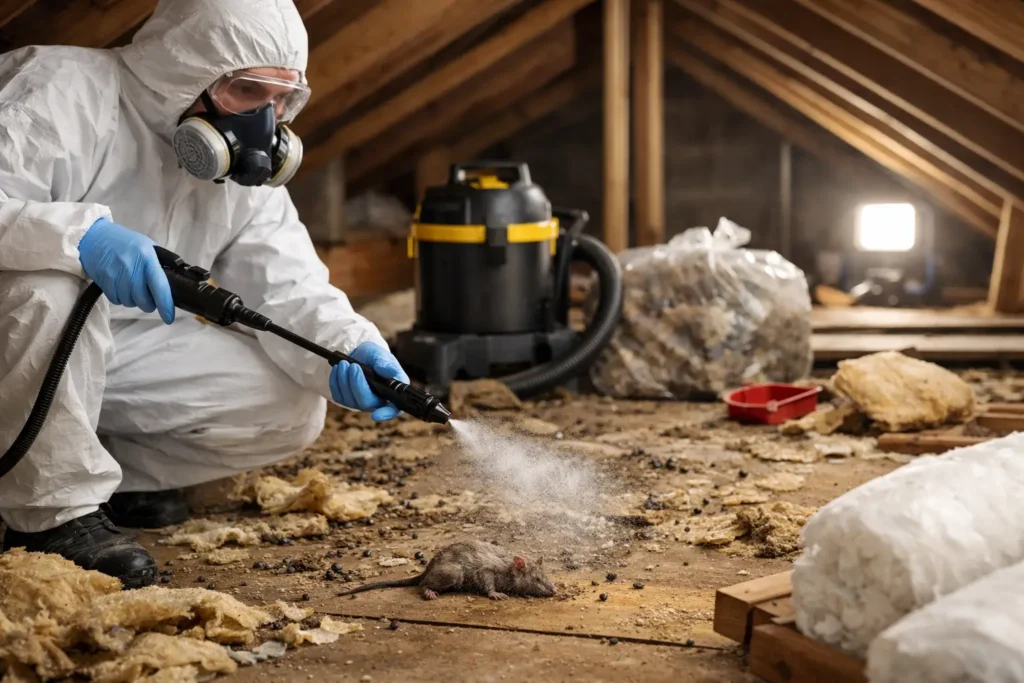
For limited cleanup, wear disposable gloves, eye protection, and a properly fitted respirator rated for fine particles. Wear disposable coveralls or clothing that can be washed separately afterward. Protect the path from the attic to the outside so contaminated debris is not carried through bedrooms, hallways, or rental units.
If there is substantial droppings accumulation, saturated insulation, or an enclosed attic with poor ventilation, stop and call for help. The right equipment and containment practices make a major difference in protecting occupants and workers.
3. Remove nesting material and contaminated insulation
Insulation is often the hardest part of attic remediation. Rodents tunnel through it, leave droppings across its surface, and contaminate it with urine. Larger animals can flatten insulation, tear vapor barriers, and leave heavy waste in one area. When contamination is widespread, removing affected insulation is usually more reliable than trying to spot-clean it.
Material should be carefully bagged and removed without shaking it out. The goal is containment, not speed. Once insulation is out, the attic deck, framing, wiring routes, and ductwork are easier to inspect for hidden damage.
Not every infestation requires full insulation removal. A recent, isolated problem may allow for targeted removal and treatment. The decision depends on contamination depth, odor, material condition, and whether the attic needs insulation upgrades anyway.
4. Clean, disinfect, and address odor at the source
After debris is removed, hard surfaces should be cleaned and treated with an appropriate disinfectant. Technicians should follow the product label, allow the required contact time, and avoid mixing chemicals. Particular attention should go to attic decking, framing, around penetrations, vent areas, and locations where urine staining is visible.
Odor treatment should match the problem. Surface disinfection can reduce contamination, but it may not resolve odor that has absorbed into wood or insulation. Enzyme-based odor treatments, sealants for heavily stained materials, and replacement of affected insulation may be needed in severe cases. Covering an odor without removing its source can encourage another animal to investigate the attic.
5. Treat parasites when evidence supports it
Fleas, mites, ticks, and other insects can remain after a nest is removed. This is most common with rodents, birds, bats, and wildlife den sites. Treatment should be based on evidence and species activity, not automatic overuse of pesticides.
An eco-conscious approach focuses on targeted treatment, cleaning, and prevention. If no parasite activity is found, sanitation and exclusion may be all that is needed. If insects are active, treat the affected area carefully and coordinate the work with removal and cleanup.
6. Restore insulation and seal every access point
A sanitized attic is only protected when it is also secured. Replace removed insulation to restore energy efficiency and help prevent moisture issues. Then complete exclusion repairs using durable materials that stand up to mountain weather and animal pressure.
Check roof and gable vents, eaves, soffits, attic fans, chimneys, plumbing penetrations, ridge lines, and utility openings. Trees or branches that touch the roof may also need trimming, since squirrels and rodents can use them as direct access routes. Exclusion is not a cosmetic finishing step. It is the prevention work that protects your sanitation investment.
Signs You Should Call a Professional
Homeowners can handle very small, recent cleanup issues with caution, but there are clear situations where professional help is the safer choice. Call for an inspection if you find heavy or widespread droppings, strong urine odor, damaged insulation, chewed wires, dead animals, bird or bat roosting evidence, raccoon waste, or recurring sounds in the ceiling.
Property managers should also act promptly after an infestation in a vacation rental or commercial building. Delayed cleanup can lead to odors, guest complaints, repeat pest activity, and more costly repairs. Documentation of inspection findings, sanitation work, and exclusion repairs is valuable when managing multiple properties.
At Outbackzack, the approach is built around humane removal, targeted sanitation, and long-term block-out repairs for mountain properties. The goal is not just to make an attic look cleaner. It is to remove the conditions that allow nuisance animals and pests to return.
A properly sanitized attic should leave you with more than fresh insulation and fewer odors. It should give you confidence that the space above your ceiling is clean, protected, and no longer serving as shelter for the next animal looking for warmth.