
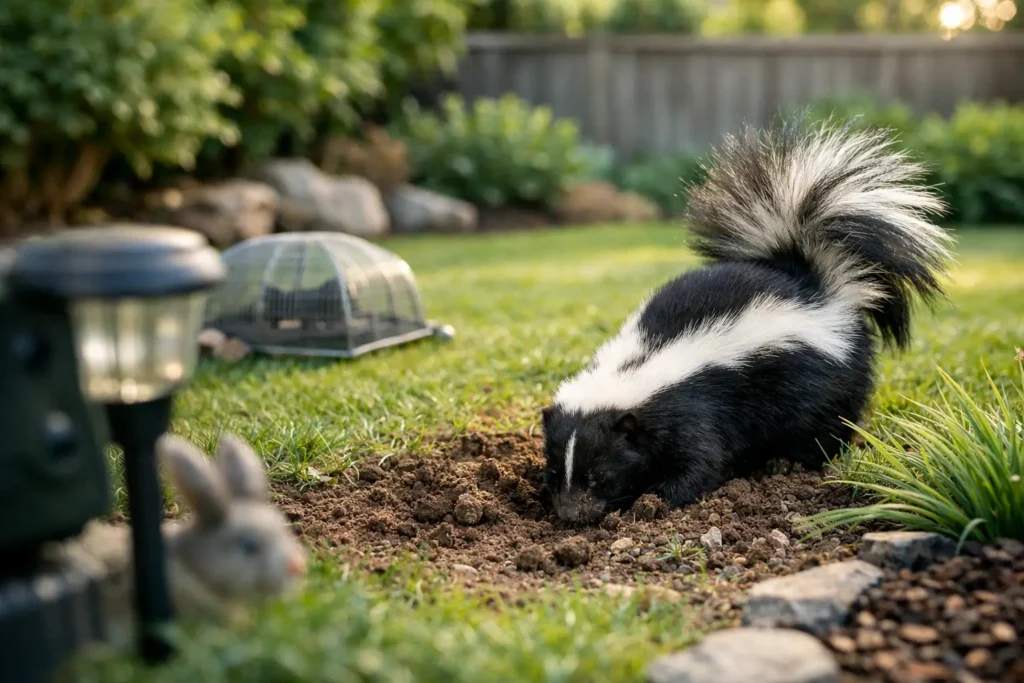
A lawn can look perfectly healthy at sunset and be covered in shallow, cone-shaped holes by morning. In Big Bear, Lake Arrowhead, and other mountain communities, that damage often points to a skunk searching for an easy meal. Knowing how to prevent skunks digging starts with addressing what is beneath the turf, not simply trying to scare the animal away.
Skunks are not digging to damage your property. They are usually hunting grubs, beetle larvae, worms, and other insects in soft soil. A humane prevention plan removes the food source, reduces hiding places, and makes the yard less inviting without putting wildlife, pets, or the local environment at unnecessary risk.
Why skunks dig up lawns and gardens
Skunks have a strong sense of smell and powerful front claws. When grubs are active close to the surface, especially after irrigation or rain, a skunk can locate them quickly and leave small pits across a lawn in a single night. The holes are usually shallow, often one to three inches deep, unlike the raised tunnels and larger mounds associated with gophers or ground squirrels.
Mountain properties can be especially attractive because they often combine wooded cover with irrigated landscaping. A cabin lot may have pine needles, stacked firewood, open crawlspace access, pet food on a deck, and a watered lawn all within a short distance. To a skunk, that is shelter, water, and food in one convenient stop.
Timing matters, too. Digging may increase in spring and fall when soil is workable and insect activity is high. It can also become more noticeable during dry periods if your lawn is one of the few consistently watered areas nearby. The goal is not to eliminate every insect from the yard. It is to prevent concentrated food sources from turning your lawn into a regular feeding ground.
How to prevent skunks digging without harming wildlife
The most effective approach combines lawn care with property cleanup. One deterrent alone may briefly change a skunk’s route, but it rarely solves a recurring problem if grubs, shelter, or accessible food remain available.
Treat the grub problem first
If a skunk is repeatedly digging in the same areas, inspect the turf for grubs. Lift a small section of sod near the damaged spots and look in the top few inches of soil. A few grubs are normal, but an unusually high number may be enough to draw nightly wildlife activity.
Use an approach suited to the season and the extent of the infestation. Beneficial nematodes can be a lower-impact option when applied correctly to moist soil at the proper time. Other lawn treatments may be appropriate in more serious cases, but follow label directions carefully and avoid broad, unnecessary pesticide use. The wrong product or timing can harm beneficial insects without solving the underlying issue.
Healthy turf also tolerates occasional feeding better than stressed grass. Avoid overwatering, which can keep the soil soft and increase surface insect activity. Water deeply and less frequently when conditions allow, preferably early in the day. Your exact schedule depends on your grass type, slope, soil, weather, and local water restrictions.
Remove the easy food sources
A skunk that finds food around the house may continue investigating the yard after the lawn insects decline. Secure outdoor food and waste every evening, especially at vacation homes that may sit unattended for days.
Pay close attention to these common attractants:
- Pet food and water bowls left on porches or patios overnight
- Trash cans with loose lids, overflowing bags, or food residue around the base
- Fallen fruit, birdseed, and spilled seed beneath feeders
- Open compost piles containing kitchen scraps
- Accessible chicken feed, livestock feed, or unsecured barbecue grease trays
Bring pet dishes inside before dusk. Use tight-fitting trash can lids and clean spills rather than leaving them for the next pickup day. If birdseed is attracting skunks as well as rodents, pause feeding for a period or use a feeder setup that limits ground spill.
Reduce cover near the home
Skunks prefer protected travel routes and daytime hiding places. Dense brush, clutter beneath decks, loose rock piles, and stacked lumber can all provide cover close to a food source. You do not need to strip a mountain property bare, but keeping the area immediately around buildings neat makes a major difference.
Trim back thick vegetation near foundations, sheds, and decks. Store firewood in an orderly rack away from the house when possible. Remove unused materials, old tarps, and debris piles that create dark, quiet spaces. Check beneath porches, raised cabins, sheds, and stair landings for fresh digging, disturbed soil, or a musky odor.
Do not seal an opening if an animal may still be under the structure. Skunks can have young, and blocking a mother inside or separating her from her kits creates a more serious situation. A professional inspection can identify active use and determine the right timing for humane exclusion.
Protect vulnerable lawn areas
For a small, high-value section of lawn or a newly planted garden, a physical barrier can be more reliable than scent-based repellents. Temporary wildlife-safe mesh or low fencing may discourage access while you correct the grub issue. Install barriers carefully so animals cannot become tangled or trapped.
Raised garden beds, enclosed compost systems, and protected poultry areas are also practical long-term improvements. If skunks are digging around a foundation garden, consider whether dripping irrigation, mulch harboring insects, or spilled birdseed is creating the attraction. Fixing that specific condition is usually more effective than treating the entire property.
Motion-activated lights or sprinklers can help make an area less comfortable, particularly when activity is occasional. They work best as part of a larger plan. A skunk that is highly motivated by a grub-rich lawn may tolerate a light or learn the sprinkler’s range over time.
What not to do when skunks are active
Avoid relying on mothballs, ammonia-soaked rags, bleach, or other harsh household chemicals. These methods can contaminate soil, harm pets and wildlife, and create a health concern for people. They also do not correct the food source that caused the digging.
Do not try to corner, chase, or handle a skunk. A skunk usually gives warning signs before spraying, such as stomping, raising its tail, or turning its rear toward the threat. Give it a clear path to leave. Keep dogs indoors or on a leash after dark, since a dog-skunks encounter can quickly become an expensive and unpleasant cleanup problem.
Live trapping without a plan is another poor shortcut. Wildlife laws, relocation restrictions, weather conditions, and the possibility of young animals all matter. An improperly placed trap can also catch a neighbor’s cat, raccoon, or other non-target animal. Humane removal should include an inspection and exclusion plan so the same conditions do not draw another skunk back.
When digging means a bigger wildlife issue
One or two holes may be normal nighttime foraging. Repeated damage, a strong odor around a deck, tracks leading under a building, or daytime skunk activity deserve closer attention. Daytime movement does not automatically mean disease, but unusual behavior, stumbling, circling, aggression, or apparent paralysis should be treated as a safety concern. Keep people and pets away and contact local animal control or a qualified wildlife professional.
If a skunk has established a den under your home, the lawn damage is only part of the problem. Burrowing can compromise lattice, insulation, ducting, and vulnerable access points. Odor, fleas, and contamination may follow, particularly in crawlspaces and vacation properties that are not checked daily.
A qualified wildlife specialist can identify entry points, confirm whether animals are present, use humane removal methods when needed, and complete exclusion work once the area is clear. Cleanup and disinfection are equally important where a den has been active.
For property owners in Southern California mountain communities, Outbackzack can help assess skunk activity, protect vulnerable structures, and address the conditions that keep wildlife returning. A lawn should be a place for family, guests, and pets, not a nightly feeding stop for nuisance animals.