
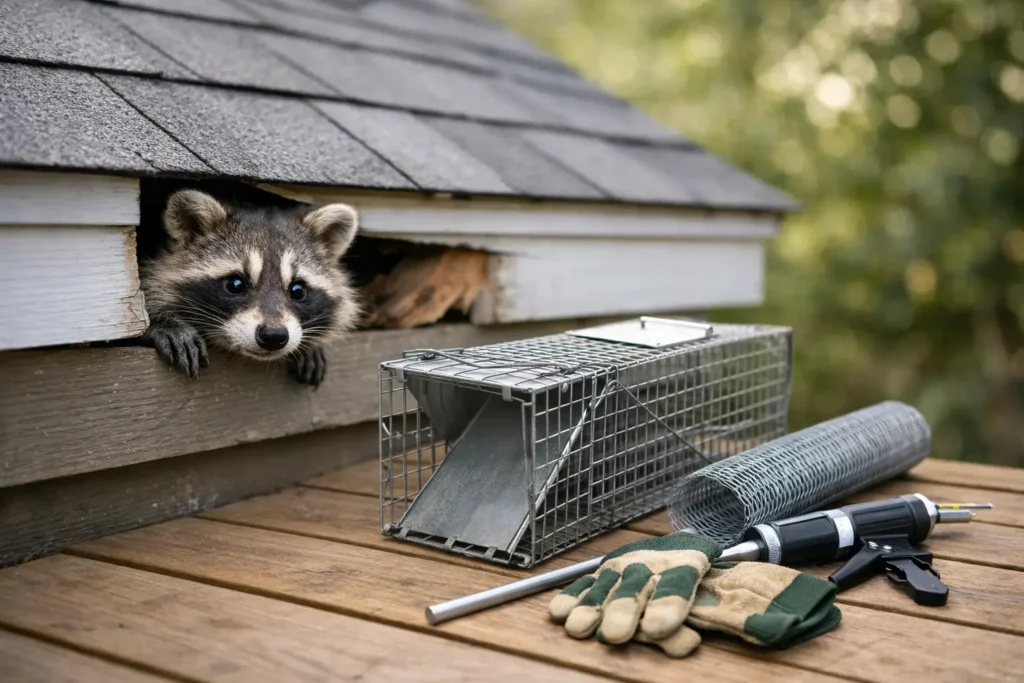
A scratching sound above the ceiling, droppings in a storage room, or a squirrel slipping beneath the eaves can turn a peaceful mountain property into a stressful situation fast. This guide to humane wildlife exclusion explains how to stop animals from entering your home, cabin, rental, or business without trapping them inside or causing unnecessary harm.
Humane exclusion is not simply closing a hole. It is a careful process of identifying the animal, confirming whether young may be present, creating a safe exit, sealing vulnerable areas, and cleaning contamination afterward. Done correctly, it protects your building, your family or guests, and the wildlife that belongs outdoors.
What Humane Wildlife Exclusion Means
Wildlife exclusion means making a structure inaccessible to nuisance animals. The humane part is the method and timing. Instead of relying on poison or sealing every opening while animals are still inside, a trained technician determines where animals are entering and leaving, then uses species-appropriate methods that allow them to exit safely.
For a raccoon in an attic, that may involve a one-way door installed over the active entry point after checking for kits. For squirrels, it may mean reinforcing roof returns, fascia gaps, and chimney openings once the animals have left. For bats, the work requires even more care. Bat exclusion should be timed and handled properly so flightless young are not separated from their mothers.
The goal is straightforward: keep animals out of the structure for good, without turning a wildlife problem into an animal welfare problem.
Why Mountain Properties Need a Different Approach
Homes around Big Bear Lake, Lake Arrowhead, Running Springs, Crestline, and nearby mountain communities sit close to forests, rock outcroppings, vacant lots, and seasonal food sources. Wildlife does not need much encouragement to investigate a warm attic, crawl space, chimney, shed, or trash area.
Snow, wind, temperature swings, and aging building materials can also create openings that are easy to miss. A lifted shingle, a loose vent screen, a gap where a utility line enters the siding, or damaged fascia may be enough for a mouse, bat, squirrel, or bird to get inside. Rodents can fit through openings much smaller than most property owners expect.
Vacation homes and seasonal cabins can be especially vulnerable. A small problem can grow unnoticed when a building sits vacant, then become obvious only when droppings, odors, chewed wiring, or nesting material appear. Humane exclusion addresses the access points that allowed that problem to develop in the first place.
Start With an Accurate Inspection
Effective exclusion begins outside, not in the attic. A full inspection should trace the route from the animal’s outdoor food, shelter, or travel path to the opening in the building. This prevents a common mistake: sealing one visible gap while leaving several easier entry points open nearby.
Look for these signs around the property:
- Rub marks, claw marks, chewed wood, or greasy trails near vents and openings
- Droppings in attics, crawl spaces, garages, sheds, and around exterior walls
- Torn screens, displaced vent covers, loose soffits, or gaps at rooflines
- Noises at predictable times, such as scratching at night or bird activity at dawn
The timing of activity matters. Raccoons are usually active at night, while squirrels are active during the day. Bats may leave around dusk. Birds may repeatedly return to the same eave, ledge, or vent. Identifying the species helps determine the right exclusion method and whether seasonal nesting or young animals must be considered.
A professional inspection also checks areas property owners often cannot safely reach, including steep rooflines, chimneys, attic voids, elevated vents, and areas affected by snow or tree damage.
Never Seal an Active Opening Without Checking First
The biggest risk in do-it-yourself exclusion is blocking an opening while animals are still inside. An animal trapped in a wall, attic, or crawl space may die there, create a serious odor issue, attract insects, or cause more damage while trying to escape. A mother separated from her young may also attempt to force her way back into the structure.
Before permanent repairs begin, active entry points need to be confirmed. Technicians may use visual evidence, monitoring, or carefully placed materials to determine which gaps are being used. Once activity patterns are understood, a one-way exclusion device can be installed where appropriate. These devices allow an animal to leave but prevent it from re-entering.
Not every situation is suitable for a one-way door. Bird nests, bats, dependent young, and certain structural layouts require a more specialized plan. Humane work depends on adapting the method to the animal and the season, not applying the same fix to every job.
Seal the Whole Structure, Not Just the Main Hole
After animals have safely exited, exclusion repairs should focus on the entire exterior envelope of the building. One repaired hole does little if a rodent can enter through a foundation vent or a squirrel can reach another roof gap two feet away.
Common exclusion work includes repairing damaged fascia and soffits, screening attic and foundation vents, sealing gaps around pipes and utility lines, reinforcing roof intersections, capping chimneys, securing crawl-space access, and repairing holes around garages or sheds. Materials matter. Lightweight plastic mesh may not stand up to chewing or harsh weather, while improperly installed metal screening can create sharp edges or fail under snow load.
The right repair should blend durability with the needs of the structure. Older cabins, for example, may have irregular framing and multiple small voids that need careful fitting. Commercial buildings may have loading areas, roof penetrations, dumpsters, and service doors that require a different prevention plan.
Remove Food and Shelter Pressures Around the Property
Exclusion works best when the building is no longer the easiest option for wildlife. You do not need to remove every natural food source from a mountain property, but practical changes can reduce repeat visits.
Keep garbage secured, avoid leaving pet food outdoors, clean up birdseed spills, and store feed in durable containers. Trim branches that create direct access to roofs when possible, and keep woodpiles, clutter, and dense debris away from the foundation. Repair leaking outdoor faucets and address standing water where feasible.
These steps are not a substitute for structural repairs. A hungry mouse can still use an unsealed gap, and a raccoon may still investigate an open crawl-space vent. They do, however, reduce the attraction that keeps animals circling back after exclusion work is complete.
Cleanup Is Part of Protecting the Property
Once animals are out, the work is not over. Droppings, urine, nesting materials, and damaged insulation can carry odors and contamination. Rodent waste may be especially concerning in enclosed spaces, while bird droppings can damage surfaces and create sanitation issues around vents, ledges, and commercial entryways.
Avoid sweeping or vacuuming dry droppings without proper protection, since that can disturb contaminated dust. Safe cleanup may involve removing affected materials, disinfecting surfaces, treating odors, and replacing damaged insulation. If wiring, ductwork, or wood has been chewed or soiled, those areas should be assessed for repair as well.
A clean, sealed space is less attractive to future pests and more comfortable for the people who use the building.
When to Call a Wildlife Exclusion Professional
Some small repairs are manageable for a capable property owner, especially when there is no evidence of animals inside. But professional help is the safer choice when you hear activity in walls or attics, find significant droppings, suspect bats, see a raccoon or skunk using the structure, or cannot safely inspect a roofline.
It also makes sense to call when a problem keeps returning. Repeat activity usually means there is an overlooked entry point, an unaddressed attractant, or a repair that did not account for how that species behaves. A local specialist understands the wildlife pressures common to mountain homes and can build a plan around the property rather than offering a temporary patch.
Outbackzack approaches exclusion as complete property protection: humane removal when needed, block-out repairs, rodent proofing, sanitation, and prevention designed for Southern California mountain communities.
A quiet attic and a clean crawl space should not come at the expense of responsible wildlife care. With the right inspection, timing, repairs, and cleanup, your property can stay protected while the animals that share this mountain environment remain where they belong: outside.