
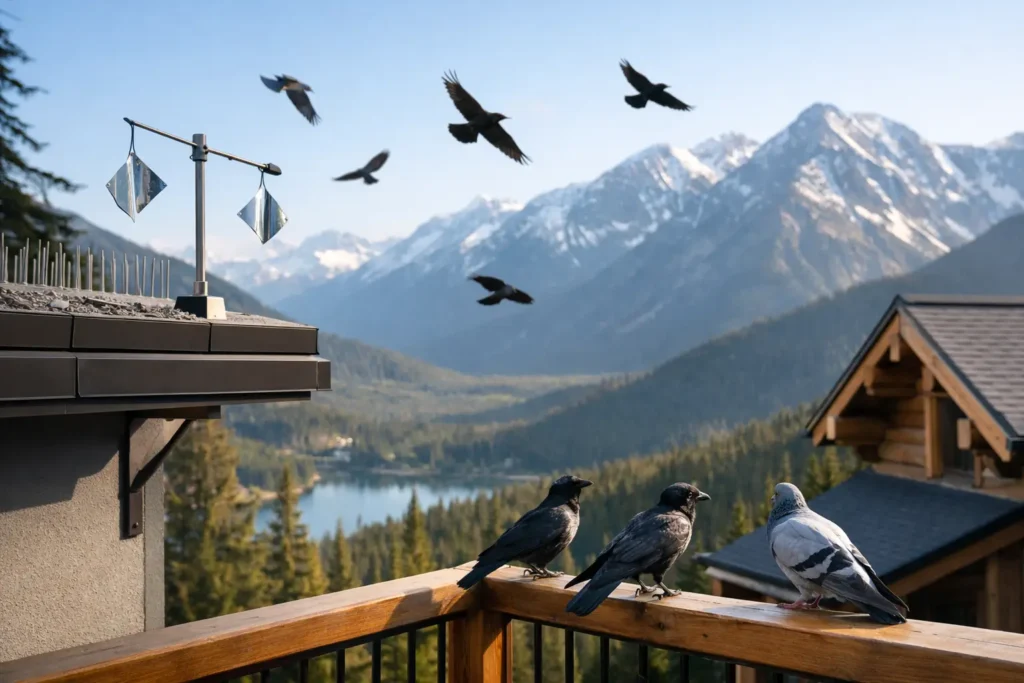
A bird problem at a commercial property rarely stays small. A few pigeons under a storefront awning can turn into stained walkways, blocked drains, slick entry areas, contaminated equipment, and customer complaints in a matter of weeks. This commercial bird control guide is built for business owners and property managers in Southern California mountain communities who need practical, humane protection that lasts.
Bird control is not simply about making a building less comfortable for birds. It is about protecting people, preserving the structure, maintaining sanitary conditions, and preventing the same nesting activity from returning each season. The right approach starts with the species, the building layout, and the conditions attracting birds in the first place.
Why commercial bird problems need fast attention
Bird droppings are more than an appearance issue. They can create slip hazards at entrances and on decks, corrode metal surfaces, stain paint and concrete, and build up around HVAC equipment, solar panels, loading areas, and signs. Nesting material can clog gutters and drains, increase fire risk near electrical components, and provide cover for insects and rodents.
For restaurants, retail shops, lodging properties, offices, and vacation rentals, visible bird activity can also affect how visitors view the property. Guests do not separate a bird-contaminated patio or entryway from the overall cleanliness of the business. In mountain areas such as Big Bear Lake, Lake Arrowhead, Running Springs, and Crestline, wooded surroundings and seasonal weather make protected ledges, eaves, vents, and rooflines especially attractive nesting locations.
Waiting until birds have established a nest usually makes the job more complicated. Some birds are protected by federal or state regulations, particularly during active nesting periods. A humane professional identifies the species and nesting status before recommending removal, exclusion, or cleanup work.
Start with an honest commercial bird control inspection
Effective control begins with identifying where birds land, roost, feed, enter, and nest. The most visible droppings are not always the main issue. Birds may be entering an attic vent, nesting behind a sign, or roosting in a sheltered area above a customer walkway.
A thorough inspection should examine roof edges, parapets, awnings, warehouse doors, loading docks, exhaust vents, attic openings, gutters, exterior lighting, signage, solar panels, and HVAC units. On larger properties, inspect the areas employees and customers do not regularly see. These locations often become long-term roosting spots because there is little human activity to discourage birds.
Look for several clear warning signs:
- Repeated droppings below ledges, beams, signs, or mechanical equipment
- Twigs, grass, feathers, or nesting debris around vents and rooflines
- Bird calls, fluttering, or scratching sounds inside walls or ceilings
- Damaged screens, loose vent covers, and gaps around exterior penetrations
- Standing water, open trash, food scraps, or outdoor feeding that attract birds
The inspection should also identify the bird species. Pigeons, house sparrows, starlings, swallows, and woodpeckers do not behave the same way, so one generic product rarely solves every problem. Swallows may build mud nests beneath eaves, while pigeons tend to gather on broad ledges and HVAC equipment. Woodpecker activity may point to insects in siding or a preferred drumming location rather than a traditional nesting issue.
Choose humane bird control methods that fit the property
The best commercial bird control guide does not promise a single fix for every building. Humane exclusion and habitat correction are usually the most dependable options, but the right materials depend on access, aesthetics, maintenance needs, and the species involved.
Exclusion closes access without harming wildlife
Exclusion is the backbone of long-term bird prevention. It uses properly fitted materials to block birds from nesting or entering vulnerable spaces while allowing the building to function normally. This may include durable screening for vents and openings, bird netting for loading bays or covered structures, and repairs to gaps along rooflines, soffits, and siding.
The details matter. A loose screen or poorly secured net can create another hazard and may fail during mountain wind, snow, or heavy rain. Commercial exclusion work should be installed for the building’s conditions, not simply attached as a temporary patch.
Landing deterrents protect ledges and equipment
Where birds repeatedly perch on ledges, signs, piping, beams, or rooftop equipment, physical landing deterrents can make those surfaces unsuitable without injuring birds. Properly selected and professionally installed systems are more reliable than visual scare devices, which birds often learn to ignore.
These systems work best after cleaning. If droppings, nesting debris, food sources, and existing shelter remain, birds may simply shift a few feet to another exposed surface. The goal is to address the entire roosting zone, not move the problem from the front entrance to the back loading area.
Cleanup and disinfection protect your staff and customers
Bird cleanup should never be treated as a quick sweep-and-go task. Dried droppings and nesting debris can become airborne when disturbed, and contaminated material may contain mites, insects, or bacteria. Employees should not be expected to handle heavy accumulations without the right protective equipment and procedures.
Professional cleanup removes droppings and debris safely, disinfects affected surfaces when appropriate, and reveals hidden damage that buildup may have covered. It also removes the scent and material cues that can draw birds back to a familiar roost. If insulation, ducting, or attic areas are contaminated, those spaces may need more extensive remediation before exclusion is completed.
Remove the conditions that keep birds coming back
A commercial property can have excellent exclusion in one location and still experience recurring bird pressure if food, water, and shelter are available nearby. Prevention is often a property-management issue as much as a wildlife-control issue.
Keep dumpsters closed and clean up spilled food around outdoor dining, loading areas, and employee break spaces. Repair leaking exterior faucets and eliminate standing water where possible. Trim vegetation away from structures when branches create convenient access to roofs or ledges. If customers or staff feed birds, establish a clear policy and explain why the practice creates sanitation and safety concerns.
For lodging and vacation properties, inspect between guest stays. A quiet cabin, covered deck, or unoccupied commercial unit can give birds enough time to establish a nest before anyone notices. Regular exterior checks are less expensive than emergency cleanup after a roost has grown.
Avoid shortcuts that create bigger problems
Foam, tape, and loosely placed mesh may appear to close a gap, but they can fail quickly and may trap wildlife if installed without checking the area first. Poison is not a responsible bird-control solution and can create risks for non-target wildlife, pets, and the surrounding environment.
Repellents, plastic predators, reflective objects, and sound devices may have limited, short-term uses in certain settings, but they are rarely a complete commercial solution. Birds adapt quickly when the food source, nesting space, or safe perch remains available. Temporary scare tactics should never replace inspection, cleanup, exclusion, and repair.
It is also critical not to remove or disturb an active protected nest without confirming what is legally allowed. Humane bird control means acting quickly while still respecting wildlife laws and seasonal nesting activity. A qualified local specialist can assess timing, identify the species, and plan work that protects the property without causing unnecessary harm.
Build bird prevention into routine property maintenance
Commercial bird control is most effective when it becomes part of the maintenance schedule. Schedule roofline, gutter, vent, and exterior equipment inspections before spring nesting activity and again after severe weather. Train maintenance staff to report fresh droppings, nest material, damaged screens, and bird activity around equipment before the issue spreads.
Documentation helps property managers spot patterns across multiple buildings. If pigeons return to the same rooftop each winter or swallows appear under the same covered entry every spring, the property can plan preventive work before birds settle in. That is usually less disruptive than working around an established nest or a heavily contaminated area.
For mountain businesses, the local environment matters. Snow load, wind exposure, pine needles in gutters, seasonal occupancy, and nearby forest habitat all affect where birds choose to shelter. Outbackzack approaches commercial bird issues with humane removal, sanitation, exclusion, and repair in mind, because lasting protection requires more than sending birds somewhere else.
A clean, protected property sends a clear message to customers and employees: this business takes safety seriously. Address bird activity while it is still limited, and you can protect the building, the people using it, and the wildlife living around it.