
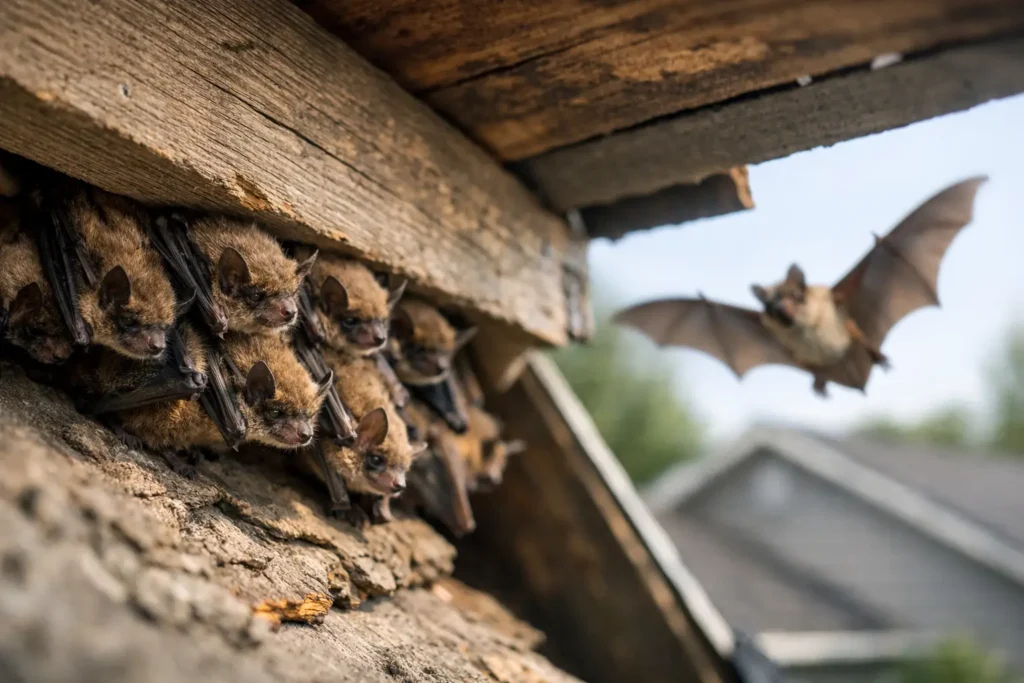
A bat slipping through a gap near the roofline at dusk can be easy to dismiss. But repeated activity around an attic vent, chimney, eave, or siding seam is a different situation. Homeowners often ask when should bats be removed from a house, cabin, or rental property. The short answer is: address the problem as soon as you notice it, but schedule the actual exclusion around the bats’ life cycle so young bats are not trapped inside.
Bats are valuable wildlife that help control insect populations. They do not belong in occupied buildings, however. A colony in an attic can leave droppings, create odor, contaminate insulation, and exploit small openings that other wildlife may later use. Humane bat removal protects your property while respecting an animal that plays an important role in our mountain environment.
When should bats be removed from a home?
The right time depends on whether bats are using the structure as a temporary roost, a maternity site, or a winter shelter. A professional inspection identifies the entry points, the likely species, the number of bats present, and the safest removal window.
In many Southern California mountain communities, the best time for exclusion is often after young bats are old enough to fly and leave on their own. If a maternity colony is excluded too early, flightless pups can be stranded inside walls or attics. That is not humane, and it can create a much larger odor and cleanup problem for the property owner.
On the other hand, waiting indefinitely is not the answer. Once bats have found a dependable roost in a warm, protected building, they may return season after season. The practical approach is to inspect early, monitor activity, and complete exclusion as soon as conditions allow.
Remove a single bat immediately from living spaces
A single bat in a bedroom, living room, office, or guest room needs prompt attention, especially if people were sleeping in the room or a pet may have had contact with it. Do not handle a bat with bare hands, try to trap it in a towel, or release it before you understand whether contact may have occurred.
Bats can carry rabies, although most do not. Any possible bite, scratch, or direct contact should be taken seriously. Contact local public health officials or a medical provider for guidance if a person may have been exposed. Keep children and pets away from the area, close interior doors if possible, and call a trained wildlife removal professional.
Act fast when bats are causing damage or contamination
Even when the timing is not right for final exclusion, an active bat issue deserves a quick inspection. Strong odors, visible droppings below a roofline, staining around entry holes, chirping from walls, or insects gathering near an attic opening can all point to a roosting issue.
Bat droppings can accumulate in insulation and on attic surfaces. Dry, disturbed droppings may create a health concern because particles can become airborne. This is why sweeping, vacuuming, or pressure-blowing attic waste without proper protective equipment is a bad idea. Removal should include controlled cleanup, sanitation, and an honest assessment of whether insulation or damaged materials need to be replaced.
Why maternity season changes the timing
Bat pups are born unable to fly. During that period, adult bats leave at night to feed but return to nurse their young. Sealing an entry point while pups remain inside can separate them from the colony and leave them trapped in the building.
The exact maternity period varies by species, weather, elevation, and local conditions. Big Bear Lake, Lake Arrowhead, Running Springs, Crestline, and nearby mountain communities have cooler temperatures and seasonal weather patterns that can affect bat activity. That is why a calendar-only answer can be unreliable. A local inspection matters more than assuming every bat issue follows the same schedule.
A humane professional may recommend monitoring the roost until juveniles are flying consistently. During that time, property owners can often address secondary gaps, plan repairs, and prepare for exclusion without sealing the active primary exit.
Winter roosts need a careful plan
Some bats use structures for sheltered winter roosting. In cold conditions, bats may be less active and may not leave regularly at night. Installing one-way exclusion devices when bats cannot exit can trap them inside, which is harmful to the animals and risky for the building.
This is another situation where removal is not simply about closing every hole immediately. A qualified technician can determine whether activity is ongoing, whether bats are likely in a torpor period, and what measures can safely protect the structure until exclusion can be completed.
Signs you should schedule a bat inspection now
You do not need to wait until a bat enters the house to get help. Schedule an inspection if you notice repeated dusk activity at the same roofline opening, droppings on a deck or exterior wall, oily staining around a gap, or high-pitched noises from an attic, chimney, or wall void.
Pay particular attention to openings around roof intersections, attic vents, chimney flashing, fascia boards, loose siding, utility penetrations, and gaps where older construction meets additions or decks. Bats can use surprisingly small openings. A gap that looks too narrow to matter may still provide access to a roosting space.
Vacation homes and cabins deserve extra attention. A seasonal property can sit empty long enough for a small issue to become an established colony. Before reopening a cabin, preparing a short-term rental, or closing a property for the season, check attic areas and exterior rooflines for signs of wildlife activity.
Humane bat removal is an exclusion process
Effective bat control is not about poisoning, trapping, or killing bats. The goal is to let the animals leave safely and prevent them from returning. This is generally done with carefully placed one-way exclusion devices at active exit points, while all secondary entry points are sealed with durable materials.
The process begins with an inspection, often near dusk when bat flight activity is easiest to observe. Once the removal window is confirmed, the technician identifies active exits and potential alternate access points. Exclusion devices are installed so bats can leave to feed but cannot re-enter.
After a suitable monitoring period, the devices are removed and the final openings are sealed. The job should also include checking areas where bats may have contaminated insulation or building materials. If cleanup is needed, it should be handled with proper containment, protective equipment, and sanitation practices.
Why do-it-yourself sealing often fails
Homeowners understandably want to close an opening as soon as they find it. The problem is that bats rarely rely on only one gap. Sealing a visible hole without inspecting the full structure can push bats deeper into walls or redirect them to another opening near the roof.
DIY work also commonly misses the timing issue. Closing an active entry during maternity season or while bats are wintering can trap animals inside. That can lead to dead bats in inaccessible voids, persistent odor, and insects feeding on remains.
Caulk alone is rarely a lasting answer for mountain properties. Weather, snow, wind, wood movement, and aging roofing materials can reopen weak repairs. Durable exclusion work uses the right materials for the location and addresses the building conditions that allowed access in the first place.
Protecting mountain homes after bat exclusion
Once bats have been excluded, prevention becomes the priority. Keep roof and siding repairs current, screen vents correctly, repair damaged fascia, and make sure chimney caps are secure. Trim branches away from the roof where practical, since overhanging limbs can provide easy access for several nuisance wildlife species.
Do not assume a quiet attic means the problem is gone. A final inspection after exclusion confirms that activity has stopped and that repairs are holding. For homes with significant droppings, professional cleanup and disinfection help restore the space and reduce lingering odor that could attract insects or other animals.
Outbackzack provides humane bat removal, exclusion, cleanup, and block-out repairs for homes and commercial properties throughout the Big Bear and Lake Arrowhead mountain region. If you see bats using your building, the safest move is to schedule an inspection early. You will have a clear plan that protects your property, your family, and the bats that belong outdoors.