
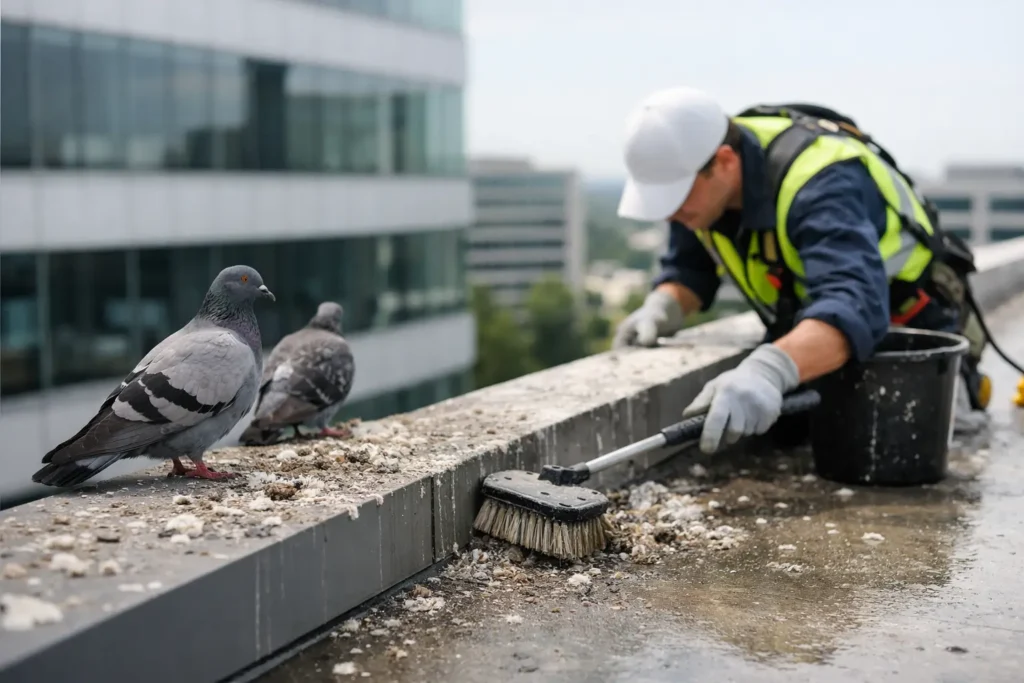
A pigeon roost above a storefront awning or swallow nest near a lodge entry can turn into more than an appearance problem fast. Bird waste cleanup for businesses protects staff, guests, inventory, building materials, and the reputation of the property. In mountain communities, where commercial buildings often sit close to trees, rooflines, and open habitat, bird activity can become a recurring maintenance issue unless cleanup is paired with prevention.
Droppings do not simply disappear when the birds leave for the day. They can collect on walkways, window ledges, signs, HVAC equipment, loading areas, decks, and roof surfaces. The longer the buildup remains, the harder it is to remove safely and the more likely birds are to return to the same established roost.
Why Bird Droppings Are a Business Problem
Bird waste creates immediate concerns at customer-facing properties. A slick sidewalk near an entrance can become a slip hazard. Droppings on outdoor seating, merchandise displays, or vehicles can frustrate customers and create extra work for employees. For vacation rentals, restaurants, retail locations, offices, and lodging properties, those visible messes can affect how people judge the entire business.
There is also a sanitation concern. Dried droppings, nesting material, feathers, and debris can hold bacteria, fungi, parasites, and other contaminants. Disturbing dry waste can send dust into the air, particularly in enclosed areas such as attics, storage rooms, roof voids, covered patios, and mechanical spaces. The risk level depends on the amount of accumulation, the bird species, ventilation, and who may be exposed, but it is never a job to treat casually.
Bird droppings can also damage the building itself. Their acidic content may stain painted surfaces, etch metal, deteriorate roofing materials, clog gutters, and contaminate drainage paths. When nests block vents or gather around equipment, the issue can affect airflow and create expensive maintenance problems.
Bird Waste Cleanup for Businesses Requires More Than a Hose
Spraying a contaminated area with a garden hose can spread runoff into entryways, landscaping, drains, or nearby surfaces. Sweeping or blowing dry droppings is also a poor solution because it can disturb contaminated dust. A professional cleanup plan starts with controlling the area and assessing what is present before removal begins.
The right approach usually includes safe removal of droppings, nesting material, and loose debris; targeted cleaning of affected surfaces; and disinfection where contamination warrants it. Technicians should use appropriate personal protective equipment and methods suited to the location. A small amount of fresh droppings on an open concrete walkway is very different from a long-standing accumulation in an attic or beneath a covered commercial roofline.
Cleanup should include the places people do not always see. Birds often leave debris behind gutters, under solar panels, above signs, inside vents, around rooftop equipment, and along beams near loading docks. If these areas are ignored, the odor, contamination, and nesting pressure may continue even after the visible mess has been removed.
The Source Must Be Addressed
Removing waste without addressing the roost is like cleaning up a leak without fixing the pipe. Pigeons, sparrows, swallows, and woodpeckers may return because the site offers shelter, warmth, food, or a protected nesting location. In wooded and high-altitude communities, nearby forest cover and seasonal weather can make overhangs, vents, eaves, and signs especially attractive.
A property inspection identifies the entry points, perch sites, nest locations, and conditions that are drawing birds in. The best prevention may involve exclusion work, repair of damaged openings, screening, bird barriers, changes to ledges or access points, or sanitation that removes the scent and debris associated with an established roost. The method depends on the species, the structure, and the season.
Some birds and active nests are protected by state or federal rules. That means timing matters. Humane bird control is not about rushing in and destroying a nest. It means identifying the species, following applicable protections, and using responsible exclusion methods that prevent future access without causing unnecessary harm.
A Practical Cleanup Plan for Commercial Properties
For business owners and property managers, the fastest route to a lasting result is to document the problem early. Note where birds are landing, whether droppings appear daily, whether there are visible nests, and whether staff or customers use the affected area. Photos can help show the pattern, but employees should avoid handling nests or dry waste themselves.
Next, limit exposure until the area is cleaned. If droppings are near a public entrance, outdoor dining area, or employee break space, use temporary barriers or redirect foot traffic when possible. This protects people while preventing the mess from becoming normalized as part of the property.
Then schedule an inspection with a wildlife and bird-control professional who can handle both remediation and prevention. Outbackzack provides humane bird removal, cleanup, disinfection, exclusion, and block-out repairs for commercial properties throughout the Big Bear and Lake Arrowhead mountain communities. A complete service visit should address the active contamination as well as the reasons birds selected the building in the first place.
When Cleanup Needs Immediate Attention
Some bird waste problems can wait for a scheduled service visit. Others should be handled promptly, especially when contamination is near food service areas, customer entrances, air intakes, employee workspaces, or stored goods. Heavy accumulations in an attic, crawlspace, warehouse loft, or equipment room also deserve quick professional attention.
Call for help sooner when you notice strong odors, birds entering a building, blocked vents, droppings falling from overhead areas, repeated nesting activity, or a sudden increase in bird traffic around the property. These signs often point to an active roost rather than an occasional bird passing through.
Prevention Is Usually More Cost-Effective Than Repeated Cleanup
Recurring cleanup bills can add up when a business treats the symptom but not the access point. Exclusion and proofing have an upfront cost, but they can reduce future sanitation work, protect finishes and equipment, and keep employees from spending time on a problem outside their role.
Still, prevention is not one-size-fits-all. A historic storefront, a lodge with exposed timber, a restaurant patio, and a warehouse roof each need a different solution. The most effective plan protects the building’s function and appearance while respecting wildlife and avoiding unnecessary disruption to daily operations.
Regular exterior checks help catch the issue before it becomes extensive. Property managers should watch roof edges, signs, covered walkways, vents, gutters, solar panels, and rarely used service areas. Early detection often means a simpler cleanup and a more straightforward exclusion repair.
A clean entryway and well-maintained building tell customers that the people inside pay attention to details. When birds start making your business their home, act before the droppings, damage, and repeat visits become a larger problem. Humane cleanup and targeted prevention can keep the property safer, cleaner, and ready for the people who rely on it.