
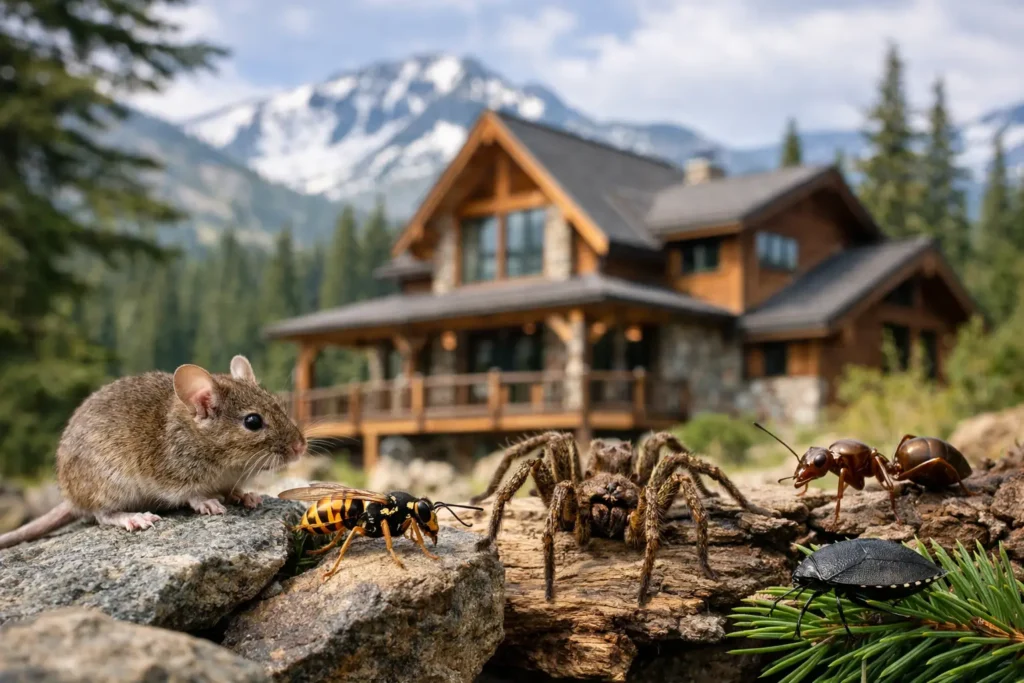
A mountain property can look perfectly secure from the driveway and still offer easy access to mice, ants, squirrels, bats, and other unwanted visitors. Gaps hidden behind decks, stacked firewood, roofline damage, and a warm crawl space can turn a cabin into a year-round shelter. This mountain home pest prevention guide focuses on the conditions that matter most in Big Bear, Lake Arrowhead, Running Springs, Crestline, and other Southern California mountain communities.
Prevention is not about declaring war on wildlife. It is about keeping animals outdoors where they belong, protecting your home from contamination and damage, and addressing entry points before a small problem becomes an expensive repair.
Start With the Outside of the Home
Most pest issues begin outside. Mountain homes sit close to pine trees, brush, rock piles, woodpiles, and natural animal travel routes. A mouse does not need an obvious open door to get inside. It can use a gap around a utility line, a warped vent screen, or a small opening at the foundation.
Walk the exterior slowly and inspect it at ground level first. Look where siding meets the foundation, where pipes and cables enter the building, and where decks attach to the structure. Check for loose screening, cracked vent covers, damaged weatherstripping, and gaps around garage doors. Rodents can fit through surprisingly small openings, while squirrels and raccoons can enlarge weak spots around eaves, soffits, and roof returns.
Trim branches away from the roof and keep dense vegetation from pressing against the siding. Overhanging limbs give squirrels and rats a direct route to attic vents and roof gaps. Brush against the home also holds moisture and creates protected paths for insects and rodents. You do not need to clear every natural feature from your property, but the area immediately around the structure should be visible and maintained.
Firewood deserves special attention. Keep stacks elevated, covered from rain, and placed well away from the house. Woodpiles can shelter rodents, spiders, ants, and beetles. Bringing a large pile close to the porch in winter may be convenient, but it also shortens the distance between pests and your living space.
Seal Entry Points Before Cold Weather Arrives
Fall is when many mountain homeowners notice rodent activity, but waiting until you hear scratching in the walls limits your options. Mice and rats seek warmth, food, and nesting material as temperatures drop. Bats may use attic voids or roof gaps seasonally, while birds often return to familiar ledges, vents, and eaves.
A proper exclusion inspection looks beyond the obvious hole. It identifies every likely route, including attic vents, crawl-space vents, gable openings, chimney gaps, roofline separations, plumbing penetrations, and areas behind exterior equipment. Materials matter. Foam alone is rarely a lasting answer because rodents can chew it. Durable repairs may require metal mesh, flashing, properly fitted vent covers, and repairs to deteriorated wood.
Do not seal an opening if you are unsure whether an animal is currently inside. Closing an active entry point can trap wildlife in walls, attics, or crawl spaces, leading to odor, damage, or a frightened animal finding another way into the home. This is especially critical with bats, raccoons, squirrels, and birds. Humane exclusion is timed and installed so animals can leave without being allowed back in.
Watch for the Signs You Cannot See From the Yard
A few clues often reveal a problem before you see the animal. Fresh droppings, chewed wiring, greasy rub marks, shredded insulation, nesting material, chirping in a wall, or a persistent odor all call for a closer inspection. In vacation homes, check carefully after periods of vacancy. A quiet, unoccupied cabin gives rodents and wildlife time to settle in unnoticed.
Control Food, Water, and Shelter
Exclusion is the strongest long-term defense, but it works best when the property is not supplying easy food and shelter. Store pantry goods, pet food, birdseed, and livestock feed in sealed containers. Do not leave pet bowls outside overnight. Even a small amount of accessible food can encourage repeated visits from mice, raccoons, skunks, and birds.
Secure trash in containers with tight-fitting lids, especially at rental properties where pickup schedules and guest habits may vary. Rinse food containers before placing them in recycling, and clean outdoor grilling areas after use. Grease residue and dropped food attract more than insects.
Water is just as valuable to pests as food. Repair leaking hose connections, dripping outdoor faucets, and plumbing leaks under sinks or in crawl spaces. Make sure gutters and downspouts move water away from the foundation. Standing water and damp wood support insect activity, while moisture in enclosed spaces can draw rodents and create conditions for mold.
For homes with bird feeders, placement matters. Feeders near the roof, deck, or garage can attract birds and rodents close to potential entry points. If you keep feeders, position them away from the structure and clean spilled seed regularly. The goal is not to remove the enjoyment of mountain wildlife. It is to keep wildlife from associating your building with a dependable meal.
Protect Attics, Crawl Spaces, and Garages
These spaces are often the first areas to become active because they are quiet, dark, and less frequently checked. An attic with damaged vents or separated fascia can become a nesting site for rodents, squirrels, bats, or birds. A crawl space with open vents, fallen insulation, or moisture problems can shelter mice and rats.
Inspect these areas at least twice a year, ideally before winter and again after spring thaw. Look for droppings, tracks, nesting materials, chewed wood, torn duct insulation, and disturbed vapor barriers. Do not sweep or vacuum suspected rodent droppings dry. Droppings may carry contaminants, and cleanup should be handled with proper protective measures and disinfection.
Garages create a different challenge. They often contain pet food, cardboard boxes, stored fabrics, holiday decorations, and clutter that make excellent nesting material. Keep storage elevated when possible, reduce cardboard buildup, and avoid leaving the garage door partially open for long periods. Replace worn bottom door seals and make sure side doors close tightly.
A Mountain Home Pest Prevention Guide for Rentals
Cabins and short-term rentals need a stronger prevention routine because occupancy changes constantly. Guests may leave doors open, store food incorrectly, place trash outside, or overlook a new noise in the attic. A small pest issue can quickly become a review, maintenance, and sanitation problem.
Property managers should inspect between stays for droppings, damaged screens, food debris, unusual odors, and signs of chewing around utility areas. Include clear guest instructions for trash storage, bird feeding, and keeping doors closed. If a property sits vacant for several weeks, schedule a walkthrough rather than assuming it is secure.
Mountain weather adds another layer. Heavy snow, wind, and falling branches can damage vents, screens, flashing, and roof edges. After a storm, inspect the exterior for changes. A repair that held up in summer may not survive a hard winter season.
Know When Prevention Needs Professional Help
DIY maintenance can handle basic cleaning, trimming, food storage, and visible weatherstripping. It is less effective when the source of activity is hidden, when animals are in an attic or wall, or when contamination is present. Poison is also not a complete prevention plan. It can create risks for pets, children, and non-target wildlife, and an animal that dies inside a wall creates another costly problem.
A professional inspection can identify species-specific activity, active entry points, structural vulnerabilities, and sanitation needs. The right response may include humane removal, one-way exclusion, rodent proofing, block-out repairs, cleanup, and disinfection. At Outbackzack, the focus is on protecting mountain properties while using eco-friendly, humane approaches that respect local wildlife.
The best time to prevent an infestation is when your home is quiet and you have not yet heard movement overhead. Set a seasonal inspection reminder, address small gaps promptly, and treat every new opening as an invitation worth closing. Your mountain home should be a refuge for the people inside it, not a winter lodge for pests.