
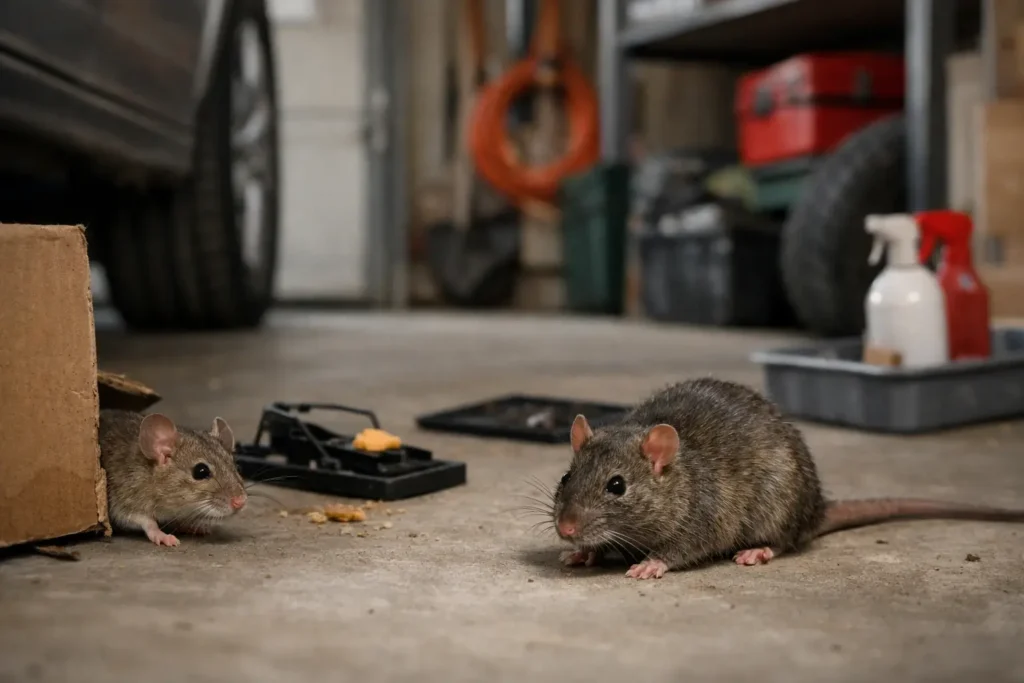
That scratching behind the storage bins usually starts small. A few droppings near the wall, a chewed bag of birdseed, a musty odor you cannot quite place. If you are wondering how to get rid of mice and rats in garage spaces, the real answer is not just trapping what you see. It is finding out why they chose your garage, removing them safely, and shutting down the conditions that let them come back.
In mountain communities, garages are especially attractive to rodents. They offer warmth, shelter from snow and wind, easy nesting material, and a steady supply of food from pet kibble, trash, cardboard, seed, and clutter. Detached garages are not immune, and attached garages create an even bigger risk because rodents often use them as a staging area before moving into walls, attics, and living spaces.
Why mice and rats choose garages
A garage gives rodents exactly what they need without much disturbance. It is usually darker than the rest of the home, quieter at night, and full of hiding places. Seasonal decorations, stacked boxes, old furniture, and stored firewood create protected tunnels and nesting zones. Even a clean-looking garage can support an infestation if there is an opening under the door, a gap around utility lines, or a loose vent screen.
Mice only need a very small gap to get inside. Rats need more room, but they are strong chewers and persistent explorers. Once they settle in, they leave behind urine, droppings, grease marks, and damaged materials. That contamination is not just unpleasant. It creates health concerns and can spread into the rest of the property.
How to get rid of mice and rats in garage areas the right way
The fastest way to waste time is to start with bait or traps before you inspect the space. If you do not know where rodents are entering, nesting, and traveling, removal becomes a temporary fix.
Start by looking for fresh droppings, gnaw marks, shredded insulation or paper, rub marks along baseboards, and small openings near garage doors, rooflines, vents, and foundations. Check behind appliances, inside cabinets, near water heaters, and around stored feed or seed. If the infestation is active, you may also notice a strong ammonia-like odor.
Once you know the activity pattern, removal and prevention need to happen together. If you only trap, new rodents can keep entering. If you only seal, you may trap live rodents inside. The order matters.
Use removal methods that match the situation
For a light mouse problem, targeted trapping can work well when placed along walls and near active runways. Rodents usually travel with one side of their body close to a surface, so placement matters more than quantity. Randomly placing traps in open floor space rarely works.
For a larger infestation, especially with rats, a more controlled plan is usually necessary. Rats are cautious. They may avoid new objects, shift nesting areas, or spread into harder-to-reach voids if pressure is applied carelessly. In garages connected to homes, that can push the problem deeper into the structure.
This is also where humane and eco-conscious service matters. Poison may seem convenient, but it creates serious trade-offs. A rodent can die inside a wall and create odor and sanitation issues. Secondary poisoning can also affect pets and local wildlife. In wooded and mountain environments, that risk is not theoretical. Responsible control focuses on direct removal, exclusion, sanitation, and long-term prevention instead of simply scattering toxic bait and hoping for the best.
Clean up carefully after removal
A garage does not feel rodent-free just because the scratching stops. Droppings, urine, nesting debris, and contaminated dust can remain behind. Sweeping or vacuuming dry droppings can stir particles into the air, which is why cleanup should be handled with care.
Contaminated materials often need to be removed, surfaces disinfected, and heavily soiled storage areas reevaluated. If rodents nested in insulation, wall voids, or vehicle compartments, the cleanup can go beyond what is visible on the floor. This part is easy to underestimate, but it is essential if you want the space to be safe and usable again.
Seal the garage so rodents cannot return
Exclusion is what turns rodent control into a lasting solution. Mice and rats are opportunists. If the garage stays accessible, another group will eventually test the same weak spots.
Look closely at the bottom corners of the garage door, side gaps, weather stripping, roof intersections, vents, and any place where pipes or wires enter. A door that closes unevenly can leave enough space for regular rodent entry. Damaged trim, warped wood, and cracked concrete around the perimeter can also become access points.
Not every repair is equal. Soft filler materials alone often fail because rodents chew through them. Durable exclusion work should match the structure and the pressure points on the property. In high-altitude communities where weather, snow, and shifting materials are part of the equation, quick patch jobs tend not to hold up for long.
Reduce what is attracting them
Rodents stay where food, water, and shelter are easy. That means prevention is partly about repairs and partly about changing what is stored in the garage.
Cardboard is a common problem because it offers both cover and nesting material. Pet food, birdseed, grass seed, and livestock feed are even bigger draws if they are stored in bags or loosely sealed bins. Water from appliance leaks, snow runoff, or condensation gives rodents one more reason to stay.
A few practical changes make a real difference. Store food-related items in sealed hard containers, keep boxes off the floor when possible, reduce clutter along walls, and avoid piling materials in dark corners for long periods. Firewood should stay away from the garage if possible, especially in colder seasons when rodents start looking for protected shelter.
When a garage infestation is more serious than it looks
A lot of garage rodent problems look minor at first. Then the owner realizes the mice are in the attic, the rats are under the subfloor, or wiring inside a stored vehicle has been chewed. If activity keeps returning after trapping, if you hear movement in adjacent walls, or if droppings show up in multiple parts of the property, the issue has likely expanded beyond the garage itself.
This is common in cabins, vacation rentals, and homes near open space. Rodent pressure changes with weather, food availability, and nearby shelter conditions. A garage may be the first obvious hotspot, but not the only one.
That is when a full inspection matters most. The goal is not just to remove what is active today. It is to understand how the whole structure is being used and where the vulnerabilities are.
Why local conditions matter in mountain communities
Rodent control in a suburban tract home is not always the same as rodent control in Big Bear, Lake Arrowhead, Running Springs, or Crestline. Mountain properties deal with colder nights, heavier seasonal shifts, more surrounding habitat, and more frequent wildlife pressure. Garages often store snow gear, bulk supplies, animal feed, and seasonal items for long periods, which creates ideal conditions for hidden activity.
That is why generic advice only goes so far. A bait station from a hardware store might catch one part of the problem while ignoring access points, sanitation, and wildlife safety. On the other hand, a targeted plan that combines humane removal, cleanup, and rodent proofing is built for the conditions that actually exist on your property.
For homeowners and property managers who want the issue handled thoroughly, professional service can save time and prevent repeat damage. Outbackzack approaches rodent problems with that bigger picture in mind – removal, sanitation, exclusion, and protection for the long term.
What to do now if you hear scratching tonight
If you suspect active rodents in the garage, avoid disturbing nesting areas or handling droppings without protection. Do not leave food sources exposed, and do not assume the problem will stay confined to the garage. Early action matters because breeding cycles are fast, and structural damage tends to grow quietly.
Take a close look at the door seal, the corners, and the walls for fresh activity. If you can identify one obvious attractant, remove it. If you can identify one obvious opening, make note of it. But if there is visible contamination, repeated signs, or any chance the problem has spread beyond a single area, it is worth treating the garage as part of the whole property, not as a separate room.
A garage should protect what is inside it, not become a safe harbor for rodents. The right fix is the one that removes the animals, respects the environment around your home, and closes the door behind them for good.