
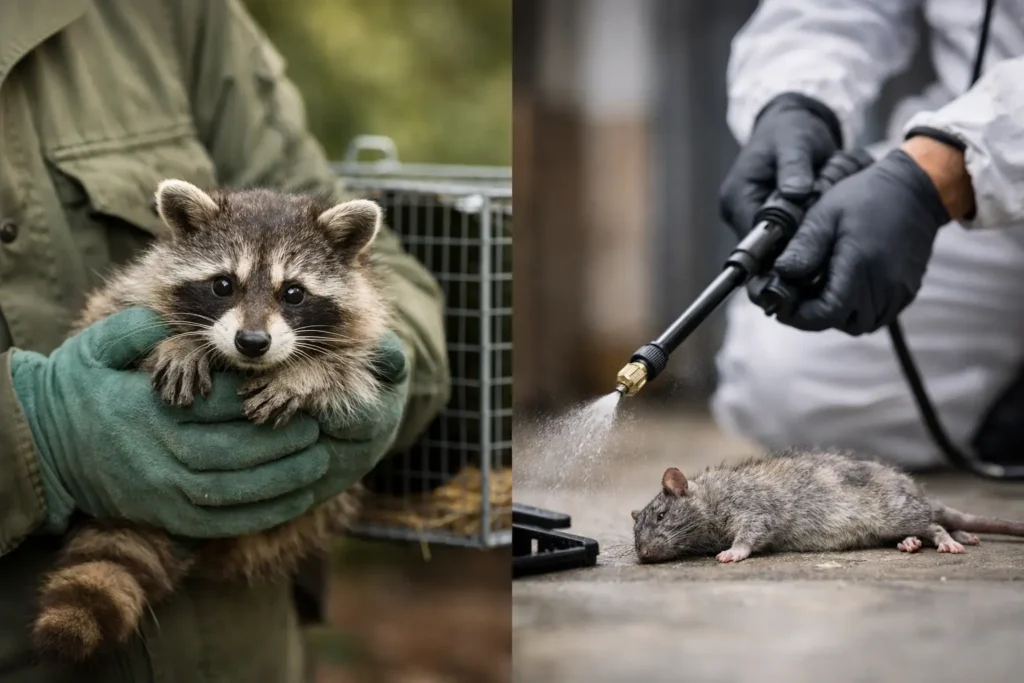
A scratching sound in the attic at 2 a.m. changes the conversation fast. When an animal or pest gets into your home, cabin, or commercial building, the question is not just how to get it out. It is whether humane removal vs extermination will actually solve the problem without creating a bigger one next week.
In mountain communities, that distinction matters more than most people realize. Homes in Big Bear, Lake Arrowhead, Running Springs, and nearby areas sit close to trees, crawl spaces, sheds, rooflines, and natural habitat. That means rodents, raccoons, skunks, bats, squirrels, birds, and insects are not rare surprises. They are part of the environment. The right response has to protect your property and respect the realities of where you live.
What humane removal vs extermination really means
Extermination is built around killing the target animal or pest population. In some cases, that may involve poisons, lethal traps, or broad treatment methods designed to eliminate activity quickly. It can sound simple, especially when you are dealing with droppings, odors, chewed wires, or noise overhead.
Humane removal takes a different approach. The goal is to remove the nuisance animal responsibly, reduce suffering, and stop the problem at its source by identifying how the animal got in, what attracted it, and how to keep it from returning. That often includes inspection, live removal where appropriate, cleanup, sanitation, exclusion repairs, and long-term proofing.
This is where many property owners get tripped up. They think removal and extermination are just two ways of saying the same thing. They are not. One focuses on the immediate occupant. The other looks at the entire chain of access, shelter, food, and contamination.
Why extermination can leave the real problem behind
When people are stressed, they naturally want the fastest option. But speed without a full plan is often what leads to repeat infestations.
If a rat is poisoned inside a wall, you may trade scratching noises for odor, insects, and a carcass you cannot reach. If a raccoon is trapped and removed but the entry hole in the roof is left open, another animal may move in. If birds are chased off a structure without proper block-out work, they usually come right back to the same ledge, vent, or eave.
That is the weakness of extermination-only thinking. It treats the visible animal as the whole issue. In reality, the animal is often just the symptom. The bigger issue is the opening in the fascia, the uncapped chimney, the damaged vent screen, the crawl space gap, the food source, or the nesting site that made your property attractive in the first place.
For mountain homes and vacation rentals, this matters even more. A vacant property can turn into an easy shelter for rodents and wildlife if small entry points go unnoticed. Killing one intruder does nothing if the structure still offers warmth, access, and protection.
When humane removal is the better long-term choice
Humane removal is usually the stronger option when you are dealing with nuisance wildlife such as raccoons, skunks, bats, squirrels, or birds. These situations often require species-specific handling, safe removal practices, and careful inspection of the building afterward.
A humane strategy also makes sense when health and sanitation are part of the job. Droppings, urine, nesting debris, and parasites can remain after the animal is gone. If the space is not cleaned and disinfected properly, you are left with contamination risks even after the immediate problem seems over.
The best humane work does not stop at removal. It includes exclusion, block-out repairs, and habitat corrections that make the property less inviting. That is how you break the cycle.
There is also an environmental piece to consider. In mountain communities, non-target animals and pets can be put at risk by poison and careless trapping methods. A more controlled, eco-conscious approach reduces collateral damage while still protecting the property.
Humane removal vs extermination for different pest problems
Not every call is the same, and the right method depends on the species, the location, and the risk level.
Rodents
Mice and rats are one of the clearest examples of where people confuse removal with resolution. Rodent populations can grow fast, and they can contaminate insulation, chew wiring, and spread mess through attics, walls, and crawl spaces.
Lethal control is sometimes part of rodent management, but on its own it is rarely enough. If rodent proofing is not done, new mice and rats will replace the old ones. A real solution usually combines population control with entry-point sealing, cleanup, and ongoing prevention.
Bats
Bats require special care. They are valuable to the ecosystem, but they do not belong inside attics or wall voids. Humane bat removal typically focuses on timing, safe exclusion methods, and making sure the colony cannot re-enter. A careless extermination mindset here can create legal, health, and structural problems fast.
Raccoons and skunks
These animals can cause major property damage and serious odor issues. They also create safety concerns when they den under decks, in crawl spaces, or inside attics. Humane removal is generally the right path because it addresses both the animal and the denning site. The follow-up work is just as important as the capture.
Birds
Pigeons, sparrows, swallows, and woodpeckers all create different kinds of damage. Nesting, droppings, pecking, and blocked vents can become expensive quickly. Humane bird control often relies on exclusion and deterrence rather than simple removal. Without that step, the same nesting pressure usually returns.
Insects
Insect work is where the answer can depend more heavily on the species and severity. Some infestations require direct treatment to eliminate active populations. Even then, eco-conscious service should still focus on targeted application, prevention, and limiting unnecessary harm wherever possible.
The cost question homeowners usually ask first
People often assume extermination is cheaper and humane removal is more expensive. Sometimes the first invoice may look that way. But the cheaper route upfront can become the more expensive route over time.
If you pay for a quick kill method and still need carcass removal, odor treatment, sanitation, attic cleanup, insulation replacement, or repeat visits, your total cost climbs quickly. Add in repair bills from ongoing chewing, nesting, or contamination, and the math changes.
Humane removal tends to cost more because it is more complete. It involves inspection, skilled handling, cleanup, exclusion, and prevention. That extra work is exactly what helps prevent the same issue from showing up again in a month.
For property managers and short-term rental owners, that long-term value is hard to ignore. A recurring pest problem does not just cost money. It affects guest experience, safety, and reputation.
What to look for in a provider
If you are choosing between companies, do not just ask whether they remove pests or wildlife. Ask how they do it.
A qualified provider should be able to explain what species you are dealing with, what removal method is appropriate, what health risks may be present, and what repairs or exclusion steps are needed afterward. They should also be honest about trade-offs. There are cases where active population reduction is necessary, especially with rodents or serious infestations, but that should be part of a broader property protection plan, not the whole plan.
For homes and businesses in Southern California mountain communities, local experience matters. Buildings here face specific pressures from wooded lots, seasonal occupancy, snow damage, roof vulnerabilities, and nearby habitat. A company that understands those conditions can spot the weak points faster and recommend solutions that actually hold up.
That is why humane, eco-conscious service is not just about being kind to animals. It is about doing a more complete job. Outbackzack approaches nuisance animal and pest problems with that full-picture mindset: remove the issue, clean the mess, close the entry points, and help keep it from happening again.
The better question to ask
Instead of asking, “Should I kill it or remove it?” ask, “What will solve this problem completely and responsibly?”
Sometimes the answer is straightforward. Sometimes it depends on the species, the level of infestation, the condition of the structure, and the health risk involved. But in most wildlife and recurring pest situations, the strongest solution is the one that deals with the animal, the damage, and the reason it got in.
If your attic, crawl space, garage, or commercial building is already showing signs of activity, waiting rarely improves the situation. The sooner you address it with a method built for both removal and prevention, the better chance you have of protecting your property without turning one nuisance problem into three.