
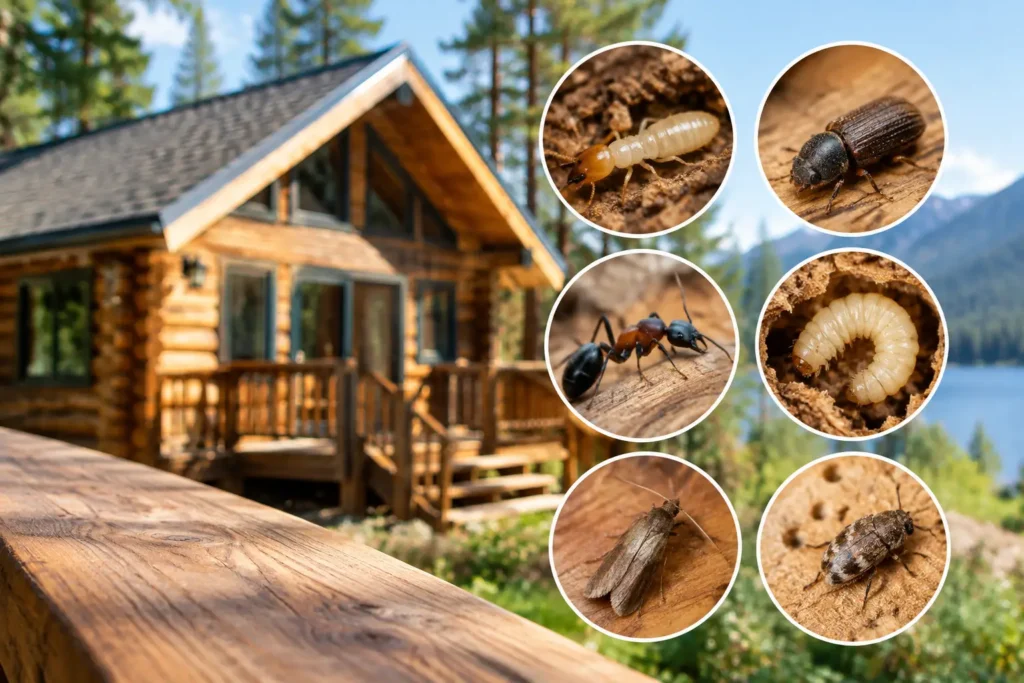
A cabin can look perfectly sound from the driveway while insects are quietly weakening trim, siding, decks, beams, or subflooring from the inside. For mountain property owners, knowing which insects damage cabins is more than a maintenance question. It can mean catching a small moisture issue before it becomes an expensive repair, a safety concern, or a recurring problem for a vacation rental.
Cabins in Big Bear, Lake Arrowhead, Running Springs, Crestline, and nearby mountain communities face conditions insects like: wooded surroundings, seasonal moisture, shaded exterior walls, stored firewood, and periods when a property sits empty. Not every bug near a cabin is destructive, but several species can damage wood directly or create conditions that lead to larger problems.
Which Insects Damage Cabins Most Often?
The most serious cabin-damaging insects are termites, carpenter ants, wood-boring beetles, carpenter bees, and, in some cases, wood wasps. Each leaves different clues. Identifying the damage correctly matters because a treatment that works for one pest may do very little for another.
Termites
Termites are the insect most homeowners worry about, and for good reason. They eat cellulose, the material found in wood and other plant-based building materials. Subterranean termites typically travel from the soil into a structure through hidden routes, while drywood termites can live within dry, sound wood.
In mountain cabins, moisture is often the deciding factor. Leaks around rooflines, plumbing penetrations, window frames, decks, and crawl spaces can soften wood and make an area more attractive to termite activity. Look for mud tubes on foundations or piers, hollow-sounding trim, blistered paint, soft baseboards, or small piles of shed wings near windowsills after a swarm.
Termite damage can remain concealed for a long time. A quick look at exterior siding is not enough to rule it out. A focused inspection should include the foundation, crawl space, deck attachments, utility entry points, and interior areas where moisture has been present.
Carpenter Ants
Carpenter ants do not eat wood like termites. They excavate it to build galleries for nesting, which can still cause meaningful damage when activity continues unchecked. They are especially drawn to wet, decaying, or previously damaged wood, so their presence often points to a water-management problem as well as an insect problem.
The most common sign is coarse, sawdust-like material called frass beneath a wall void, window frame, eave, or porch beam. You may also hear faint rustling inside a wall during quiet evening hours or see large black ants traveling along plumbing lines, tree branches, or exterior siding.
A single carpenter ant indoors does not always mean the colony is in the cabin. It may be foraging from a nest outdoors. Repeated sightings, frass, or activity around damp wood deserve a professional evaluation. Finding and correcting the moisture source is essential, or new ants may return to the same vulnerable area.
Wood-Boring Beetles
Several beetles can damage cabins, including powderpost beetles and old house borers. Their larvae feed inside wood, sometimes for years, before emerging as adults. By the time a homeowner notices round or oval exit holes, the feeding stage may already have caused damage below the surface.
Powderpost beetles often leave very fine, flour-like powder beneath small holes. Old house borer damage may produce larger oval holes and a coarser powder. These pests can affect structural lumber, exposed beams, flooring, furniture, and stored wood, depending on the species and the type of lumber involved.
Fresh powder is the key detail. Old exit holes in a beam do not automatically mean an active infestation. Clean the area, monitor it for new dust or new holes, and have suspicious wood examined before assuming the problem has ended. In a cabin that is only used seasonally, beetle activity can go unnoticed for a long time.
Carpenter Bees
Carpenter bees bore clean, nearly round holes into unfinished or weathered wood, especially fascia boards, railings, eaves, deck posts, and exposed beams. The adult bee does not consume the wood. It tunnels to create nesting chambers, and repeated use of the same area can leave wood looking pockmarked and weakened.
These bees are valuable pollinators, so removal should be handled thoughtfully. The goal is not to harm beneficial insects unnecessarily. It is to stop repeat nesting in vulnerable structural wood. Repairing damaged areas and protecting exposed wood surfaces can help discourage future activity without treating every bee around the property as a threat.
Wood Wasps and Horntails
Wood wasps, sometimes called horntails, are less common structural pests but can alarm cabin owners when large wasp-like insects emerge from firewood, logs, or lumber. They usually target stressed, dying, or recently cut trees rather than sound, finished cabin materials.
Their appearance does not always mean the cabin itself is under attack. Still, emergence from stored lumber, unfinished wood, or an interior beam should be assessed. Proper identification prevents unnecessary treatment and helps distinguish a limited wood-storage issue from active building damage.
Bark Beetles and Other Forest Insects
Bark beetles are a major concern for mountain forests, but they generally damage living trees rather than cabins. Their real risk to a property is indirect. Dead or stressed trees can become falling hazards, add fuel to wildfire conditions, and bring other insects closer to the structure.
Keep in mind that woodpeckers may peck at siding when they are hunting insects beneath it. The bird damage is visible, but the underlying issue may be a hidden carpenter ant, beetle, or other insect population. Solving only the surface damage can leave the attraction in place.
Warning Signs of Insect Damage in a Mountain Cabin
Insect damage is easiest to manage when it is caught early. Watch for soft or hollow wood, unexplained piles of frass, mud tubes, pinholes or oval exit holes, bubbling paint, sagging trim, and recurring insect activity in the same location. Damaged window frames, deck supports, crawl spaces, and roof eaves deserve extra attention because they often hold moisture after snow, rain, or plumbing leaks.
Odor can also be a clue. Damp, musty wood may signal conditions that attract carpenter ants or termites. A cabin that has been closed for several months should be inspected carefully upon reopening, particularly after a wet winter or a period of heavy snowmelt.
Do not assume every hole is insect damage. Weathering, woodpecker activity, old fastener holes, and natural checking in large beams can look concerning. A correct diagnosis protects both your cabin and the environment by avoiding unnecessary pesticide use.
Prevention That Protects Wood Without Over-Treating
The best prevention plan combines maintenance, exclusion, moisture control, and targeted professional treatment when active insects are confirmed. Start by keeping soil, mulch, and firewood away from siding and foundation areas. Firewood should be stored off the ground and away from the cabin, not stacked against a deck or wall where insects can travel unnoticed.
Repair leaks promptly, including small drips beneath sinks and slow leaks around flashing. Clear debris from gutters, make sure downspouts direct water away from the foundation, and maintain enough clearance between siding and soil. Trim branches that touch the roof or exterior walls. They can give insects easy access while also trapping shade and moisture against the structure.
Seal openings around utility lines, vents, siding gaps, and damaged screens. Exclusion will not stop insects already inside a beam or wall, but it reduces access points for foraging insects and helps prevent other pest problems. Cabins often have small gaps created by settling, weather exposure, or previous repairs, so a seasonal walk-around is worthwhile.
Avoid relying on broad, repeated spraying as a default response. It may kill visible insects without reaching the nest, galleries, or moisture conditions sustaining the problem. It can also affect beneficial insects around your property. An inspection-led plan is more effective: identify the species, locate the activity, address the contributing conditions, and use the least disruptive effective option.
When to Call for an Inspection
Call for help when you find mud tubes, fresh frass, active beetle dust, multiple carpenter ants indoors, soft structural wood, or repeated damage around the same beam, eave, deck, or window. Property managers should also schedule inspections when a rental cabin has been vacant, after water damage, or before major remodeling work exposes older lumber.
Outbackzack provides practical, eco-conscious pest solutions for mountain properties, with an approach that focuses on the actual source of the issue rather than a temporary surface fix. For cabins in wooded communities, early inspection can protect the structure while avoiding unnecessary harm to wildlife and beneficial insects.
A well-maintained cabin should feel like a place to get away, not another hidden repair waiting to grow. Pay attention to small changes in the wood, keep moisture under control, and act while damage is still limited and manageable.