
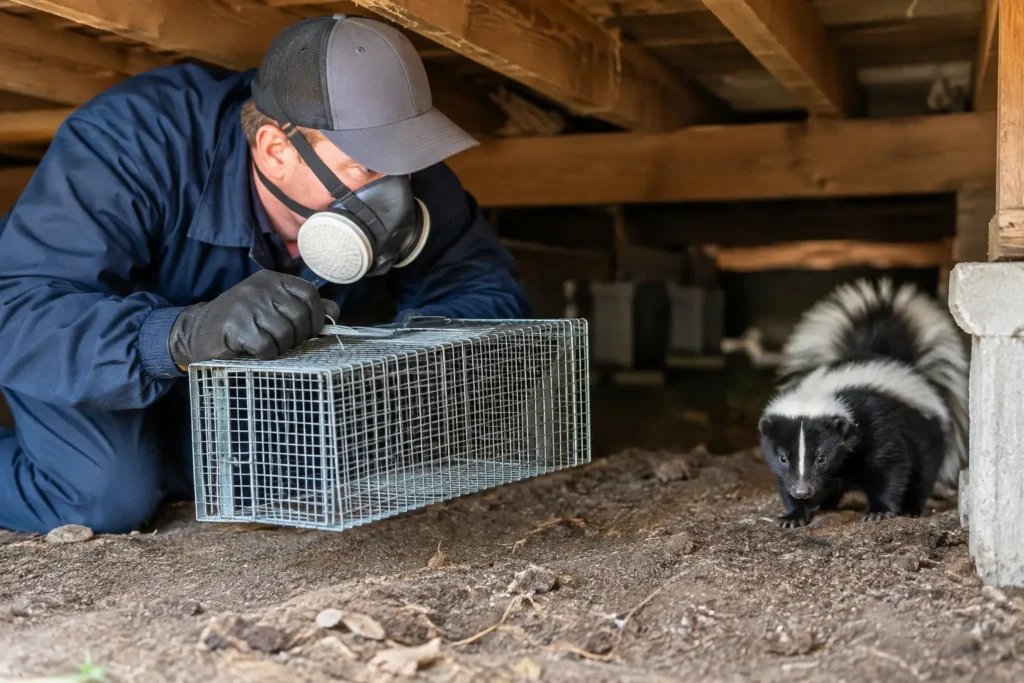
A skunk under a crawl space rarely stays a small problem. The odor can drift through floor vents, insulation can become soiled, and a mother skunk may turn a quiet space beneath your home or cabin into a den for her kits. Professional skunk removal for crawl spaces addresses the animal safely, then deals with the contamination and the opening that allowed it in.
For homes around Big Bear Lake, Lake Arrowhead, Running Springs, Crestline, and other mountain communities, crawl spaces offer shelter from weather, predators, and neighborhood activity. A property may sit empty for part of the year, which gives wildlife time to investigate loose foundation vents, gaps around plumbing, broken lattice, or openings created by other animals.
Signs a Skunk Is Living Below Your Home
The most recognizable sign is odor, but smell alone does not confirm that a skunk is currently under the structure. A skunk may have sprayed nearby, passed through the yard, or been injured on the road. Active crawl space activity usually leaves a combination of clues.
You may notice a musky odor that gets stronger around a foundation vent or particular section of the floor. Fresh digging beside the foundation, disturbed soil, a low opening beneath a deck, and tracks leading toward a vent are also common. Skunks are primarily nocturnal, so homeowners may hear slow scratching, shuffling, or movement after dark.
Droppings, torn vapor barriers, scattered insulation, and insects gathering near soiled areas can point to a longer-term occupancy. If the odor appears suddenly during spring or early summer, use extra caution. A female may have young kits in the den, and sealing the opening without a plan can separate them from their mother.
Why Crawl Space Skunks Need a Careful Response
Skunks are not aggressive by nature. They prefer to avoid people and will usually give warning signs before spraying. Still, a trapped, cornered, or frightened animal can spray, bite, or scratch. Wildlife can also carry parasites and diseases, including the risk of rabies. Never try to grab a skunk, smoke it out, flood the crawl space, or use poison.
Those shortcuts can create a larger and more expensive problem. A skunk that dies below the home may leave an intense odor that lingers in insulation and framing. Blocking an entrance while animals are still inside can lead to trapped young, damage as the adult tries to escape, and sanitation concerns that are much harder to resolve.
There is also a difference between getting one skunk out and making the property less attractive to the next one. Mountain properties often have several vulnerable areas, especially older cabins with mixed foundation materials, woodpiles near the home, and uneven ground around additions or decks. The right solution considers the entire property, not only the hole where the animal entered.
How Humane Skunk Removal for Crawl Spaces Works
A proper service begins with an on-site inspection. A wildlife technician identifies the active entry point, checks for alternate routes, looks for signs of kits, and evaluates conditions inside the crawl space. This step matters because exclusion work must be timed correctly and installed where it will not trap animals inside.
Inspection and den assessment
The technician examines foundation vents, gaps along siding, access doors, utility penetrations, deck voids, and areas where soil has washed away. They also assess droppings, nesting material, odor levels, and damaged insulation. If evidence suggests a mother and kits, the removal approach must protect the family and prevent abandonment.
In many cases, humane one-way devices allow an adult skunk to leave but prevent re-entry. Depending on the site and local regulations, trapping may be needed. The goal is effective removal with the least possible stress to the animal, not a rushed fix that leaves young animals behind or creates another opening.
Exclusion after the skunk is out
Exclusion is what turns removal into prevention. Once the crawl space is confirmed clear, vulnerable openings should be repaired with durable, wildlife-resistant materials. This may include securing foundation vents, reinforcing access panels, closing gaps around pipes, repairing damaged lattice, and screening openings under decks.
Every property is different. An opening large enough for a skunk may also invite raccoons, squirrels, rodents, or feral cats. A technician should look beyond the obvious gap and identify conditions that could lead to another wildlife issue later.
Cleanup and odor control
Skunk odor can travel through ducts, wood framing, insulation, and porous crawl space materials. Removing the animal does not remove the contamination. Soiled nesting material, droppings, and damaged insulation may need to be removed, followed by sanitation and odor treatment suited to the affected area.
The scope depends on how long the skunk was present and whether it sprayed. A brief visit near an exterior vent may need limited treatment. A long-term den with droppings, urine, disturbed insulation, and repeated spraying may require more extensive crawl space cleanup and disinfection. An honest inspection should explain that difference before work begins.
What Homeowners Should Do Before Help Arrives
Keep people and pets away from the suspected entry point. Dogs are especially likely to provoke a skunk and bring the odor back indoors on their fur. Avoid shining lights into the den, poking at the opening, or placing objects directly in front of it. These actions can stress the animal and make removal more difficult.
Do not seal the gap yourself, even if it looks like the obvious solution. Wait until the crawl space has been inspected and the animal has safely exited. If you see a skunk out during the day, acting disoriented, circling, dragging its legs, or showing unusual aggression, stay back and contact a qualified wildlife professional promptly.
You can reduce attractants without disturbing the den. Secure trash, clean up fallen birdseed, avoid leaving pet food outdoors, and keep compost contained. If possible, move woodpiles and stored materials away from the foundation. These changes do not remove an established skunk, but they help make the area less appealing after exclusion work is complete.
Seasonal Skunk Problems in Mountain Communities
Skunk activity can happen at any time, but denning concerns often increase from late winter through summer. Females seek protected sites for raising young, and crawl spaces provide darkness, stable temperatures, and cover from predators. That is why spring exclusions require special care.
Cold weather can also push skunks toward sheltered areas beneath homes, cabins, and commercial buildings. Vacation properties that sit vacant can be especially vulnerable because fresh digging and odor may go unnoticed for days or weeks. Property managers should include foundation vents, crawl space access points, and exterior screening in regular inspection routines, particularly before and after periods of vacancy.
When to Call a Professional
Call for help when you have persistent skunk odor near the foundation, visible digging, confirmed activity under the building, or signs of contamination in the crawl space. Fast action is especially wise if pets have been sprayed, a family with kits may be present, or the property is a rental with guests nearby.
Outbackzack provides humane wildlife removal, cleanup, disinfection, and exclusion services designed for the real conditions found in Southern California mountain properties. The focus is on protecting your home, rental, or business while treating wildlife responsibly.
A crawl space should protect the structure above it, not become a shelter for nuisance wildlife. Address the skunk carefully, close the path back in, and restore the area so your property is cleaner, safer, and ready for the next season.