
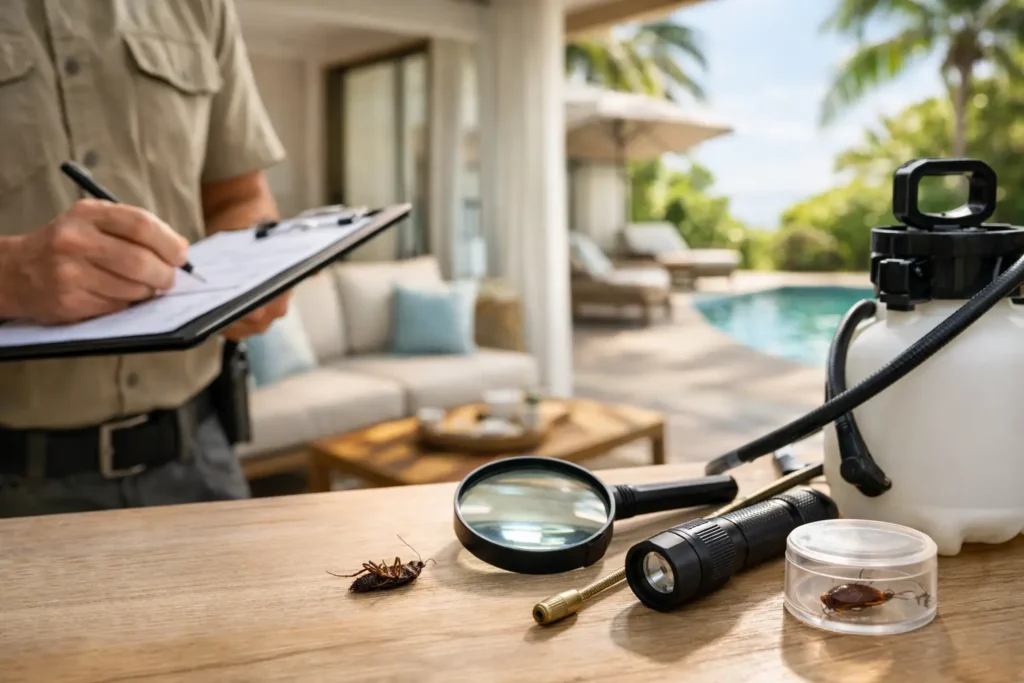
A guest finding mouse droppings beneath the kitchen sink or hearing scratching above the bedroom ceiling can turn a five-star stay into a refund request overnight. This vacation rental pest inspection checklist helps cabin owners and property managers catch warning signs before a guest does, especially in Big Bear, Lake Arrowhead, Running Springs, and other mountain communities where wildlife pressure is part of property ownership.
Vacation rentals need a different inspection routine than primary homes. They often sit empty between bookings, guests may leave doors open or food unsecured, and a small issue can grow unnoticed in an attic, crawl space, wall void, or exterior vent. A thorough inspection protects your guests, your reviews, and the long-term condition of your property.
Vacation Rental Pest Inspection Checklist for Mountain Homes
Inspect the property before every guest arrival, then schedule a more detailed inspection at least seasonally. Properties surrounded by forest, near open space, or used heavily during holidays may need more frequent checks. Snow, wind, and temperature changes can also create new entry points quickly.
Start outside before looking indoors
Your exterior tells the story of how pests and nuisance wildlife may be getting inside. Walk the entire structure slowly, including decks, retaining walls, rooflines, sheds, trash areas, and the space beneath porches.
Look for gaps around utility lines, plumbing penetrations, vents, siding joints, foundation openings, and garage doors. Mice can enter through openings roughly the size of a dime, while squirrels, rats, raccoons, bats, and birds need larger access points but can cause more visible damage. Pay close attention to damaged vent screens, loose fascia boards, lifted roof edges, broken soffits, and uncapped chimneys.
Check trees and brush near the building as well. Branches touching or hanging close to the roof give squirrels, rats, and raccoons an easy path upward. Woodpiles, stacked materials, dense ground cover, and clutter near the foundation provide hiding places for rodents and insects. Clearing these areas does not eliminate every risk, but it reduces access and makes activity easier to spot.
Use this exterior checklist during your walk-around:
- Look for droppings, tracks, burrows, gnaw marks, nesting material, and overturned trash.
- Check doors, screens, crawl-space vents, attic vents, roof penetrations, and chimney caps for damage or gaps.
- Inspect decks and railings for wasp nests, spider webs, carpenter bee holes, and rodent activity.
- Make sure garbage cans have tight-fitting lids and are positioned away from doors and windows.
- Note moisture problems, standing water, leaking hose connections, and drainage that directs water toward the foundation.
Do not seal an opening if you suspect an animal is currently inside. Blocking an occupied animal in a wall, attic, or crawl space can create a more serious problem, including trapped young, odors, damage, and a desperate animal finding its way into living areas. Humane removal and properly timed exclusion work matter.
Check guest-facing rooms with fresh eyes
Enter the rental as though you are a guest arriving after dark with luggage in hand. Start with the kitchen, bathrooms, bedrooms, living room, laundry area, and entry spaces. These are the places where evidence becomes a cleanliness concern and where guests are most likely to report an issue.
In the kitchen, inspect under sinks, behind the refrigerator and stove, inside lower cabinets, and around the dishwasher. Look for droppings, greasy rub marks along walls, chewed packaging, shredded paper, insect skins, or small black specks that could indicate cockroaches. Check pantry shelves and make sure all food left for guests, including coffee supplies and welcome baskets, is stored in sealed containers.
Bathrooms and laundry rooms deserve equal attention because moisture attracts pests. Check for leaks below sinks, around toilets, behind washing machines, and near water heaters. Silverfish, ants, cockroaches, and other insects are more likely to appear where water and organic debris are available. A slow leak can also soften building materials and invite larger pest issues over time.
In bedrooms and living areas, look beneath furniture, along baseboards, around windows, and inside closets. Watch for insect activity near lamps and window sills, rodent droppings behind furniture, and tiny piles of sawdust-like material near wood features. In mountain cabins, do not assume a rustic appearance means guests will overlook pest evidence. Clean, well-maintained spaces are part of the rental experience.
Inspect attics, crawl spaces, and utility areas
The quietest parts of a vacation rental often hold the most valuable clues. If it is safe to access these spaces, inspect the attic, crawl space, basement, mechanical room, and garage between bookings. Wear appropriate protective gear and avoid disturbing unknown droppings, nesting material, or insulation.
Rodent droppings, urine odor, chewed wiring, damaged insulation, and nesting material are strong signs that mice or rats are active. Scratching sounds at night, especially near the roofline, can point to rodents, squirrels, raccoons, or bats. Bats may leave small droppings below roosting areas, while raccoons can tear insulation and damage ducts or vents as they create denning space.
Bird activity also deserves attention. Pigeons, sparrows, swallows, and woodpeckers can create problems around eaves, vents, siding, and rooftop equipment. Nesting debris can clog drainage areas, droppings can contaminate surfaces, and repeated woodpecker damage can open a direct path into wall voids. Wildlife should be handled responsibly, with attention to species protections and nesting seasons.
Never sweep, vacuum, or handle significant accumulations of droppings without proper precautions. Contaminated insulation and nesting debris can carry odors, parasites, and health concerns. Professional cleanup and disinfection are often the safer choice after a confirmed rodent, bat, bird, or larger wildlife infestation.
Look for insects that disrupt stays
Not every pest issue involves an animal in the attic. Insects can create just as much guest frustration, particularly when cabins are vacant between turnovers. Check window frames, door thresholds, baseboards, under appliances, and exterior lighting for ants, spiders, cockroaches, earwigs, and other common invaders.
Inspect beds, upholstered furniture, luggage racks, and headboards for unexplained spotting, shed skins, or live insects. Bed bug concerns require a careful, prompt response because misidentifying the problem or treating it casually can make it worse. Avoid moving questionable linens or furniture through the property until the issue has been assessed.
For wood-destroying pests, look for damaged wood, mud-like tubes, small exit holes, or piles of fine material near trim, beams, decks, and garages. The correct solution depends on the pest and the extent of damage. A surface treatment may not solve an issue that is connected to moisture, structural gaps, or a hidden nest.
Document what you find and act before turnover
A consistent inspection is only useful if your team can track patterns. Keep a simple property log with the date, location, evidence found, weather conditions, photos, and action taken. This is especially helpful for managers overseeing multiple cabins or for owners who rely on cleaners to report conditions between stays.
Address food, trash, and moisture issues immediately. Repair small gaps before they become established entry points. If you find fresh droppings, active nesting, repeated scratching, chewed wiring, animal odors, or visible wildlife access, do not wait for another booking cycle to see if it resolves itself. Pests rarely leave a reliable vacation schedule.
For active infestations, the best long-term approach combines humane removal where appropriate, targeted treatment, sanitation, and exclusion repairs. Removing an animal without closing access often leads to another animal moving into the same protected space. Sealing a gap without confirming the space is empty can create avoidable harm and property damage.
Outbackzack helps mountain property owners identify the source of the problem, remove nuisance animals responsibly, clean affected areas, and protect the structure from repeat entry. For vacation rentals, that means less uncertainty before check-in and fewer surprises after guests arrive.
A clean turnover is valuable, but a pest-aware turnover is what protects the stay. Give your rental one careful inspection before the next set of keys changes hands, and treat every new sound, odor, dropping, or exterior gap as a reason to investigate early.