
You hear scratching in the wall at 2 a.m., then find droppings under the sink the next morning. That is usually when the debate starts – rodent proofing vs trapping. Homeowners in mountain communities often want the fastest fix, but the right answer depends on how rodents got in, how active they are, and whether you want a short-term reduction or real long-term control.
In places like Big Bear, Lake Arrowhead, Running Springs, and Crestline, rodent pressure is not unusual. Cabins, crawl spaces, wood piles, snow-season shelter, and aging rooflines give mice and rats plenty of opportunities. If the property is a vacation home or rental, the problem can build quietly for weeks before anyone sees the signs. That is why choosing between trapping and proofing should never be a guess.
Rodent proofing vs trapping: the real difference
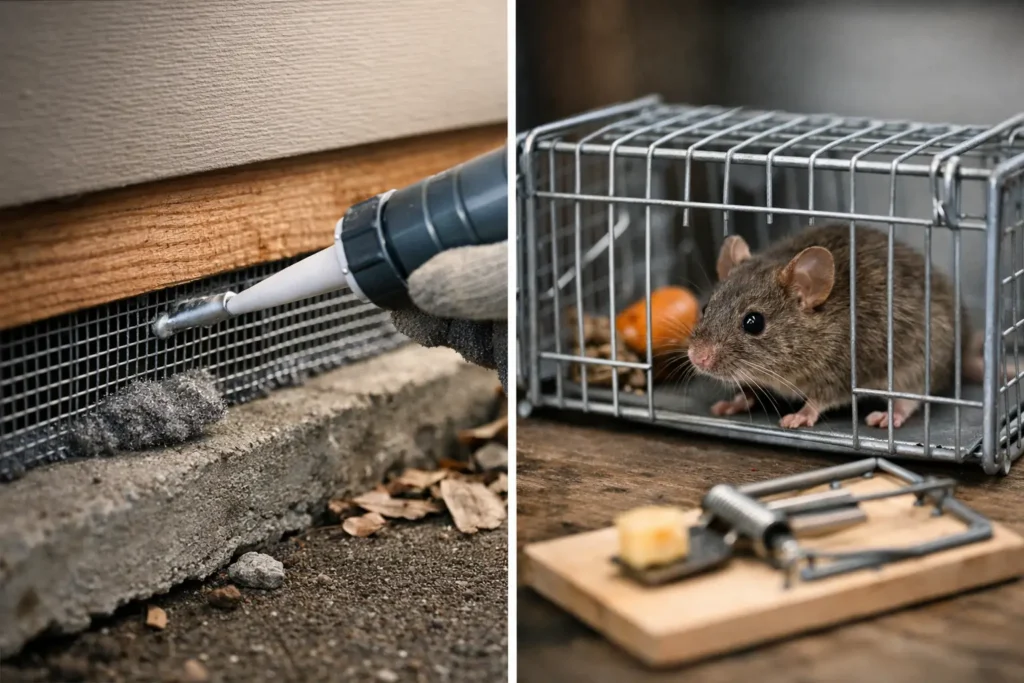
Trapping is about removal. Rodent proofing is about prevention. One deals with the animals already inside. The other deals with how they got there in the first place.
Trapping can quickly reduce activity in kitchens, attics, garages, and crawl spaces. When done correctly, it gives clear evidence of where rodents are traveling and how serious the infestation is. It is often the fastest way to bring an active issue under control, especially when noises, droppings, or contamination are already affecting daily life.
Proofing works differently. It closes entry points, seals construction gaps, screens vents, protects roof returns, and blocks the weak spots rodents use again and again. If trapping lowers the pressure, proofing cuts off the supply. Without that step, the next wave often follows the same path right back in.
That is why this should not be treated as an either-or question in every situation. In many homes, the strongest plan is trapping first, then proofing before the issue restarts.
When trapping makes sense
If rodents are actively inside the structure, trapping is usually the immediate move. You cannot seal a house with animals still in the walls, attic, or subarea and assume the problem is solved. That can leave rodents trapped inside, increase odor issues, and create more contamination in hidden areas.
Trapping is especially useful when the infestation is current and visible. Fresh droppings, gnaw marks, grease rubs along walls, shredded insulation, and food damage all point to active movement. In those cases, removal needs to happen before a property can be stabilized.
There are also situations where trapping helps define the problem. A mountain cabin might have occasional mouse activity in winter, while a commercial kitchen or occupied home may have a larger and more urgent rat issue. Trap placement, catch patterns, and inspection findings reveal where rodents are nesting and how they are moving through the structure. That information matters because it changes the proofing strategy.
Still, trapping has limits. If the entry point remains open, trapping can become a cycle instead of a solution. You remove a few mice, then a few more show up. That does not mean trapping failed. It usually means the building is still accessible.
When rodent proofing makes more sense
Rodent proofing is the stronger investment when the goal is to stop repeat invasions. Mountain homes are especially vulnerable because temperature swings push rodents indoors, and many structures have small gaps that go unnoticed for years. Roof intersections, attic vents, utility penetrations, crawl space openings, garage corners, and gaps under eaves can all become access points.
If you have dealt with recurring rodent problems every fall or winter, proofing should move to the top of the list. The same goes for vacant cabins, vacation rentals between guests, and properties surrounded by dense vegetation or stored materials. Those environments give rodents cover and easy staging areas near the building.
Proofing is also the more responsible choice when you want to reduce future harm, not just react to the current infestation. Humane, eco-conscious rodent control should focus on changing the conditions that invite rodents in. If the structure stays open, removal efforts become repetitive and less effective over time.
That said, proofing is only as good as the inspection behind it. Missing one roof gap or one broken vent screen can keep the entire problem alive. Good exclusion work is detailed, building-specific, and based on actual rodent behavior, not guesswork.
Why mountain properties need a combined approach
In Southern California mountain communities, rodent issues are often tied to seasonal shelter pressure. As nights get colder, attics and wall voids become prime nesting spaces. Snow, rain, and limited natural food can push mice and rats closer to occupied buildings, especially cabins with quiet periods and stored supplies.
That is where a combined strategy usually wins. Trapping addresses the active population. Proofing protects the structure from the next one. Cleanup and sanitation may also be necessary if droppings, urine, nesting debris, or contaminated insulation are present.
This matters because rodents do more than make noise. They chew wiring, damage insulation, contaminate food storage areas, and leave behind health risks in enclosed spaces. On vacation rentals and commercial properties, even a small rodent issue can quickly become a reputation issue if guests or customers notice signs of activity.
For many local property owners, the real cost is not just the trap service or the exclusion repair. It is the cost of doing half the job, then dealing with the same infestation again a few months later.
Rodent proofing vs trapping for cost and results
On the surface, trapping often looks cheaper. It can be deployed quickly, and the immediate purpose is clear. If you need active rodents removed now, that cost is easy to justify.
Proofing can require more upfront work because it involves inspection, material selection, and repair of structural vulnerabilities. Depending on the building, that might include sealing multiple gaps, reinforcing vent openings, repairing damaged areas, and addressing conditions that support rodent access.
But long-term value is a different calculation. If you trap repeatedly without sealing access, the property stays exposed. Over time, recurring service calls, contamination, damaged insulation, and repair work can cost far more than proper proofing would have. In that sense, proofing often carries the stronger return, while trapping delivers the faster relief.
So which gives better results? If the question is speed, trapping usually wins. If the question is durability, proofing usually wins. If the question is how to solve an established infestation in a mountain home, the answer is often both.
Humane control matters here
Not every rodent control company treats prevention and removal with the same standard. A humane and eco-conscious approach does not mean ignoring the problem. It means solving it responsibly.
That includes targeted removal, careful inspection, exclusion that reduces repeat entry, and sanitation that restores the safety of the space. It also means avoiding the mindset that everything can be handled with poison or repeated kill-based tactics. In homes with pets, children, wildlife activity, or sensitive surrounding habitat, that distinction matters.
For local communities that value both property protection and wildlife responsibility, this approach makes practical sense. You want rodents out of the structure, but you also want methods that respect the broader environment around the home.
How to decide what your property needs
The best starting point is simple: ask whether you have an active infestation, a repeat access problem, or both. If you are hearing movement, seeing fresh droppings, or finding new damage, active removal needs attention first. If the same issue has happened more than once, the structure almost certainly needs proofing.
You should also consider how the property is used. A full-time residence needs fast stabilization. A vacation cabin may need stronger prevention because long gaps between visits let rodent activity spread unnoticed. A commercial property may need both immediate removal and visible sanitation planning to protect operations.
The age and layout of the building matter too. Older mountain homes often have more entry opportunities than owners realize, especially around rooflines, crawl spaces, and retrofitted utility lines. That is why professional inspection matters more than buying a few traps and hoping the activity slows down.
At Outbackzack, that local reality is the point. Mountain properties are not generic structures, and rodent control should not be generic either.
If rodents are already inside, act quickly. If they have been there before, think beyond the trap. The most helpful fix is the one that protects your home after the scratching stops.