A raccoon in the attic is not a problem to put off until the weekend. The scratching overhead, overturned trash, torn vent screen, or strong odor usually means an animal has already found a sheltered place to rest or raise young. To remove raccoons humanely, the goal is not simply to get the animal outside. It is to get it out safely, keep it from returning, and protect your family and property from contamination and damage.
For homes, cabins, vacation rentals, and commercial buildings in mountain communities, raccoons are especially persistent. They are intelligent climbers with nimble paws, and they quickly recognize weak rooflines, crawl-space openings, open chimneys, and damaged vents. A humane solution needs to address both the raccoon and the access point.
Start by Confirming Where the Raccoon Is Living
Raccoons are nocturnal, so activity after dark is a strong clue. You may hear slow, heavy movement in an attic or wall, unlike the lighter scratching often associated with mice or squirrels. Other signs include droppings near an entry point, insulation pulled apart, muddy paw prints, tipped trash containers, and damage around soffits, roof vents, or chimney caps.
Do not assume a raccoon is alone. In spring and early summer, a female may be denning with kits in an attic, chimney, crawl space, or under a deck. Closing an opening while babies are still inside can separate them from their mother. That creates a more serious animal welfare issue and can lead to odor, insects, and expensive cleanup inside the structure.
A careful inspection should identify every possible entry point, not just the most obvious hole. Raccoons can exploit loose construction materials and enlarged gaps around vents. On older mountain homes, snow, wind, tree limbs, and seasonal wear can create access points that are easy to miss from the ground.
Why Relocation Is Not Always the Humane Answer
Many property owners understandably think trapping and relocating a raccoon is the kindest option. In practice, it can be stressful for the animal, may be restricted by local and state wildlife rules, and often does not solve the underlying property problem. A new raccoon may simply move into the same unsealed opening.
Relocated raccoons also face unfamiliar territory, food competition, traffic, predators, and the challenge of finding shelter. If kits are involved, relocation can separate a family. Humane wildlife work is not about choosing the quickest-looking option. It is about using methods that reduce suffering while protecting the building for the long term.
Professional wildlife removal commonly relies on inspection, monitored eviction or exclusion methods when appropriate, and repairs that prevent re-entry. The right method depends on where the animal is located, whether young are present, the time of year, and the condition of the structure.
How to Remove Raccoons Humanely Without Creating a Bigger Problem
Keep Your Distance and Remove Easy Food Sources
Never try to corner, handle, or chase a raccoon from an attic, garage, or crawl space. Even a normally calm raccoon can bite or scratch when frightened or protecting young. Keep children and pets away from the area, and avoid direct contact with droppings or nesting material.
Outside, secure garbage in durable containers with tight-fitting lids. Bring pet food indoors, clean up fallen fruit, and avoid leaving bird seed accessible overnight. These steps will not force a raccoon out of an established den, but they make the property less rewarding once it leaves.
Do Not Seal the Opening Too Soon
This is the most common mistake in raccoon removal. A homeowner sees an opening under an eave or near a vent and immediately covers it. If the raccoon is still inside, it may panic and tear into another part of the house. If kits are inside, the mother may cause significant damage trying to reach them.
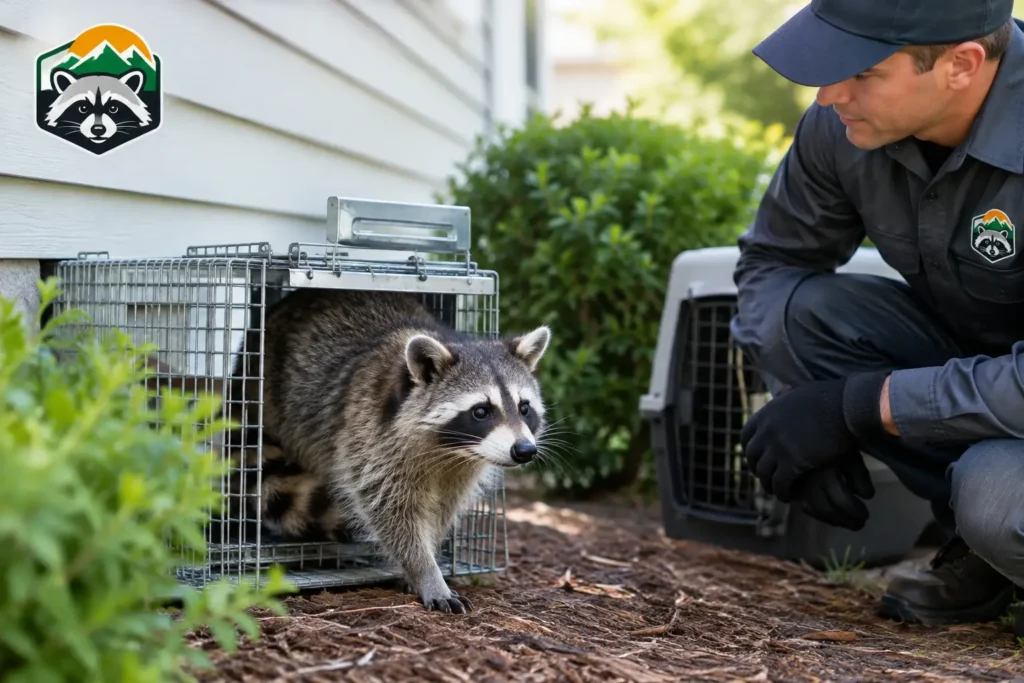
Instead, the structure should be inspected and the animal’s status confirmed. Humane exclusion may involve a properly installed one-way device that lets an adult leave but prevents it from getting back in. These devices must be used carefully and monitored. They are not appropriate in every situation, particularly when dependent young may be present.
Use Qualified Help for Attics, Chimneys, and Young Animals
An occupied attic is not a standard pest-control job. It can involve contaminated insulation, hidden entry points, chewed wiring, and animals in inaccessible areas. Chimneys also require special care because a raccoon can become trapped or may be sheltering with kits.
A qualified humane wildlife professional can assess the situation, determine whether babies are present, and choose a removal approach that does not rely on poison or harmful products. That matters for raccoons, but it also protects pets, non-target wildlife, and the wider mountain environment.
Exclusion Is What Stops the Next Raccoon
Removing a raccoon without repairing access is only a temporary win. Raccoons have excellent memories and can return to the same den site, especially when the space was warm, dry, and protected from weather.
After the animal has safely left, vulnerable areas should be repaired with wildlife-resistant materials. Common exclusion work includes securing roof vents, repairing soffits and fascia, screening chimney openings with an appropriate cap, reinforcing crawl-space access points, and closing gaps where utility lines enter the building.
Tree maintenance can help too. Trim branches that touch or hang close to the roof, since they can act as direct routes to upper-level access points. This does not mean removing every tree around a cabin or home. In wooded communities, a balanced approach protects the structure while preserving the landscape that makes the area special.
Cleanup Matters After Raccoon Activity
Raccoon droppings and urine can contaminate insulation, stored items, and surfaces. Disturbed insulation may no longer perform properly, and nesting material can hold moisture and odor. A quick sweep with a household broom is not a safe or complete answer, especially in enclosed spaces.
Avoid dry sweeping or vacuuming droppings, which can put contaminated particles into the air. Keep people and pets out of the affected area until it can be evaluated. Proper cleanup may involve protective equipment, careful removal of contaminated material, disinfection, odor treatment, and restoration work where needed.
This is also the time to inspect for secondary damage. Raccoons may disturb electrical wiring, crush ductwork, displace insulation, or create openings that allow rodents, birds, or insects inside later. Addressing those issues immediately is usually less costly than discovering them after another season of weather.
When a Raccoon Problem Needs Fast Attention
Call for professional help promptly if a raccoon is inside living space, trapped in a chimney or wall, behaving unusually, or has access to food preparation areas. You should also act quickly if there are signs of kits, persistent attic activity, foul odors, visible droppings, or structural damage around the roofline.
For property managers and vacation-rental owners, speed matters because an unoccupied building can give wildlife days or weeks to cause damage unnoticed. A pre-arrival inspection after a vacancy, storm, or heavy seasonal weather can catch loose vents and damaged exterior materials before they become an open invitation.
Outbackzack provides humane nuisance wildlife removal, exclusion repairs, cleanup, and disinfection for properties throughout Big Bear Lake and surrounding mountain communities. The approach is tough on the entry points and respectful toward the animal – without poison or harmful removal products.
A raccoon chose your property because it found shelter, not because it is trying to be a bad neighbor. Solve the shelter problem correctly, and you protect your home while giving local wildlife the respectful distance it deserves.