
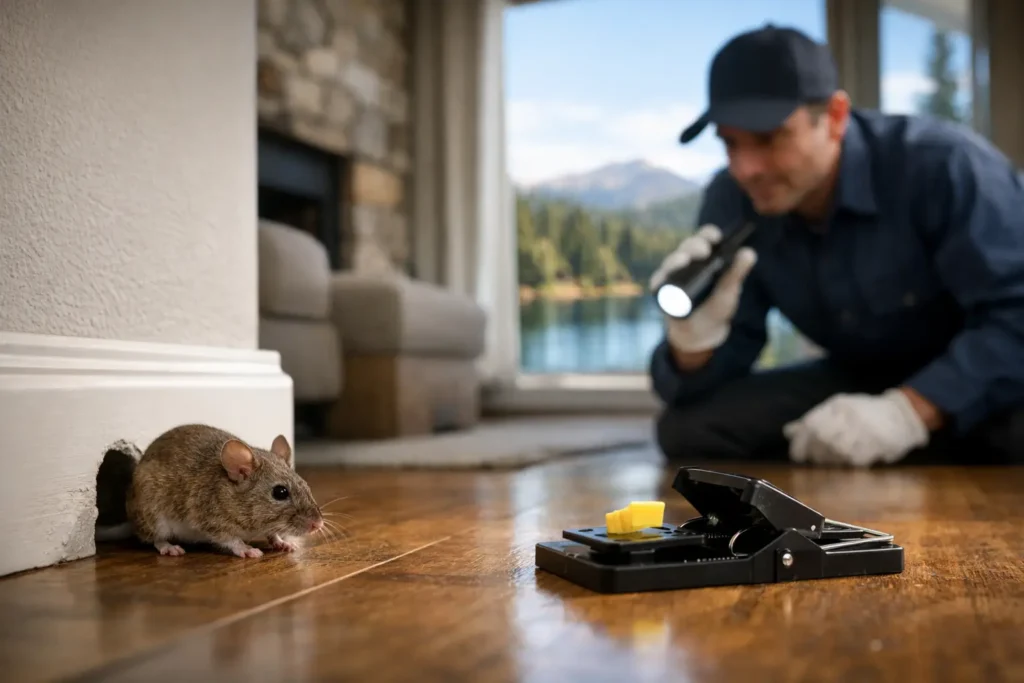
That scratching in the wall at 2 a.m. is not your house settling. In mountain communities, mice move fast when temperatures drop, food is easy to reach, or a quiet cabin sits empty for part of the week. If you need mice removal Lake Arrowhead property owners can rely on, the real job is not just getting rodents out. It is finding how they got in, cleaning up what they left behind, and making sure they do not come back.
Lake Arrowhead homes deal with a different kind of rodent pressure than properties down the hill. Cabins, crawl spaces, dense tree cover, stacked firewood, and seasonal occupancy all create ideal conditions for mice. A quick trap setup from the hardware store may catch one or two, but it usually does not solve the source of the problem. If mice are nesting in insulation, moving through attic voids, or feeding behind kitchen cabinets, piecemeal fixes tend to leave homeowners stuck in the same cycle.
Why mice are such a common problem in Lake Arrowhead
Mountain properties offer mice exactly what they want – shelter, warmth, nesting material, and easy access to crumbs, pet food, bird seed, and pantry goods. Older homes are especially vulnerable because they often have small structural gaps around foundations, rooflines, vents, pipes, or utility penetrations. Even newer homes can have construction gaps that are easy for mice to exploit.
The local environment matters too. In wooded neighborhoods, rodents travel along fences, stacked lumber, rock features, and overgrown vegetation. When outdoor food sources become less reliable, they shift indoors. Vacation homes and short-term rentals can be even more attractive because mice can settle in undisturbed between visits.
Once inside, mice reproduce quickly. A small issue can become a widespread infestation before the owner notices more than a few droppings. That is why timing matters. Early action limits contamination, structural damage, and the cost of cleanup.
Signs you need mice removal in Lake Arrowhead
Some signs are obvious. Others are easy to miss until the infestation is more advanced. Droppings in drawers, under sinks, in garages, or along baseboards are one of the most common early indicators. Gnaw marks on food packaging, cardboard boxes, wiring, or wood trim are another red flag.
You may also hear movement at night in the attic, ceiling, or walls. Mice are light, so the sounds are often subtle – quick scratching, faint scurrying, or tiny tapping noises. A stale, musky odor in enclosed spaces can point to nesting activity. If you find shredded paper, insulation, or fabric in hidden areas, there is a good chance mice are building nests nearby.
Commercial properties and vacation rentals have an added concern: guest-facing visibility. One mouse seen in a kitchen, storage area, or lobby can quickly become a sanitation issue and a reputation issue.
The real risks of a mouse infestation
A lot of people think of mice as more annoying than dangerous. The problem is what they do behind the scenes. Mice contaminate surfaces and stored goods with urine and droppings. In attics and wall voids, they damage insulation and leave nesting debris that can linger long after the animals are gone.
They also chew constantly. That means they can damage wood, plastic, drywall, and electrical wiring. In some homes, rodent chewing creates fire hazards or leads to expensive repairs that have nothing to do with pest control at first glance.
There is also the health side. Any area with rodent droppings or nesting material needs to be handled carefully. Sweeping or disturbing contaminated material without the right approach can spread particles into the air. That is one reason professional cleanup and disinfection matter.
What effective mice removal Lake Arrowhead service should include
A proper mice job starts with inspection, not guesswork. The goal is to identify active travel routes, nesting zones, attractants, and entry points. Without that first step, treatment can become a revolving door.
Inspection and problem mapping
A technician should assess attics, crawl spaces, garages, kitchens, utility rooms, rooflines, and exterior gaps. In mountain homes, rodents often enter through very small openings around vents, fascia lines, plumbing penetrations, and foundation transitions. The inspection should also account for nearby woodpiles, vegetation, and food sources that are drawing activity close to the structure.
Targeted removal
Removal methods should be matched to the property and level of activity. Humane, eco-conscious rodent control focuses on solving the infestation responsibly while minimizing unnecessary harm to the surrounding environment. What works in a full-time residence may differ from what makes sense in a vacant cabin or a commercial building with sensitive access needs.
Exclusion and rodent proofing
This is where many mouse problems are won or lost. If entry points remain open, new mice will replace the old ones. Exclusion means sealing access points with durable materials that can stand up to rodent pressure and mountain weather. This is not the same as stuffing a gap with whatever is nearby and hoping it holds.
Cleanup and sanitation
If mice have been active for any length of time, cleanup is part of the job. Droppings, urine contamination, soiled insulation, and nesting debris should be addressed carefully. A complete service may also include disinfection and recommendations for replacing contaminated materials where needed.
Why DIY often falls short
Traps from the store can catch mice. They just do not explain why mice are there in the first place. DIY efforts usually focus on visible areas like kitchens or garages, while the real nesting zone may be in the attic, subarea, or inside wall cavities.
There is also the issue of access points. Many homeowners seal the larger gaps they can see but miss the hidden openings near the roofline or under the structure. Mice only need a very small space to get inside. If the entry work is incomplete, the infestation continues.
Poisons are another area where caution matters. In mountain communities, indiscriminate rodenticide use can create risks for pets, children, and non-target wildlife. It can also lead to dead rodents in inaccessible spaces, which creates odor and sanitation problems. Responsible control is not just about speed. It is about solving the issue without creating a bigger one.
What makes mountain homes harder to protect
Lake Arrowhead properties have a few challenges that deserve special attention. Snow, cold weather, and seasonal occupancy increase indoor rodent pressure. Homes tucked into wooded lots may have constant wildlife movement around the structure. Multi-level roofs, raised foundations, deck systems, and crawl spaces create more hidden access points than a typical suburban tract home.
Cabins and second homes can also sit quiet for days or weeks, giving mice time to settle in, breed, and spread without interruption. By the time the owner returns, the evidence may be widespread. In these cases, removal and cleanup usually need to happen together rather than as separate steps.
Preventing the next infestation
After removal, prevention becomes the priority. Food should be stored in sealed containers, not left in thin bags or cardboard. Pet food and bird seed should be tightly contained. Firewood should be stored away from the home when possible, and vegetation should be kept from touching siding or roof edges.
Still, housekeeping alone will not keep mice out if the structure is open. The physical condition of the building matters most. Gaps around pipes, vents, doors, crawl space openings, and roof transitions need to be identified and corrected with long-term materials. For property managers and owners of short-term rentals, scheduled inspections can be a smart move because they catch activity before guests do.
For local homeowners and businesses, working with a company that understands mountain pest pressure makes a difference. Outbackzack approaches mice issues with the bigger picture in mind – humane removal, eco-friendly methods, sanitation, and exclusion work that protects both the property and the surrounding environment.
When to call for professional mice removal in Lake Arrowhead
If you are hearing rodents in the walls, finding droppings in more than one area, noticing repeat activity after using traps, or seeing signs in an attic or crawl space, it is time to bring in a specialist. The same goes for rental properties, restaurants, retail sites, and any building where sanitation and public visibility matter.
A fast response can prevent a small mouse problem from turning into damaged insulation, contaminated storage, gnawed wiring, or a full cleanup project. More importantly, it gives you a real answer instead of another temporary fix.
The right mice removal plan should leave you with more than a quieter house. It should leave you with a cleaner, safer, better-protected property that is ready for the next season in Lake Arrowhead.