
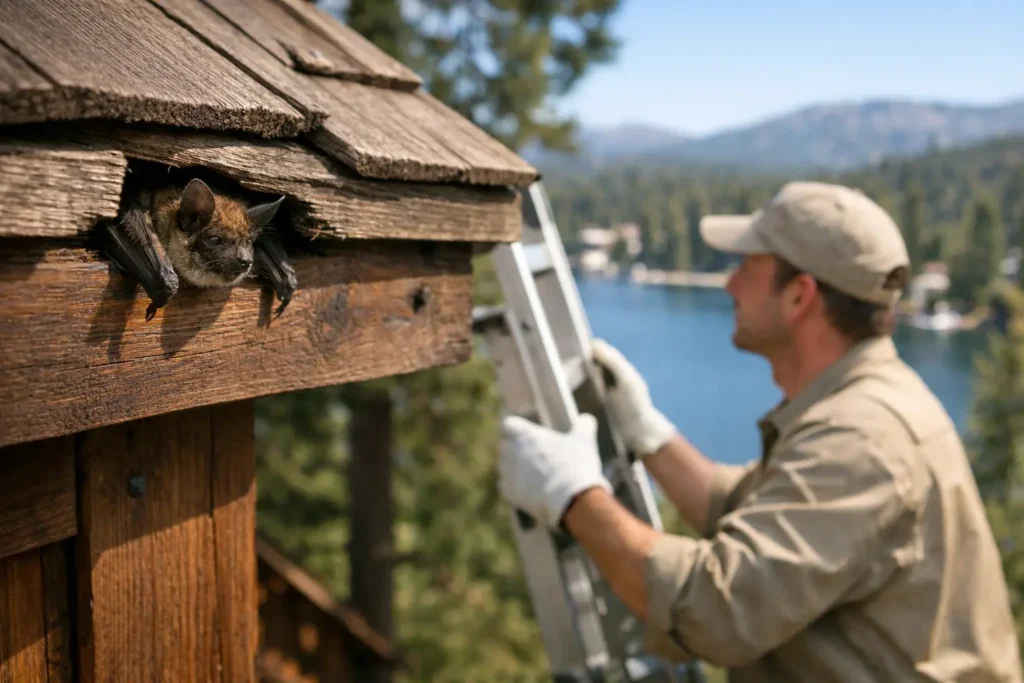
A bat problem in Lake Arrowhead usually starts quietly. You may hear light scratching in the attic after sunset, notice droppings collecting near a gable vent, or catch a quick flutter under the eaves at dusk. When that happens, bat removal Lake Arrowhead property owners choose should be fast, humane, and focused on keeping the animals out for good.
Mountain homes, cabins, and vacation rentals are especially vulnerable because bats are drawn to sheltered rooflines, attic voids, crawl spaces, and small construction gaps that stay protected from weather. In a wooded community, that combination of natural habitat and easy access to manmade shelter creates the perfect setup for recurring bat activity if the issue is not handled correctly.
Why bats show up in Lake Arrowhead homes
Lake Arrowhead properties sit in a landscape bats already like. Trees, water sources, insects, and quiet roosting zones all support local bat populations. Once a structure offers warmth and protection, an attic or roofline can become more attractive than a natural crevice or hollow.
Older mountain homes often have more entry points than owners realize. A gap along fascia boards, lifted roofing, unscreened vents, warped siding, or separation around utility lines can be enough. Bats do not need a large opening, and they tend to return to reliable roosting spots unless those access points are professionally sealed.
Season also matters. In warmer months, a small issue can turn into a maternity colony, which changes how removal should be handled. Humane wildlife control is not just about getting animals out. It is about doing the work at the right time, in the right way, without trapping young bats inside or causing them to scatter deeper into the structure.
What makes bat removal different from basic pest control
Bat problems are not solved the same way as rodent problems or insect problems. Sprays, poisons, and random sealing attempts are not the answer. In many situations, the wrong move makes the problem worse by driving bats into walls, trapping them indoors, or leaving contamination behind.
Proper bat removal starts with inspection, not guesswork. A technician has to identify where the bats are roosting, how they are entering, whether pups may be present, and what level of cleanup is needed. The goal is exclusion – allowing bats to leave safely while preventing them from re-entering.
That distinction matters for homeowners and property managers because a quick patch job rarely holds up in mountain conditions. Wind, snow, sun exposure, and the natural settling of cabins and older homes can reopen weak repairs. A real solution has to account for both wildlife behavior and the structure itself.
Humane bat removal in Lake Arrowhead means exclusion
The most effective approach to bat removal in Lake Arrowhead is humane exclusion. That means identifying the active entry and exit points, installing one-way devices when appropriate, and then sealing the structure after the bats have left.
This process works because bats are creatures of habit. They leave at dusk to feed and return to the same openings. Exclusion takes advantage of that pattern without harming the animals. It protects the property while respecting local wildlife and the broader ecosystem bats support.
There is a trade-off, though. Exclusion is not always a same-day, instant fix in the way some people expect. It has to be timed correctly, especially around maternity season and weather conditions. But the payoff is a safer, cleaner, longer-lasting result that does not create a second problem inside your walls or attic.
Signs you may need professional bat removal Lake Arrowhead services
Some bat infestations are obvious. Others build slowly until the odor, staining, or droppings become impossible to ignore. If you own a primary residence, second home, rental cabin, restaurant, office, or mixed-use building in the mountains, there are a few signs worth taking seriously.
Frequent bat sightings around the roofline at dusk are one of the biggest indicators. So are dark rub marks near small openings, droppings below eaves or attic access points, and strong ammonia-like odors caused by accumulated guano and urine. In some cases, property owners first notice stains on exterior walls or hear movement overhead late in the evening.
It also depends on how often the property is occupied. A vacation rental that sits empty between guests can allow a small bat issue to grow unnoticed. That is why regular inspections matter in mountain communities where wildlife pressure is constant and seasonal occupancy is common.
The health and property risks are real
Bats play an important role outdoors, but they do not belong inside a home or commercial building. The biggest concern is not usually direct aggression. It is contamination.
Bat guano can accumulate in attics, insulation, wall voids, and access areas. Over time, that buildup creates odor, stains, and conditions that can affect indoor air quality. In larger infestations, droppings can compress insulation, increase cleanup costs, and leave a property with lingering sanitation issues even after the bats are gone.
There is also the stress factor. Homeowners should not have to wonder whether animals are flying through attic spaces above bedrooms, guest rooms, or common areas. Property managers should not have to field calls from tenants or guests after seeing a bat near an entryway or hearing activity overnight. Fast action protects more than the structure. It protects peace of mind.
Why DIY bat removal usually backfires
Most do-it-yourself bat removal attempts fail for one simple reason: they focus on the bat you can see, not the colony behavior you cannot. Closing one visible gap without finding the secondary openings can push bats into another section of the building. Trying to remove them by hand can create safety issues. Using repellents rarely solves the source problem.
There is also a timing issue. If exclusion is attempted at the wrong point in the season, young bats may be left behind. If cleanup is skipped, odor and contamination remain. If repairs are cosmetic instead of structural, the same issue can come back with the next shift in weather.
For mountain properties, local experience matters. Rooflines are steeper, structures are more exposed, and wildlife patterns are different from those in urban neighborhoods. A service company that understands Lake Arrowhead conditions can spot the hidden vulnerabilities that a general handyman or inexperienced pest company may miss.
What a complete service should include
A serious bat job is more than removal. It should begin with a detailed inspection and continue through exclusion, sealing, sanitation, and prevention. If any one of those pieces is skipped, the property is left vulnerable.
The inspection should locate all likely access points, identify roosting areas, and determine whether there are seasonal restrictions affecting removal timing. From there, humane exclusion devices can be placed where needed so bats exit naturally.
Once the bats are out, sealing and block-out work become the critical step. That may include repairs to roof gaps, vents, eaves, construction joints, and other vulnerable transitions. Cleanup and disinfection are just as important. Guano and soiled materials should not be left behind if the goal is a truly restored attic or crawl space.
This is where a full-service wildlife company stands apart. Outbackzack approaches the problem as both removal and property protection, which is what Lake Arrowhead owners actually need.
Choosing the right bat removal partner
Not every company that handles pests is equipped for bats. Ask whether the removal method is humane, whether exclusion and repair are part of the service, and whether cleanup is available if contamination is present. Those details tell you whether you are getting a real solution or just a temporary response.
It also helps to work with a team that knows mountain communities firsthand. Homes in Lake Arrowhead, Running Springs, Crestline, Big Bear, and nearby areas share many of the same wildlife pressures, but each property still has its own construction quirks. Experience with local architecture, climate, and animal behavior leads to better outcomes.
If you suspect bats in your attic, roofline, crawl space, or commercial building, do not wait for the smell or damage to get worse. The earlier the issue is identified, the more options you usually have for humane removal and lower-cost repairs.
A good bat service does more than get animals out. It restores the structure, reduces health concerns, and helps your home stay a home – not a roost.