
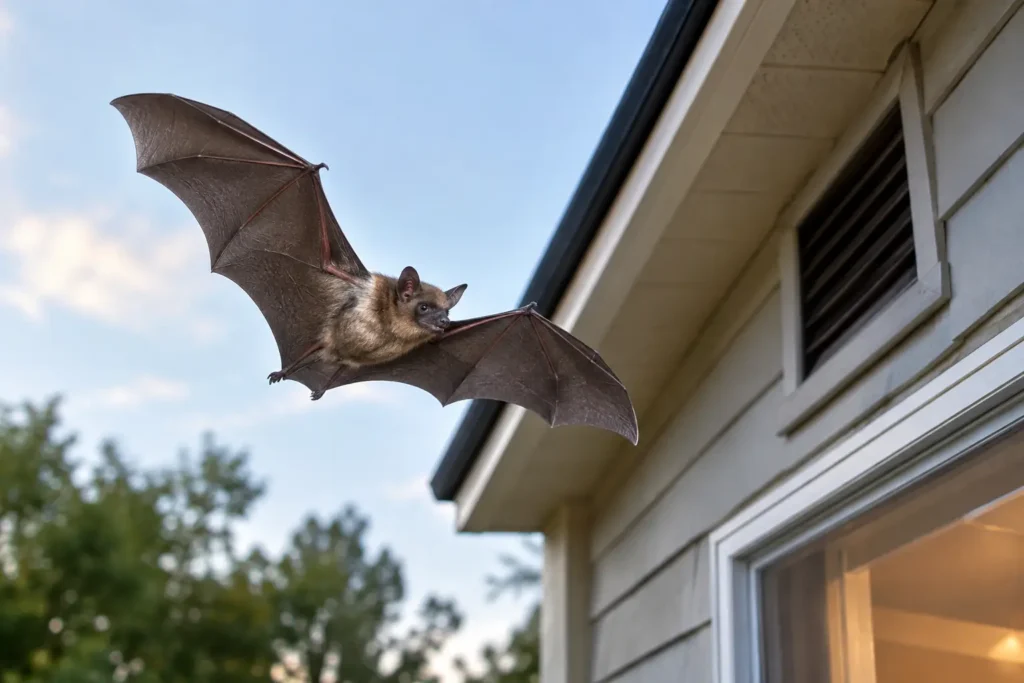
A bat slipping through a gap near a roofline can turn a quiet cabin evening into a serious property concern. Homeowners often ask when do bats enter homes, but the more useful question is why a building became available to them in the first place. Bats are not trying to invade your living space. They are looking for a dark, protected roost that stays warmer and safer than the outdoors.
In Big Bear Lake, Lake Arrowhead, Running Springs, Crestline, and other Southern California mountain communities, homes sit close to forests, rocky slopes, and natural feeding areas. That makes wildlife activity part of mountain living. A fast, humane response protects your household while respecting the role bats play in the local ecosystem.
When Do Bats Enter Homes Most Often?
Bats may investigate an opening at any point during the warmer season, but activity around structures often increases from spring through early fall. They are most likely to enter shortly after sunset, when they leave a roost to feed, or before sunrise, when they return for the day.
The timing depends on weather, food sources, the condition of the building, and the species involved. A cold snap at higher elevation can make an attic, chimney chase, wall void, or soffit especially appealing. During hot periods, shaded upper areas of a home may offer a more stable place to rest.
A single bat seen outdoors at dusk is normal and beneficial. Bats consume insects, including many night-flying pests. Repeated entry and exit from the same opening, however, can indicate that bats are using the structure as a roost.
Spring and early summer: Maternity season concerns
Spring and early summer require special care. Female bats may gather in protected spaces to give birth and raise young. Baby bats cannot fly immediately, so sealing an active roost at the wrong time can trap them inside a wall or attic. That can lead to animal deaths, odor problems, insects attracted to remains, and desperate adult bats searching for another way out.
This is why bat removal should never start with a quick patch job. A trained wildlife professional needs to identify activity, assess whether young may be present, and choose a humane exclusion schedule that does not separate mothers from pups.
Late summer and fall: Increased movement around buildings
By late summer, young bats that are able to fly may begin moving with the colony. Homeowners can notice more evening activity around eaves, vents, fascia boards, chimneys, and loose roof flashing. Fall weather changes can also push bats to seek reliable shelter before colder conditions arrive.
A building with an existing gap may be used year after year. Once a bat discovers a dependable roost, other bats may follow. Waiting until the next season often gives a small access problem time to become a larger cleanup and exclusion project.
Winter: Less visible does not always mean gone
In mountain areas, bat activity may be far less visible in winter. Some species migrate, while others use protected sites for winter shelter. A quiet attic is not proof that a roost has been abandoned. Sealing openings without a careful inspection can still create problems if bats are present in concealed voids.
Why Mountain Homes Attract Bats
Bats can enter openings that seem too small to matter. Gaps around roof intersections, utility lines, attic vents, chimneys, siding, and damaged trim can provide access. In many cases, the opening was caused by normal weathering rather than neglect. Snow, wind, sun exposure, settling, and fallen branches are hard on cabins and mountain homes.
An attic or wall void offers several things a bat needs: darkness, shelter from predators, stable temperatures, and a place to rest undisturbed during the day. Vacant cabins, seasonal rentals, and structures with limited daytime activity can be especially attractive if exterior gaps are left open.
Bats do not chew their way into a building like rodents. They take advantage of openings already there. That distinction matters because long-term control depends on repairing access points, not just removing the animals that are currently inside.
Signs Bats May Be Using Your Home
The clearest sign is a bat repeatedly emerging from or returning to one specific area around dusk or dawn. Watch from a safe distance for several evenings. Do not stand directly below the opening, and do not try to block it while bats may still be inside.
Other signs can include dark staining or oily rub marks near a small gap, chirping or scratching noises in walls near sunset, and droppings below an entry point or in an attic. Bat droppings, called guano, can resemble rodent droppings, but they often crumble into shiny insect fragments when disturbed. Avoid handling or sweeping any droppings yourself, since dry material can release particles into the air.
A bat found in a living room, bedroom, or other occupied area calls for more caution. Keep people and pets away, close interior doors if possible, and do not touch the animal. If there is any possibility that a person or pet had direct contact with the bat, contact local public health or medical professionals promptly for guidance. Bats should only be handled by properly trained personnel.
What Not to Do When Bats Enter a House
Do not use poison, glue traps, or lethal control methods. Beyond being inhumane, these methods can leave dead animals inside inaccessible building spaces and do nothing to solve the entry issue. Bats are valuable native wildlife, and many species receive legal protections.
Do not seal a hole just because you saw a bat fly out of it. There may be more bats inside, including young that cannot leave. Blocking an active opening can force bats into living areas through light fixtures, wall gaps, or ductwork.
It is also best not to rely on bright lights, loud noise, mothballs, or store-bought repellents. These approaches rarely resolve a roost and can make the situation less predictable. Effective removal is based on inspection, timing, one-way exclusion, and full exterior repair.
The Humane Way to Remove Bats From a Home
Professional bat work begins with a detailed inspection of the exterior, attic, roofline, vents, chimney areas, and likely travel routes. The goal is to locate primary entry points as well as the smaller gaps bats could use after the main opening is addressed.
When conditions allow, humane one-way exclusion devices are installed at active exits. These devices let bats leave to feed but prevent them from returning to the roost. Every secondary access point must be sealed with durable materials at the same time. Otherwise, bats may simply move a few feet and enter through another opening.
After the exclusion period, the building should be checked again before final closure. If guano or nesting debris is present, proper cleanup and disinfection may be needed. This is more than an appearance issue. Professional sanitation helps reduce odor, contamination concerns, and the chance that insects or other pests will be drawn to the area.
For homes, cabins, vacation rentals, and commercial properties in the mountain region, Outbackzack approaches bat concerns with humane removal, exclusion repairs, and property-focused prevention. The objective is not to harm bats. It is to keep them outdoors, where they can continue controlling insects without sharing your attic or walls.
How to Reduce the Chance of Future Bat Entry
The best prevention happens before bats establish a roost. Inspect the roofline at least once a year and after severe weather. Pay close attention to loose fascia boards, damaged screens, attic and gable vents, chimney caps, roof-to-wall intersections, utility penetrations, and gaps around siding.
Keep tree limbs trimmed back from the structure where practical, but remember that trimming alone will not close an entry point. The most effective protection is quality exclusion work using materials that can withstand mountain weather and normal building movement.
If you hear noises near dusk, find droppings, or see bats using a gap around your home, act before sealing anything. A careful inspection and humane plan can protect your family, preserve your property, and allow these useful animals to remain where they belong – outside.