
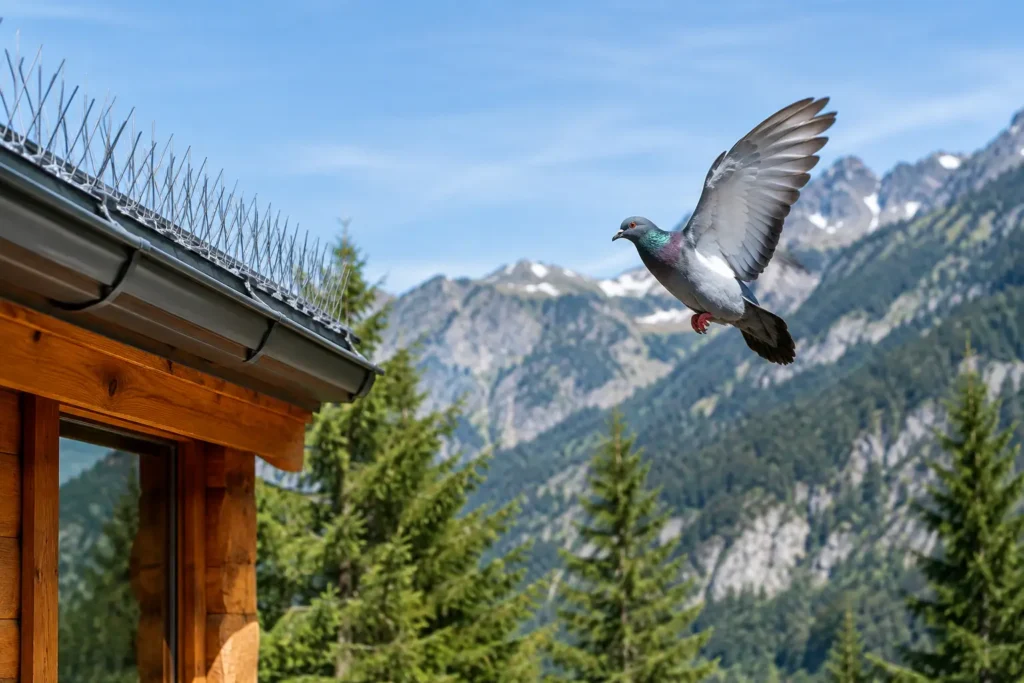
A few pigeons on a roofline can turn into a costly property problem fast. In Big Bear, Lake Arrowhead, and other mountain communities, sheltered eaves, warm vents, decks, and unused cabins give pigeons exactly what they need: a safe perch, protection from weather, and a place to nest. Knowing how to keep pigeons away means removing those advantages before droppings, nesting debris, and repeated bird activity damage your property.
Pigeons are persistent because they return to familiar roosting and nesting sites. A one-time scare tactic may move them for a day, but lasting bird control takes a combination of sanitation, exclusion, repair, and habitat changes. The goal is not to harm birds. It is to protect your home, rental, storefront, or commercial building with humane methods that make the area unsuitable for pigeons.
Why pigeons become a property problem
Pigeon droppings are more than an unpleasant sight on railings, walkways, solar panels, and outdoor furniture. They can create slippery surfaces, stain siding and roofs, clog gutters, and build up around vents and mechanical equipment. Droppings and nest materials may also carry bacteria, parasites, and fungi, especially when they accumulate in enclosed spaces such as attics, carports, crawlspaces, and roof voids.
For vacation homes and cabins, the problem can go unnoticed between visits. A small roost under an eave may become a heavy buildup around a window, chimney, or covered entry by the time an owner returns. Property managers have an added concern: visible droppings and nesting birds can lead to guest complaints, cleanup costs, and a poor first impression.
Mountain weather makes some pigeon issues worse. Snow, wind, and cold temperatures push birds toward protected ledges, overhangs, and attic openings. Once pigeons settle into a dependable sheltered spot, they will often return season after season unless the access point is professionally blocked.
How to keep pigeons away for good
The most effective solution is to combine immediate deterrence with permanent exclusion. Start by identifying where the birds land, where they nest, and what attracts them. Watch the property at dawn or late afternoon, when pigeons commonly leave or return to roosts. Look for droppings concentrated beneath roof edges, on balconies, near vents, or around signs and light fixtures.
Remove food and water sources
Pigeons stay where food is easy to find. Secure trash cans with tight-fitting lids, clean up fallen birdseed, and avoid leaving pet food outdoors. If you feed other birds, use feeders designed to limit spilled seed and clean the ground beneath them regularly.
Standing water also encourages bird activity. Repair dripping spigots, empty containers that collect rainwater, and keep outdoor eating areas clean. This step will not solve a nesting problem by itself, but it removes a reason for birds to linger.
Make roosting surfaces inaccessible
Physical exclusion is the most reliable humane pigeon control method. Bird netting can protect larger open spaces, including covered patios, loading areas, carports, and roof sections. Properly installed netting prevents access without trapping or injuring birds.
On narrow ledges, beams, signs, and rooflines, professionally installed bird spikes or low-profile wire systems can prevent pigeons from landing. These products work when they are fitted to the full landing surface. A small strip of spikes on only part of a wide ledge simply gives pigeons room to stand beside it.
Screens and durable mesh should also cover attic vents, chimney openings, under-deck spaces, and gaps around roof returns where pigeons may nest. The material must be strong enough to withstand weather and secured well enough that birds cannot push underneath it.
Repair the openings pigeons exploit
Pigeons do not need a large hole to create a mess. A loose soffit, missing vent screen, damaged fascia board, or gap beneath a roof edge can become a nesting site. Check these areas after storms, heavy snow, or high winds, which can loosen building materials in mountain communities.
Block-out work should happen only after confirming that no active birds, eggs, or young are trapped inside. While pigeons are commonly managed as nuisance birds, other species may use similar spaces and can have different legal protections. Proper identification matters before any nest removal or exclusion work begins.
For older cabins and rental properties, repairs often need to do double duty. Closing bird entry points can also help prevent mice, rats, squirrels, and insects from using the same damaged areas. That makes exclusion one of the best long-term investments for a property exposed to mountain wildlife.
Clean up droppings and nesting debris safely
Do not sweep dry pigeon droppings or use a leaf blower to move them. Dry material can become airborne, and old droppings may contain contaminants. Lightly mist small outdoor deposits before removing them, wear gloves and appropriate respiratory protection, and seal the waste in a bag for disposal.
Large accumulations, attic contamination, or droppings around HVAC equipment require more care. Cleanup should include removal of nesting material, disinfection of affected surfaces, and inspection for damage hidden beneath the debris. If a roost has been active for a long time, cleanup without exclusion is wasted effort. Birds will simply return and contaminate the same area again.
Deterrents that help, and those that usually disappoint
Reflective tape, predator decoys, plastic owls, and sound devices can create a short-term disturbance. They may be useful while a new exclusion system is being installed, especially if they are moved frequently. Pigeons are intelligent and quickly learn when a decoy or sound poses no real threat.
Ultrasonic devices are also unreliable for outdoor pigeon control. Wind, rain, building layout, and the birds’ ability to adapt limit their effectiveness. Sticky bird gels can create messy conditions, catch debris, and complicate cleanup. They are rarely the best fit for a property that needs a clean, humane, lasting solution.
Repellents may help on limited surfaces, but they cannot compensate for an open attic vent, accessible roof ledge, or constant food source. When birds are nesting, physical barriers remain the practical choice.
Protect roofs, solar panels, and commercial buildings
Solar panel arrays are a common pigeon shelter because the gap beneath them offers shade, warmth, and cover from predators. Birds can build nests under panels, leaving droppings on the roof and reducing airflow around the system. Specialized mesh barriers can close the perimeter without damaging the panels or blocking their function.
Commercial properties often need a tailored approach. Restaurants, retail centers, warehouses, and lodging properties may have multiple ledges, exterior lights, signs, HVAC units, and dumpster areas that attract birds. A site inspection should identify every active roost, not just the most visible one. Otherwise, pigeons may shift from one side of the building to another after treatment.
For multi-unit properties, it also helps to create consistent rules around feeding birds, storing trash, and maintaining balconies. One unprotected balcony can undermine otherwise effective building-wide bird control.
When to call a professional for pigeon control
A professional inspection is the right move when pigeons are inside an attic or wall void, nests are located at unsafe heights, droppings have built up heavily, or bird activity keeps returning after basic deterrents. It is also the safer option around electrical equipment, solar panels, steep roofs, and commercial structures.
Outbackzack approaches nuisance bird problems with humane removal, exclusion, cleanup, disinfection, and repair in mind. A complete plan addresses the bird activity you see today and the vulnerabilities that invite the next flock tomorrow. For homes, cabins, vacation rentals, and businesses, that means fewer repeat visits from pigeons and a cleaner, safer property.
The best time to act is when you first notice regular perching or fresh droppings. Closing a single gap and cleaning a small ledge is far easier than restoring an attic, roofline, or outdoor entry after pigeons have made it home.