
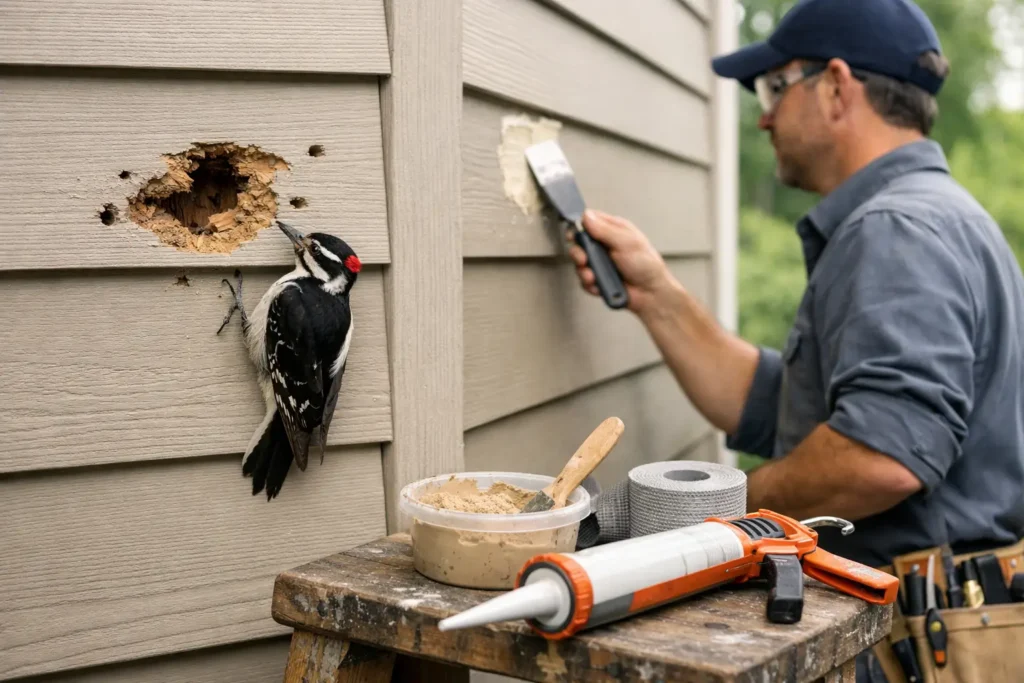
A fresh hole in cedar siding can look small from the driveway. Behind it, there may be wet insulation, an insect issue, or an entry point for rodents and other birds. Effective woodpecker damage repair is not just filling a hole with caulk. It means identifying why the bird targeted the structure, repairing the exterior correctly, and using humane prevention measures so the same wall does not become a repeat target.
For homes, cabins, vacation rentals, and commercial properties in Big Bear Lake, Lake Arrowhead, Running Springs, Crestline, and nearby mountain communities, timing matters. Weather swings, snow, wind, and wooded surroundings can turn minor exterior damage into an expensive maintenance problem quickly.
Why Woodpeckers Damage Buildings
Woodpeckers do not usually drill into a building for no reason. The pattern and location of the damage provide clues about what is happening.
Small, shallow rows of holes may be feeding damage. The bird could be searching for carpenter ants, beetle larvae, or other insects living behind siding, trim, fascia, or woodpecker-vulnerable materials. In this situation, patching the holes without addressing the insect activity can leave the property attractive to the bird.
Larger, rounded holes are often nesting or roosting cavities. These openings may lead into wall voids, attic spaces, or insulated areas. A woodpecker that has found a protected place to shelter may return repeatedly, especially when the site is quiet and nearby trees provide cover.
Loud tapping on metal gutters, vents, chimney caps, or siding may be drumming behavior. This is how woodpeckers communicate and establish territory. The noise can be frustrating, but it does not always mean the bird has created an opening. A professional inspection separates surface noise from active structural damage.
Why Fast Woodpecker Damage Repair Matters
An exterior hole is an opening in your building envelope. Even when it is only an inch or two wide, rain and melting snow can reach sheathing, insulation, and framing. Over time, moisture can stain interior walls, weaken wood, encourage mold, and create conditions that attract more insects.
Openings also invite other nuisance wildlife. Mice, rats, squirrels, bats, sparrows, and wasps can use an existing woodpecker hole or enlarge a weak repair. Mountain properties that sit vacant between weekends or rental stays are especially vulnerable because small entry points can go unnoticed.
There is also a fire and ventilation concern around soffits, eaves, and exterior vents. Damage near these areas should never be sealed casually with expanding foam or thin tape. The repair has to preserve the function of the structure while blocking wildlife access.
The Right Order for Woodpecker Damage Repair
A lasting repair begins with inspection, not a patch gun. A wildlife professional should inspect the damaged area, nearby trim, attic or wall access where possible, and the surrounding trees or insect activity. The goal is to determine whether the hole is active, whether a bird is inside, and whether another condition is drawing woodpeckers to the property.
Confirm That the Cavity Is Inactive
Many woodpecker species are protected, and active nests, eggs, and young birds require careful handling. Blocking an occupied cavity can harm wildlife and create a bigger problem inside the wall. If activity is present, humane timing and exclusion methods are needed before permanent closure takes place.
This is one reason a quick DIY repair can backfire. A homeowner may seal what appears to be an empty hole, only to hear movement behind the siding later. Professional assessment helps protect the animal while protecting the property.
Repair the Substrate, Not Just the Surface
Once the opening is confirmed inactive, damaged or soft material should be removed. For wood siding, that may mean replacing a portion of the board or trim rather than covering a deteriorated edge. For stucco, fiber-cement, or composite siding, the repair method depends on the depth of damage and the condition of the backing material.
The opening should be closed with durable materials that match the construction and resist future entry. Caulk can be useful as a finishing seal, but it is rarely enough on its own for a larger cavity. A proper repair may include solid backing, exterior-grade patch material, flashing where needed, primer, and paint or stain to restore weather protection.
Address the Attraction Before It Becomes a Pattern
If the woodpecker was feeding, insect control may be part of the solution. Carpenter ants, wood-boring insects, and moisture-damaged wood can all make siding more appealing. If the bird was nesting or roosting, nearby cavities, unprotected vents, and quiet wall sections may need attention as well.
Humane exclusion can include carefully placed physical barriers, vent protection, and visual or sound deterrents used correctly. Deterrents are most effective when they are installed early and combined with repair work. A plastic owl, reflective tape, or a single noise device may create a short-term disruption, but woodpeckers often learn to ignore predictable objects.
Common Mistakes That Lead to Repeat Damage
Painting over the hole is one of the most common mistakes. Paint may improve the appearance for a short time, but it does not stop moisture, insect access, or a bird from reopening weakened material.
Another mistake is using loose mesh or netting without considering entanglement risk. Wildlife control should be effective without creating hazards for birds or other animals. Material selection and installation matter, particularly around rooflines and trees.
Some property owners also wait until they see multiple holes. By then, water may have already entered the wall and the bird may have established a regular roosting site. Calling for an inspection after the first signs of drilling is usually more affordable than waiting for widespread siding or fascia replacement.
Prevention for Mountain Homes and Cabins
Prevention is most reliable when it becomes part of routine exterior maintenance. Check siding, fascia, eaves, window trim, and chimney areas each season, especially after heavy storms. Look for fresh wood chips below the wall, new round openings, loose trim, staining, or droppings near exterior cavities.
Keep trees and branches from pressing against the structure where practical. Branches close to the roof or siding can give wildlife a direct route to vulnerable areas. This does not mean removing every tree around a mountain home. Healthy trees are part of the landscape and habitat. It means managing contact points and watching the sections of the home most exposed to bird activity.
Wood condition matters, too. Replace rotted boards, maintain paint or stain, and correct leaks that soften exterior materials. A well-maintained wall is harder for insects to inhabit and harder for wildlife to exploit.
For vacation rentals and second homes, ask a caretaker, neighbor, or property manager to report fresh drilling immediately. A quick photo of the hole, surrounding area, and any wood debris can help determine how urgent the issue may be before an on-site visit.
When to Call a Wildlife and Repair Professional
Call for help when you see an active bird entering a hole, hear scratching or chirping inside a wall, find several new holes, or notice damage near vents, attic openings, or electrical fixtures. You should also request an inspection if the hole is accompanied by carpenter ant activity, water staining, soft siding, or evidence of rodents.
Outbackzack provides humane nuisance bird solutions and property protection for Southern California mountain communities. The right approach respects protected wildlife, addresses the reason for the damage, and helps keep your home or business closed to the next animal looking for shelter.
A repaired wall should do more than look finished. It should stand up to mountain weather, keep unwanted wildlife outside, and let the woodpeckers remain where they belong – in the forest, not in your siding.