
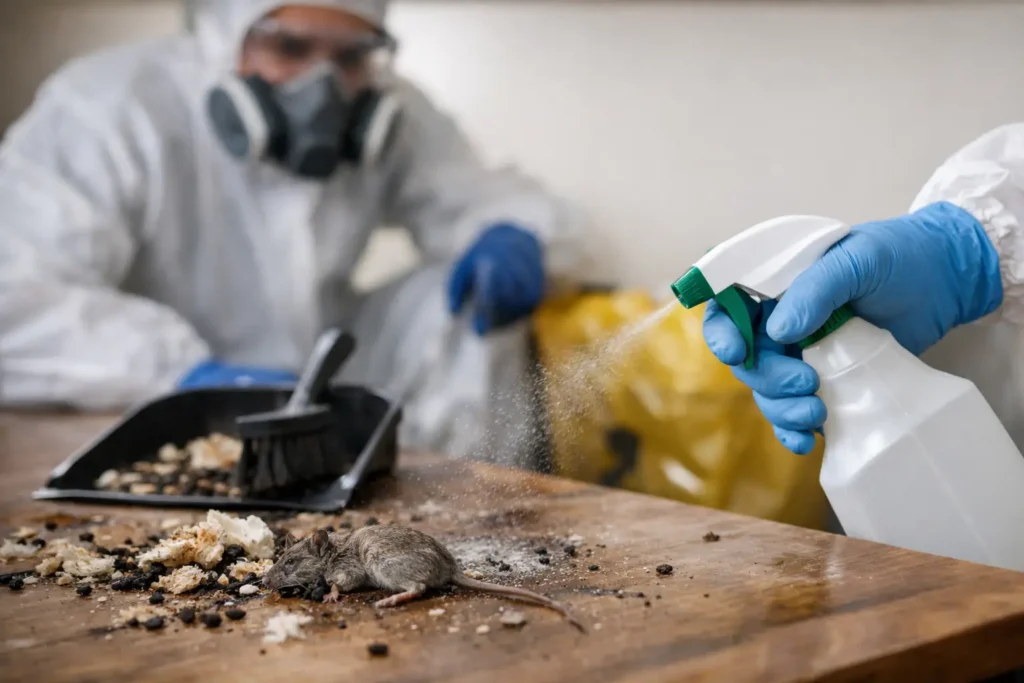
Finding mouse droppings under the sink or rat nesting in attic insulation is more than a mess. If you are wondering how to clean rodent contamination, the first priority is safety. Rodent urine, droppings, nesting material, and contaminated dust can expose people to bacteria and other harmful particles, especially in enclosed spaces like cabins, crawl spaces, garages, and attics.
In mountain communities, rodent activity tends to spike when temperatures drop and animals push indoors for food, warmth, and shelter. That means contamination often shows up in places people do not inspect often – behind appliances, inside wall voids, in storage closets, and above ceilings. Cleaning it the wrong way can stir contaminated particles into the air and make a bad situation worse.
How to clean rodent contamination without spreading it
The biggest mistake people make is treating rodent droppings like ordinary dirt. Sweeping, vacuuming, or using a leaf blower in a garage can aerosolize contaminated dust. That is exactly what you want to avoid.
Before you touch anything, ventilate the area if possible. Open doors and windows for at least 30 minutes and leave the space while fresh air circulates. If the contamination is in an attic, crawl space, or other poorly ventilated area, extra caution matters. In tight spaces, exposure risk goes up because dust hangs in the air longer.
Wear disposable gloves and a well-fitted mask. For light contamination in open, accessible areas, that may be enough. For heavy contamination, especially in insulation or enclosed spaces, professional remediation is often the safer call. Eye protection and disposable coveralls also make sense if you are dealing with overhead droppings, nesting debris, or contaminated insulation.
Once the area is aired out, spray droppings, urine spots, and nesting materials with a disinfectant or bleach solution and let it soak. The goal is to fully wet the material before removal. Dry droppings break apart easily. Wet droppings are much safer to pick up.
Use paper towels or disposable rags to collect the waste, then place everything directly into a sealed plastic bag. That includes droppings, nesting material, dead rodents, and any heavily soiled debris. After that, disinfect the surrounding area again and wipe it down thoroughly.
What cleaning solution should you use?
For many homeowners, a standard disinfectant labeled for bacteria and viruses works well if used according to the label. A bleach solution can also be used in some settings, typically made fresh and applied carefully. The trade-off is that bleach can damage certain surfaces, discolor fabrics, and create strong fumes in enclosed areas.
That means the right cleaner depends on the material. On sealed surfaces like tile, metal, and some countertops, stronger disinfectants are usually manageable. On unfinished wood, insulation, stored fabric, or cardboard, cleanup gets harder because contamination soaks in. In those cases, disinfecting the surface may not be enough. Sometimes the only effective option is removal and replacement.
If you are cleaning in a vacation rental, restaurant storage area, maintenance room, or commercial back-of-house space, product choice also matters because some chemicals require special handling around food-contact areas. Safe cleanup is not just about killing germs. It is about matching the method to the surface.
How to clean rodent contamination in common problem areas
A few droppings in a pantry call for a different response than a long-term infestation in an attic. The location changes the level of risk and the amount of work involved.
Kitchens, pantries, and cabinets
Start by removing all exposed food and disposing of anything that may have been chewed or contaminated. Even sealed packages should be inspected closely. Rodents can get into more than most people expect.
Disinfect shelves, cabinet floors, corners, and any nearby surfaces where urine trails may be present. Pull out drawer liners if they are soiled. If droppings are found behind the stove or refrigerator, clean those areas carefully after unplugging appliances when appropriate.
Attics and insulation
This is where cleanup often stops being a basic household task. Rodent contamination in attics tends to spread over a wide area, and insulation absorbs urine, odor, and fecal matter. If rodents nested there for weeks or months, spot-cleaning will not solve the problem.
In many attic cases, contaminated insulation needs to be removed, the space disinfected, entry points sealed, and new insulation installed. This is especially true when there is a strong odor, visible trails, or large amounts of droppings. Trying to save heavily contaminated insulation usually leads to lingering smell and ongoing health concerns.
Crawl spaces, basements, and garages
These spaces often collect hidden contamination because people enter them less often. Rodents may nest in stored boxes, wall insulation, old furniture, or around water heaters and utility lines. Cardboard, paper goods, and soft storage materials are usually not worth saving if heavily contaminated.
Garages and crawl spaces also create a temptation to sweep up quickly and move on. That shortcut is risky. Slow, wet cleanup is the safer approach.
HVAC areas and ducting
If contamination is near ductwork or inside an HVAC system, do not treat it like a simple wipe-down job. Running the system can spread contaminated particles through the building. In that situation, professional assessment is the right move before the system is used again.
When should you throw items away?
Not everything can or should be disinfected. Porous materials are the main issue. If rodent urine or droppings have soaked into insulation, mattresses, cardboard boxes, books, paper goods, upholstered furniture, or pet bedding, disposal may be the most practical and sanitary option.
The general rule is simple. If the material can be fully cleaned and disinfected, keep it. If contamination has penetrated deep into the material, replace it. This matters in cabins and seasonal homes where infestations may go unnoticed for long periods. By the time the problem is discovered, some stored items are beyond recovery.
After cleanup, the real fix is prevention
Cleaning up without solving the entry problem usually means doing the same job again later. Rodent contamination is often a symptom of a larger access issue – gaps under eaves, openings around pipes, damaged vents, crawl space entries, roofline holes, or garage door gaps.
Once cleanup is complete, inspect the structure carefully. Look for rub marks, gnawing, grease trails, nesting, and active droppings. Outdoors, check wood piles, dense vegetation, fallen seed, pet food storage, and trash handling. Rodent pressure is often heavier in wooded and high-elevation areas, so exclusion work matters as much as sanitation.
Humane and eco-conscious rodent control focuses on getting animals out, keeping them out, and reducing attractants without creating unnecessary harm to local wildlife. That is the long-term answer. Cleanup handles the contamination you can see. Exclusion handles the reason it happened.
When to call a professional
There is a point where cleanup becomes a remediation job, not a DIY project. If you are dealing with large amounts of droppings, a dead rodent in an inaccessible area, contaminated insulation, recurring odor, or evidence of infestation inside walls or ductwork, professional help is usually the safer and more efficient option.
The same goes for commercial properties, vacation rentals, and homes preparing for sale or guest turnover. In those situations, partial cleanup is rarely enough. You need the contamination removed, the area disinfected, and the access points addressed so the problem does not come back.
For property owners in mountain communities, that local experience matters. A company that understands rodent pressure in cabins, wooded neighborhoods, and seasonal structures can spot the patterns faster and recommend repairs that fit the building and the environment. Outbackzack approaches that work with a practical focus on humane removal, sanitation, and long-term rodent proofing.
If you only remember one thing, remember this: the safest way to clean rodent contamination is to slow down, keep dust out of the air, and fix the access problem before it turns into another cleanup job next season.